In This Article
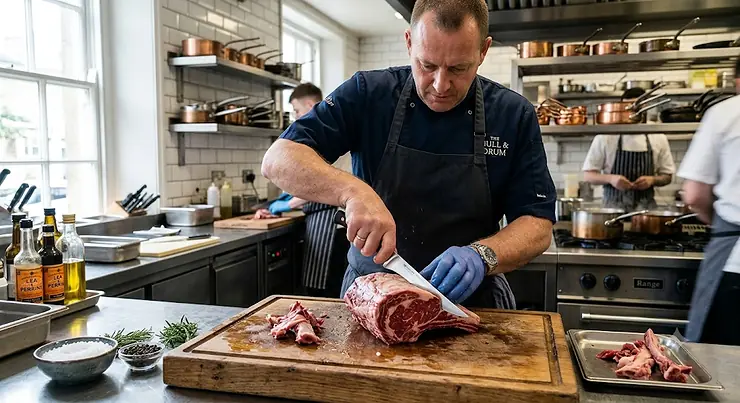
Right, let’s be honest for a second: most kitchen drawers in Britain have a chef’s knife, a bread knife, and something rusty that used to be sharp. What’s usually missing is the one blade that actually saves you money every time you cook a chicken thigh or a leg of lamb — the best boning knife. This is the tool that turns a whole bird into neat, boneless portions instead of a wrestling match, and it’s the difference between wasted meat left clinging to the carcass and a plate that makes the butcher’s counter look overpriced.
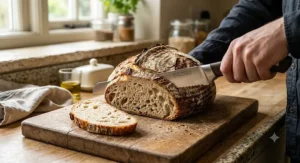
A boning knife is a narrow, pointed blade — typically 12 to 17 cm long — built specifically for separating meat, poultry and fish from bone without hacking through muscle fibres. On paper this sounds simple. In practice, the wrong knife (too stiff, too flimsy, or simply blunt out of the box) will leave you fighting a chicken carcass for twenty minutes and swearing off home butchery for life. The right one glides.
Over the following sections, we’ve dug into seven genuinely available knives — from a sub-£30 workhorse to a Solingen-forged splurge — using real specifications, aggregated customer-review sentiment, and honest comparative reasoning rather than recycled marketing copy. Whether you’re portioning chicken thighs for the freezer, filleting a trout you caught yourself, or finally attempting a whole leg of lamb, there’s a knife here that matches your ambition and your budget. Prices below are shown as ranges only, since retail prices shift constantly — always check current pricing before you buy.
Quick Comparison Table
| Knife | Blade Style | Price Range | Best For |
|---|---|---|---|
| Victorinox Fibrox Pro Boning Knife | Flexible, curved | Under £30 | Best overall value |
| Victorinox Fibrox Narrow Curved Boning Knife | Narrow, curved | £20s | Best narrow blade for precision |
| ProCook Professional X50 Chef Boning Knife | Semi-stiff, curved | £20s | Best British brand |
| Zwilling Pro Boning Knife | Semi-flexible, forged | £60s-£70s | Best for serious home butchery |
| Wusthof Classic Boning Knife | Semi-stiff, forged | £90s-£100 | Best premium splurge |
Looking at the spread above, the gap between the cheapest and priciest knife here is roughly £70, yet the fundamental job — separating meat from bone — doesn’t actually change that much between them. What does change is edge retention, balance, and how long the blade stays genuinely sharp between honing sessions. If you’re boning a chicken once a month, the value end of this table will serve you brilliantly; if you’re processing a whole lamb or working through several birds a week, the extra forging and steel quality on the pricier models starts paying for itself in reduced sharpening time and cleaner cuts.
💬 Already know which style suits you? Scroll down to the full reviews and check today’s price before it changes!
Top 7 Best Boning Knives: Expert Analysis
1. Victorinox Fibrox Pro Boning Knife — best boning knife under £30
The Victorinox Fibrox Pro has become something of a default recommendation among professional kitchens, and the reason is refreshingly unglamorous: it simply does the job without fuss. The 15cm curved, flexible blade is stamped from ice-tempered high-carbon stainless steel, hardened to roughly 58 HRC, which strikes a sensible balance between edge retention and ease of sharpening for a home cook who isn’t going to invest in a whetstone collection.
Based on the spec comparison with pricier forged blades, what you’re sacrificing here is heft and a bolster — this is a lighter, thinner knife, and that’s precisely why it works so well on poultry and fish, where a heavy blade fights you rather than helping. The NSF-certified Fibrox handle is textured rather than smooth, which matters more than it sounds: boning work gets slippery fast once fat and moisture are involved.
Reviewers consistently report that this knife arrives genuinely sharp out of the box and holds an edge well through repeated poultry sessions, with several long-term owners noting they’ve bought a second one simply because the first is always in the dishwasher when needed. A recurring theme in aggregated feedback is that the handle, while excellent for grip, feels slightly utilitarian rather than premium — a fair trade at this price.
Pros:
- ✅ NSF-certified non-slip Fibrox handle, secure even wet
- ✅ Ice-tempered blade holds a working edge well
- ✅ Genuinely under £30 with a lifetime warranty
Cons:
- ❌ Stamped, not forged — lacks a substantial bolster
- ❌ Handle texture feels basic next to forged rivalled brands
At around £20-£25, this is hard to beat as a first boning knife or a reliable spare, and the value verdict is straightforward: for most home cooks, this is the only boning knife they’ll ever need to buy.
2. Victorinox Fibrox Narrow Curved Boning Knife — best narrow blade for precision
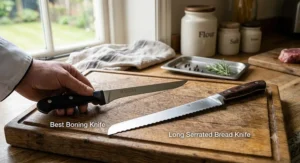
If the standard Fibrox Pro is the generalist, this narrow curved variant is the specialist. The blade tapers to a genuinely fine point across its 15cm length, and the narrower profile means less steel is in contact with the meat at any given moment — useful when you’re trying to hug close to a rib bone or work into the tight pocket around a chicken thigh joint without gouging.
What most buyers overlook about narrow boning blades is that the reduced width isn’t just about aesthetics; it directly reduces drag and lets you follow curved bone contours with noticeably less resistance than a wider blade offers. Reviewers consistently describe this model as excellent for prime rib and larger cuts of beef, with several noting the flex is “just right” — enough to hug bone without feeling flimsy underhand.
The trade-off, and it’s an honest one, is versatility. A blade this narrow isn’t the tool you reach for to trim a whole side of pork shoulder or portion a large salmon; it excels specifically at detail work. Aggregated feedback also flags the curved profile as handy for hollowing vegetables, an unexpected but genuinely useful crossover.
Pros:
- ✅ Narrow curved blade excels at tight joints and bones
- ✅ Consistent Victorinox edge quality and flexibility
- ✅ Comfortable, non-slip Fibrox grip
Cons:
- ❌ Narrower profile is less versatile on larger cuts
- ❌ Still stamped rather than forged, so lighter in the hand
Priced similarly to its sibling at around £22-£28, this is the one to add second — not instead of — a wider blade, if precision work like poultry joints or fish is your main task.
3. ProCook Professional X50 Chef Boning Knife — best British brand pick
ProCook is a B Corp-certified British homewares retailer, and its Professional X50 range leans into classic French-style knife design rather than the German or Swiss conventions dominating this list. The 15cm curved blade is made from German X50CrMoV15 steel — the same 0.5% carbon, 15% chromium alloy used by several premium European manufacturers — paired with a triple-rivet handle and a full-length anti-slip bolster.
Here’s what the spec sheet won’t tell you outright: that bolster running the full length of the handle isn’t just decoration, it gives your fingers a stable pinch-point when the knife inevitably gets slick with fat, which matters more during a genuine deboning session than most marketing copy admits. Based on the steel composition alone, edge retention should sit comfortably in line with mid-range German competitors, while remaining straightforward to touch up on a honing steel between uses.
As a UK-founded brand recognised by Which? for its wider homewares range, ProCook doesn’t have quite the decades-deep aggregated review history of Victorinox on Amazon, so treat individual review counts with a little more caution here — though the specs and construction stand up well against the establishment names.
Pros:
- ✅ German X50CrMoV15 steel for solid edge retention
- ✅ Full-length bolster aids grip when hands get slick
- ✅ British B Corp brand with a 30-day guarantee
Cons:
- ❌ Not dishwasher safe — hand wash only
- ❌ Smaller aggregated review base than Victorinox or Wusthof
Typically priced in the £20-£25 range, this is the pick for anyone who wants to support a UK retailer without compromising on genuine German-grade steel.
4. Mercer Culinary Genesis Flexible Boning Knife — best all-rounder for chicken and fish
Mercer Culinary built its reputation supplying culinary schools, and the Genesis range is where that professional-training pedigree shows. This 6-inch (15cm) flexible boning knife is fully forged from a single piece of high-carbon German steel — rather than stamped — which gives it genuine heft and a proper bolster for balance, something the budget Victorinox models deliberately do without.
What most buyers overlook about forged versus stamped construction is that it isn’t purely about snob value: the additional mass at the bolster shifts the knife’s centre of balance back towards the handle, which reduces wrist fatigue on longer sessions like breaking down multiple chickens. The taper-grind edge is hand-polished, and the black Santoprene handle is specifically formulated to stay grippy when wet — a genuinely practical detail for anyone who’s dropped a slippery-handled knife mid-task.
Aggregated reviewer sentiment is consistently strong on value: several long-term owners describe it as holding its edge impressively well for the price bracket, and specifically call out its comfort for cutting up chicken and salmon. A recurring theme, however, is that — like most forged knives in this list — it demands hand washing; dishwasher exposure will dull the edge and can degrade the handle over time.
Pros:
- ✅ Fully forged blade with a real bolster for balance
- ✅ Santoprene handle stays grippy even wet
- ✅ Strong reviewer sentiment on edge retention for the price
Cons:
- ❌ Hand-wash only — no dishwasher shortcuts
- ❌ Fewer size/colour variants than the Victorinox range
Sitting around £28-£38, this is the sensible step up once you’ve outgrown a stamped budget blade but aren’t ready to spend Wüsthof money.
5. Zwilling Four Star Boning Knife — best mid-range forged option
Zwilling’s FOUR STAR range has been on the market for close to four decades, and the boning knife within it is a straightforward, no-nonsense forged blade with a stainless steel bolster and an ergonomically shaped plastic handle. The 14cm blade is made from a single piece of premium steel that balances carbon and chromium content for a workable compromise between hardness and ease of sharpening.
Based on the spec comparison with Zwilling’s own budget lines, the FOUR STAR sits squarely in the middle: forged rather than stamped, but without the ice-hardening treatment reserved for the Pro range above it. What that means in practice is a knife that holds an edge noticeably longer than a stamped budget model, while remaining easy to bring back to sharpness on a standard honing steel — no specialist whetstone required.
Reviewers consistently note the thin, flexible blade is purpose-built rather than an everyday utility knife, with several long-standing owners specifically praising it for game birds like pheasant and describing the flex as ideal for close, accurate boning work. One recurring piece of aggregated feedback worth flagging honestly: this is not the knife to reach for if you only want to own one blade for everything — it’s a specialist tool that rewards being used as intended.
Pros:
- ✅ Single-piece forged steel with a genuine bolster
- ✅ Nearly 40 years of proven FOUR STAR heritage
- ✅ Reviewers specifically praise it for game and poultry
Cons:
- ❌ Pricier than stamped budget alternatives
- ❌ Thin flexible blade isn’t a general-purpose knife
Typically found around £45-£55, this is a strong pick for anyone serious about game preparation or regular poultry butchery who wants forged construction without stepping into premium territory.
6. Zwilling Pro Boning Knife — best for serious home butchery
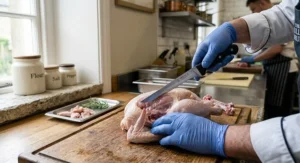
Move up to the Zwilling Pro range and you’re into SIGMAFORGE territory — a one-piece precision-forged construction paired with FRIODUR ice-hardening, a proprietary process that heats and then rapidly cools the blade to lock in sharpness, flexibility and corrosion resistance simultaneously. The 14cm pointed-tip blade is designed specifically for separating bones, tendons, fat and skin from meat, poultry or fish without tearing the muscle fibres.
Here’s what most spec sheets skip: the “pro touch” bolster on this model isn’t just for looks, it’s shaped to encourage a pinch grip — holding the blade between thumb and forefinger just ahead of the handle — which gives markedly more control than a standard hammer grip when you’re working close to a joint. Based on the wedge-shaped blade geometry Zwilling describes, this is a knife engineered specifically for repeated, sustained boning sessions rather than occasional use.
Aggregated feedback frequently references America’s Test Kitchen-style testing praising this exact profile of knife for maintaining sharpness across extended deboning sessions — consistent with Zwilling’s own claims about the Friodur treatment. The trade-off is straightforward: you’re paying a genuine premium over the FOUR STAR sibling for the forging technique and hardening process, and while Zwilling markets the knife as dishwasher safe, most long-term owners recommend hand washing to protect the edge.
Pros:
- ✅ SIGMAFORGE one-piece forging for superior balance
- ✅ FRIODUR ice-hardening extends genuine edge retention
- ✅ Pro-touch bolster enables a proper precision pinch grip
Cons:
- ❌ A meaningful price step up from the FOUR STAR range
- ❌ Best results still require hand washing, despite the dishwasher-safe label
Expect to pay somewhere in the £60-£75 range, and for anyone processing whole birds or larger game regularly, this is arguably the best boning knife for home butchery on this list — the point where tool quality genuinely starts saving you time.
7. Wusthof Classic Boning Knife — best premium splurge
Wusthof has been forging knives in Solingen, Germany’s historic “City of Blades”, since 1814, and the Classic range’s boning knife is the brand’s flagship interpretation of the format: a precision-forged, full-tang blade with a triple-riveted handle and a proper finger guard bolster for safety.
What the spec sheet won’t tell you, but reviewers note repeatedly, is just how much of the day-to-day experience comes down to Wusthof’s PEtec sharpening technology — a computer-controlled, laser-guided edge-forming process the brand claims delivers 20% sharper results with double the edge retention compared with traditionally ground blades. Based on the high-carbon stainless steel composition and full-tang construction, this is a knife built for decades rather than years, backed by a genuine lifetime warranty against manufacturing defects.
Aggregated UK reviews are strikingly consistent: multiple long-term owners describe it as the best boning knife they’ve used, specifically citing the balance, the solid bolster, and the precise amount of blade flex for working close to bone. One recurring theme worth flagging honestly — a small number of owners report the knife eventually snapping under heavy use, though Wusthof’s customer service has been repeatedly praised for replacing knives without argument, which speaks well of the warranty in practice.
Pros:
- ✅ Precision-forged full tang for genuine professional balance
- ✅ PEtec technology gives a sharper, longer-lasting edge
- ✅ Lifetime warranty backed by 200+ years of Solingen heritage
Cons:
- ❌ The most expensive knife on this list, around £90-£100
- ❌ Overkill if you only debone the occasional Sunday roast
If budget genuinely isn’t the deciding factor, this is the boning knife you buy once and hand down — a proper investment piece rather than a consumable.
Top 7 Boning Knives: Full Specification Comparison
| Knife | Blade Length | Construction | Price Range | Best For |
|---|---|---|---|---|
| Victorinox Fibrox Pro Boning Knife | 15cm | Stamped, flexible | Under £30 | Overall value |
| Victorinox Fibrox Narrow Curved Boning Knife | 15cm | Stamped, narrow curved | £20s | Precision/narrow work |
| ProCook Professional X50 Chef Boning Knife | 15cm | Stamped, X50 steel | £20s | British brand fans |
| Mercer Culinary Genesis Boning Knife | 15cm | Forged, flexible | £28-£38 | Chicken and fish |
| Zwilling Four Star Boning Knife | 14cm | Forged | £45-£55 | Mid-range game/poultry |
| Zwilling Pro Boning Knife | 14cm | SIGMAFORGE, ice-hardened | £60-£75 | Serious home butchery |
| Wusthof Classic Boning Knife | 14cm | Precision-forged, full tang | £90-£100 | Premium, lifetime use |
The clearest pattern in this table is that construction method, not brand prestige alone, tracks almost perfectly with price: the three stamped blades sit under £30, while every forged option costs considerably more. For anyone weighing up whether forging is worth the extra spend, the honest answer is that it buys you a proper bolster for balance and typically longer edge retention between sharpenings — a genuine benefit if you’re boning several times a week, and a marginal one if you’re doing it monthly.
💬 Just one click — help others make better buying decisions too!😊
Practical Usage Guide: Deboning Chicken and Meat Prep at Home
Getting a new boning knife home is only step one — using it well is where the real savings show up. Before your first proper session, spend five minutes honing the blade on a steel, even if it arrived “sharp”: most boning knives ship with a working edge rather than their best possible one, and a few passes at the manufacturer’s recommended angle (usually 15-20 degrees) noticeably improves control from the very first cut.
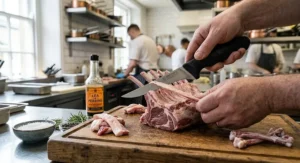
For deboning chicken specifically — the single most common use case behind this keyword — start with the bird breast-side down and locate the backbone. Run the tip of the blade along one side of it, keeping the flat of the blade pressed against the bone rather than the meat, and let the knife’s natural flex do the work of following the curve of the ribs. Common first-30-days mistakes include gripping the handle too tightly (which tires your hand fast and reduces feel) and trying to force the blade through joints rather than finding the cartilage and cutting through it directly.
Maintenance is straightforward but non-negotiable: hand wash and dry immediately after every use, hone before each session rather than after, and store the knife in a block or on a magnetic strip rather than loose in a drawer, where the edge dulls against other cutlery.
As detailed on Wikipedia’s overview of the boning knife, the format has existed in some form since at least the early 18th century, and the core design principle — narrow, flexible, sharply pointed — hasn’t fundamentally changed because it simply works. For a visual refresher on grip and cutting motion, the BBC’s own knife skills demonstration covers the fundamentals that apply directly to boning work, even though it wasn’t filmed with this specific task in mind.
Budget roughly 15-20 minutes for your first whole chicken and expect that time to roughly halve by your third or fourth attempt — this is a skill that rewards repetition more than any single piece of equipment.
Real Kitchens, Real Choices: Which Boning Knife Suits You?
The weeknight cook. If you’re buying whole chickens to save money and portioning them into thighs, breasts and stock bones once a week, the Victorinox Fibrox Pro Boning Knife is genuinely all you need. It’s light, quick to clean, and forgiving if you’re still building technique — no point spending Wüsthof money on a knife that’ll spend most of its life doing one straightforward job.
The keen game cook. Anyone processing pheasant, rabbit or venison through the season needs a blade with enough flex to follow small, irregular bones without feeling unstable. The Zwilling Four Star Boning Knife is specifically praised by aggregated reviewers for exactly this use case, and its price sits comfortably below the specialist game-processing knives sold by butchery suppliers.
The ambitious home butcher. If you’re breaking down whole lamb shoulders, boning a leg for stuffing, or working through several birds in one sitting on a regular basis, the extra control and reduced fatigue from a forged, ice-hardened blade like the Zwilling Pro Boning Knife or the Wusthof Classic Boning Knife genuinely earns its higher price — the time saved per session adds up fast when you’re doing this weekly rather than occasionally.
Problem → Solution: Common Boning Knife Frustrations Solved
Problem: the blade feels too flimsy and wobbles under pressure. This usually means you’ve bought (or are using) a flexible knife for a stiff-blade job. Reserve genuinely flexible blades like the Victorinox Fibrox Pro Boning Knife for poultry and fish, and reach for a semi-stiff option like the ProCook Professional X50 Chef Boning Knife for beef, pork or lamb.
Problem: the knife dulls within a few sessions. Stamped budget blades need honing far more frequently than forged ones — that’s the honest trade-off for the lower price. Hone before every session, not just when it feels blunt, and consider stepping up to a forged option like the Mercer Culinary Genesis Boning Knife if this becomes a recurring frustration.
Problem: your hand slips mid-cut. This is almost always a handle-material issue combined with fat or moisture. Textured grips like Victorinox’s Fibrox or ProCook’s full-length bolster are specifically designed to address this; if you’re using an older, smooth-handled knife, drying your hands more frequently mid-task is a genuine short-term fix.
Problem: you’re leaving too much meat on the bone. This is a technique issue more often than an equipment one — keep the blade angled flat against the bone rather than the meat, and let the knife’s flex do the curving rather than forcing a straight cut around a joint.
Problem: the knife feels wrong for your hand size. Handle circumference varies more between brands than most buyers expect. If a 14cm Zwilling handle feels bulky, the slimmer Victorinox Fibrox profile is worth trying before assuming boning knives simply aren’t for you.
How to Choose the Best Boning Knife
Choosing the right blade comes down to a handful of genuinely decisive factors, rather than dozens of marketing bullet points:
- Decide on flexibility first. Flexible blades suit poultry and fish; semi-stiff or stiff blades handle beef, pork and lamb with more control and less wobble under pressure.
- Check the blade width. Narrow blades excel at detail work around joints and ribs; wider blades offer more stability across larger cuts.
- Match construction to frequency of use. Stamped blades (Victorinox, ProCook) are perfectly capable for occasional use; forged blades (Mercer, Zwilling, Wusthof) reward frequent, heavier use with better balance and longer edge retention.
- Prioritise the handle over the blade steel, within reason. A knife you can’t grip confidently when wet is dangerous regardless of how good its steel is — textured or bolstered handles matter more day-to-day than an extra percentage point of chromium.
- Consider blade length against your typical task. A 12-15cm blade suits most home poultry and fish work; only step up to longer blades if you’re regularly processing larger cuts of beef or pork.
- Factor in maintenance realism. If you know you’ll never own a whetstone, favour blades that are easy to bring back to sharpness on a basic honing steel rather than premium steels that demand specialist sharpening.
- Set a genuine budget ceiling before you shop. As the comparison table above shows, price tracks construction method closely — decide whether you need forged-blade longevity or whether a stamped blade under £30 genuinely covers your needs.
Boning Knife vs Filleting Knife: What’s the Difference
The terms get used almost interchangeably in casual conversation, but the distinction matters once you’re actually shopping. A boning knife is built primarily for meat, poultry and thicker fish, with a blade that ranges from stiff to flexible depending on the intended cut. A filleting knife, by contrast, is designed specifically for fish — longer, thinner, and considerably more flexible than even the softest boning knife, because it needs to hug the contours of a fish’s skeleton and skin with minimal pressure.
Based on the spec comparison across both categories, the practical rule of thumb is this: if fish is your main target, particularly larger species like salmon or trout, a dedicated filleting knife will outperform a boning knife every time, since the extra length and flex make long, single-pass cuts along the spine far cleaner. If you’re mostly working with poultry, smaller fish, or general meat trimming, a flexible boning knife like the Victorinox Fibrox Pro Boning Knife genuinely does double duty reasonably well.
For anyone specifically hunting for the best filleting knife rather than a boning knife, Victorinox’s own longer Fibrox fillet models (typically 20cm-plus, straight-bladed and even more flexible than their boning equivalents) are widely regarded among the strongest value options in that separate category — worth a dedicated look if fish, not meat, is your primary use case. Professional kitchens frequently own both, precisely because forcing one tool to do the other’s job always involves some compromise.
Best Boning Knife for Home Butchery
Home butchery — breaking down whole animals or large primal cuts rather than pre-portioned supermarket meat — places different demands on a knife than simply jointing a chicken. You’re working through more connective tissue, larger muscle groups, and considerably tougher sinew, often for extended sessions rather than a quick five-minute job.
What most first-time home butchers overlook is that a single knife rarely covers the whole process well. A semi-stiff blade like the ProCook Professional X50 Chef Boning Knife handles the initial separation of larger muscle groups from bone with more control than a flexible blade would allow, while a genuinely flexible option like the Zwilling Pro Boning Knife comes into its own for the final trimming and precision work around joints and silverskin.
Reviewers consistently note that forged blades with a proper bolster — rather than stamped budget knives — hold up noticeably better across extended sessions, since home butchery sessions frequently run well over an hour. If you’re planning to take this seriously — a whole lamb, a pig, or regular deer processing — investing in both a stiffer and a more flexible blade from this list, rather than trying to make one knife do everything, will save frustration and produce cleaner results.
Narrow Blade vs Wide Blade: Choosing the Right Meat Preparation Knife
Blade width is one of the most underrated decisions in this entire category, and it’s rarely explained clearly at the point of sale. A narrow blade — like the Victorinox Fibrox Narrow Curved Boning Knife — concentrates less steel against the meat at any given point, which reduces drag and lets the tip follow tight curves around ribs, joints and small bones with noticeably more precision.
A wider blade, by contrast, offers more lateral stability, which matters when you’re working through larger, denser cuts where a narrow blade might flex unpredictably under pressure. Based on the aggregated feedback across both styles in this guide, narrow blades are consistently praised for poultry, game birds and fish, while wider, semi-stiff blades are favoured for beef, pork and lamb.
The honest answer to “which is better” is that it depends entirely on what’s most often on your chopping board. Cooks who process a lot of poultry and smaller game genuinely benefit from a dedicated narrow blade as a second knife; those working mostly with larger cuts of red meat will get more consistent results from a standard or wide-profile blade as their primary tool.
Common Mistakes When Buying a Boning Knife
The single most common mistake is buying based on blade length alone, without considering flexibility — a 15cm stiff blade and a 15cm flexible blade are, in practical terms, almost different tools entirely, suited to different meats. Shoppers also frequently underestimate handle importance, focusing entirely on steel type while ignoring how the knife will actually feel after twenty minutes of continuous, greasy-handed work.
Another recurring error is assuming a single knife needs to cover every task, from chicken to beef to fish — as the sections above make clear, most serious cooks eventually own at least two boning-style knives for exactly this reason. Buyers also sometimes skip checking whether a blade is genuinely dishwasher safe versus merely dishwasher tolerant; several forged models in this guide are technically dishwasher safe but explicitly recommended for hand washing by their own manufacturers, and ignoring that guidance shortens the edge’s working life considerably.
Finally, don’t assume the most expensive option is automatically the right one for your needs — as the value verdicts throughout this guide show, several sub-£30 knives genuinely outperform their price point for typical home use, and premium steel only pays for itself with frequent, heavy use.
Long-Term Cost and Maintenance: Is a Premium Boning Knife Worth It
Total cost of ownership tells a more useful story than the sticker price alone. A £22 Victorinox Fibrox Pro, honed regularly and replaced perhaps once every five to eight years of moderate home use, works out to roughly £3-£4 per year. A £95 Wusthof Classic, treated with proper care, is genuinely built to last decades — potentially bringing its annual cost below the cheaper knife if you keep it long enough, while also requiring less frequent sharpening along the way.
The maintenance overhead differs too. Stamped budget blades need more frequent honing to stay at their best, which costs time rather than money, while forged blades with better steel treatment (Zwilling’s Friodur process, Wusthof’s PEtec technology) hold a working edge for noticeably longer stretches between sessions. Neither approach is objectively wrong — it’s a genuine trade-off between upfront cost and ongoing time investment.
Where the maths clearly favours premium is frequency of use: anyone boning meat several times a week will recoup the price difference in saved sharpening time and reduced replacement frequency within a couple of years. For occasional cooks, a well-maintained budget blade will comfortably outlast the point where upgrading makes financial sense.
Safety and Food Hygiene When Preparing Meat at Home
A sharp boning knife is, somewhat counter-intuitively, safer than a dull one — dull blades require more pressure and are more prone to slipping unpredictably, which is when most kitchen cuts actually happen. Keeping your knife properly honed isn’t just about performance, then; it’s a genuine safety practice.
Hygiene matters just as much as blade sharpness when you’re working with raw meat and poultry. According to Food Standards Agency guidance on avoiding cross-contamination, bacteria can spread from raw meat to a chopping board, knife and hands within seconds, and the same board or knife should never be used for ready-to-eat food afterwards without thorough washing — a designated board and knife pairing kept solely for raw meat prep is a simple, effective habit.
Beyond hygiene, basic handling safety applies specifically to boning work: always cut away from your non-knife hand, use the claw grip (fingertips tucked, knuckles guiding the blade) on the hand steadying the meat, and never attempt to catch a dropped knife — step back and let it fall. These habits matter more with a boning knife than almost any other kitchen tool, precisely because the work involves cutting close to bone in tight, often slippery spaces.
Frequently Asked Questions
❓ What is the best boning knife for a complete beginner?
❓ Is a flexible or stiff boning knife better overall?
❓ Can I use one boning knife for both meat and fish?
❓ How often should I sharpen a boning knife?
❓ Is it worth spending over £50 on a boning knife?
Conclusion
There isn’t a single “best” boning knife so much as a best match for how often you cook, what you’re cutting, and how much long-term maintenance you’re realistically willing to do. For most home cooks portioning chicken and trimming the odd joint of meat, the Victorinox Fibrox Pro Boning Knife remains an outstanding, low-risk starting point that genuinely punches above its price. Those chasing narrow, precise control will appreciate the Victorinox Fibrox Narrow Curved model, while British-brand loyalists have a genuinely capable option in ProCook’s Professional X50.
Step up in frequency and ambition, and the Mercer Culinary Genesis and Zwilling Four Star knives offer real forged-blade benefits without premium pricing. For anyone taking home butchery seriously — whole birds, larger game, or frequent processing — the Zwilling Pro and Wusthof Classic represent genuine long-term investments rather than simple purchases, backed by the kind of construction and warranty support that justifies their price over years of use.
Whichever you choose, remember that technique and maintenance matter as much as the knife itself — a cheap, well-honed blade will outperform an expensive, neglected one every time.
✨ Don’t Miss These Exclusive Deals!
🔍 Take your meat preparation to the next level with these carefully selected boning knives. Click through to check current pricing and availability before you commit — the right blade will pay for itself the very first time you skip the butcher’s counter and portion your own chicken at home!
Recommended for You
- Offset Bread Knife 2026: 7 Brilliant Picks Compared
- Serrated Bread Knife: 7 Best Picks for Crusty Loaves (2026)
- Best Bread Knife 2026: 7 Top Picks That Won’t Wreck a Loaf
Disclaimer: This article contains affiliate links. As an Amazon Associate, I earn from qualifying purchases. If you purchase products through these links, we may earn a small commission at no additional cost to you.
✨ Found this helpful? Share it with your friends! 💬🤗
