
In This Article
If you’ve ever tried to skin a mackerel with a chef’s knife, you already know why a flexible filleting knife exists. The blade needs to bend. Not “sort of flex if you lean on it” bend — genuinely curve along the spine of a fish while your ordinary kitchen knives sit there rigid and useless, mangling what should have been a clean fillet into something resembling a crime scene.
A flexible filleting knife is a long, narrow-bladed knife designed to flex and follow the contours of fish, poultry or delicate cuts of meat, allowing you to remove skin, bones and membranes with minimal waste. The blade’s thinness is the whole point: it lets you work close to the bone without the stiffness of a standard chef’s knife getting in the way. Anglers, keen home cooks and anyone who buys whole fish from the fishmonger will find one indispensable.
This guide is built on genuine research rather than guesswork. We’ve pulled together real specifications, aggregated review sentiment, and honest comparative analysis across seven knives that actually exist and are actually available, spanning budget picks under £30 through to forged German professional-grade blades. Where reviewer opinion is verifiable, we say so. Where it isn’t, we say that too, because a fabricated five-star quote helps nobody choose the right blade.
Whether you’re after a flexible fillet knife buy for weekend fishing trips, comparing the best flexible boning knife for trimming meat, or simply want the right flexible filleting knife for fish prep at home, you’ll find a genuine recommendation below — plus the comparative reasoning to back it up.
Quick Comparison Table
| Knife | Blade Length | Flex Type | Price Range | Best For |
|---|---|---|---|---|
| SHAN ZU 7 Inch Fillet Knife | 17.8cm | Semi-flex | Around £25-£35 | Budget-conscious first-timers |
| Rockingham Forge Boning/Filleting Knife | 15-20cm | Semi-flex | Around £20-£30 | British-brand value seekers |
| Mercer Culinary Millennia Narrow Fillet Knife | 21.6cm | Semi-flex | Around £25-£35 | Home cooks wanting NSF-rated durability |
| Dexter-Russell SofGrip Flexible Fillet Knife | 17.8-20cm | Full flex | Around £25-£40 | Anglers working with wet, slippery hands |
| Victorinox Fibrox Filleting Knife | 20cm | Full flex | Around £20-£33 | All-round precision filleting |
| WÜSTHOF Classic Flexible Fish Fillet Knife | 16-18cm | Semi-flex | Around £70-£90 | Buyers who want forged, lifetime-grade steel |
| F. Dick ErgoGrip Semi-Flex Filleting Knife | 18-21cm | Semi-flex | Around £45-£65 | Professionals and serious hobbyist anglers |
Looking at the spread above, the pattern is fairly clear: cheaper knives lean towards full flex because thinner steel is easier and cheaper to grind, while premium forged blades like the WÜSTHOF Classic Flexible Fish Fillet Knife tend to sit at semi-flex, trading a little bendiness for edge retention and control. If your priority is working with small, delicate fish such as trout or plaice, full flex options like the Victorinox Fibrox Filleting Knife will feel more forgiving. For bigger, tougher fish or meat trimming, the added backbone of the F. Dick ErgoGrip Semi-Flex Filleting Knife pays off in accuracy rather than agility.
💬 Found a favourite already? Scroll down to see current pricing and availability — one click could save your next fish supper from a mangled fillet.
Top 7 Flexible Filleting Knives: Expert Analysis
The following seven knives were chosen to cover budget, mid-range and premium price points, alongside genuine variety in blade flex, length and country of manufacture. Every product below includes real specifications and, where verifiable, aggregated review sentiment — never invented quotes or star ratings.
1. SHAN ZU 7 Inch Fillet Knife — best budget flexible fillet knife for beginners
The standout here is the price-to-performance ratio: a sub-£35 knife using genuine high-carbon steel rather than the mystery-metal blades that plague the bargain end of the market. The 7-inch (17.8cm) blade is ground from Japanese high-carbon steel hardened to a claimed 62 HRC, with a hand-finished 12-15° edge and a Pakkawood or G10 handle depending on the variant you choose. What that hardness figure means in practice is that the edge holds up longer between sharpenings than most knives at this price, though very hard steel can also be marginally more prone to chipping if you hit a rib bone at the wrong angle.
Based on the spec comparison with other sub-£35 fillet knives, the SHAN ZU’s flexibility sits at genuine semi-flex rather than the overly floppy blades some budget brands ship — useful for anyone learning to fillet who doesn’t yet have the wrist control for a full-flex blade. Reviewers consistently report the knife arrives impressively sharp out of the box, with several noting they didn’t need to hone it before first use, though a handful mention the handle finish varies slightly between batches.
Pros:
- ✅ Genuine high-carbon steel at a budget price point
- ✅ Arrives sharp enough for immediate first use
- ✅ Comfortable ergonomic handle with finger guard
Cons:
- ❌ Handle quality can vary slightly between batches
- ❌ Less brand heritage and after-sales support than premium rivals
Around £25-£35 depending on handle variant, this represents solid value for anyone dipping a toe into fish prep without committing to a premium price tag.
2. Rockingham Forge Boning/Filleting Knife — best British-brand value pick
What most buyers overlook about this knife is its heritage: Rockingham Forge traces its roots to Grunwerg Ltd, manufacturing in Sheffield — the historic home of English cutlery — since 1948. The RF series filleting and boning knives use German chromium-molybdenum-vanadium steel, ice-hardened for rust resistance, with a long, thin blade specifically designed to separate meat or fish from bone with minimal waste.
On paper, this means you’re getting German-grade steel chemistry wrapped in a brand that has genuine standing in the UK market — Rockingham Forge’s 20cm chef’s knife was independently rated Best Japanese-style knife under £40 by BBC Good Food, which speaks to the wider range’s quality control rather than this specific model, but it’s a reasonable proxy for the brand’s consistency. Reviewers of the wider Rockingham Forge knife ranges frequently mention that the blades keep an edge well and the handles feel secure even during extended use, though the filleting-specific model has a smaller review pool than the brand’s chef’s knives, so treat that sentiment as directional rather than definitive.
Pros:
- ✅ British heritage brand with independent editorial recognition
- ✅ German ice-hardened steel for rust resistance
- ✅ Long, thin blade minimises waste when removing bones
Cons:
- ❌ Smaller dedicated review pool than the brand’s bestselling chef’s knives
- ❌ Handle design is functional rather than premium-feeling
Priced around £20-£30, this is the knife to pick if supporting a UK-manufacturing-linked brand matters to you as much as the blade itself.
3. Mercer Culinary Millennia Narrow Fillet Knife — best NSF-certified all-rounder
The narrow, semi-flexible 8.5-inch (21.6cm) blade is the standout feature here, striking a genuine middle ground between too-stiff and too-floppy. Mercer’s Millennia range uses one-piece stamped Japanese high-carbon stainless steel with a 15° edge angle and a hardness around 53-54 HRC — noticeably softer than the SHAN ZU’s claimed 62 HRC, which in practice means slightly less edge retention but easier home sharpening, since very hard steels need finer stones and more patience to bring back to a working edge.
Based on the spec comparison, the Santoprene-and-polypropylene handle is designed specifically for wet, greasy grip conditions, and the NSF certification signals it meets US commercial food-safety hygiene standards, which is a reasonable proxy for build quality even in a home kitchen. One independent review outlet ranked this model as their first-choice fillet knife, and reviewers consistently note it arrives genuinely razor-sharp, with some saying they didn’t need a sharpener at all on first use. A common thread in aggregated feedback is that first-time buyers are surprised by how much flex is packed into a knife this size.
Pros:
- ✅ NSF-certified, commercial-grade hygiene and build standard
- ✅ Comfortable non-slip grip in wet conditions
- ✅ Reasonably easy to home-sharpen versus harder budget blades
Cons:
- ❌ Not dishwasher safe, despite the durable-feeling handle
- ❌ UK import pricing can push it above equivalent US pricing
Expect a price in the £25-£35 range in the UK, making this a strong pick for anyone who wants NSF-level reliability without stepping up to forged German pricing.
4. Dexter-Russell SofGrip Flexible Fillet Knife — best grip for wet, slippery hands
The SofGrip handle is the standout feature, and it’s not marketing fluff — this soft, rubberised grip is specifically engineered to stay secure when your hands are covered in fish slime, which is precisely the situation most fillet knives are used in. The blade comes in 7-9 inch lengths, made from Dexter’s proprietary DEXSTEEL high-carbon, high-alloy stainless steel, individually ground and honed for what the brand describes as “just the right amount of flex.”
What most buyers overlook about Dexter-Russell knives is that they’re not designed to be kitchen jewellery; they’re designed to survive fifty fish on a rocking boat deck, and that industrial-first philosophy shows in both strengths and weaknesses. Reviewers consistently report the blade arrives extremely sharp and holds that edge through repeated use, with several long-term users specifically praising how well the grip performs when hands are wet — a genuine point of difference against the harder, more textured Victorinox Fibrox handle. Aggregated feedback also notes the flex is well-judged: not so stiff it fights you, not so floppy it wanders off-line.
Pros:
- ✅ SofGrip handle excels specifically in wet, slippery conditions
- ✅ DEXSTEEL blade holds its edge through heavy repeated use
- ✅ NSF certified and made in the USA with a lifetime workmanship guarantee
Cons:
- ❌ Utilitarian looks compared with European forged rivals
- ❌ Import shipping can add to the effective UK price
At around £25-£40 depending on blade length and sheath inclusion, this is the knife anglers repeatedly gravitate towards for exactly the reasons above.
5.Victorinox Fibrox Filleting Knife — best all-round narrow flexible blade
The 20cm narrow, fully flexible blade with a fine tip is the headline feature, purpose-built for precision work on everything from small reef fish to larger salmon and swordfish. Victorinox has manufactured cutlery since 1884, and the Fibrox range’s drop-forged full-tang construction with a high-carbon stainless steel blade has become something of an industry-standard reference point that other brands are frequently benchmarked against, including in our own comparisons above.
Here’s what to weigh: the Fibrox handle is textured thermoplastic elastomer rather than a soft-touch rubber, which some anglers find grippier when dry but more slippery than Dexter’s SofGrip when genuinely wet and slimy. Reviewers consistently describe the knife as “brilliant” and specifically praise the “great hand feel,” with several long-term owners mentioning they’ve replaced a lost or worn Victorinox with the identical model because nothing else quite matched it. A few reviews mention the blade can feel almost too flexible for larger, tougher fish, which lines up with our spec analysis — this is a full-flex blade rather than the stiffer semi-flex of the F. Dick or Wüsthof below.
Pros:
- ✅ Fine tip and narrow blade ideal for delicate precision filleting
- ✅ Dishwasher-safe Fibrox handle, unusual for a proper filleting knife
- ✅ Trusted 1884-founded Swiss brand with wide UK availability
Cons:
- ❌ Full flex can feel excessive on larger, tougher fish
- ❌ Textured handle is less secure than SofGrip when truly wet
Around £20-£33 depending on retailer and colour variant, this remains one of the most consistently recommended flexible filleting knives for fish across independent buying guides.
6. WÜSTHOF Classic Flexible Fish Fillet Knife — best forged premium option
Precision-forged from a single piece of high-carbon stainless steel and tempered to 58° HRC, the standout feature is Wüsthof’s PEtec (Precision Edge Technology) grinding process, which the brand claims delivers a blade 20% sharper with twice the edge retention of its previous generation. The long, narrow, flexible blade is designed to move smoothly along a fish’s backbone and cleanly separate skin from flesh, and the full-tang, triple-riveted POM handle adds genuine heft and balance compared with the lighter stamped knives further down this list.
What the spec sheet won’t tell you, but reviewer feedback suggests, is that this extra weight and bolster make the Wüsthof feel noticeably more like a precision instrument and less like a disposable tool — buyers frequently mention the balance and grip quality specifically, describing it as “razor sharp out of the box” and praising how it “measures up to the high expectations” associated with the Wüsthof name. This is a knife built in Solingen, Germany, under a Solingen quality designation that carries genuine regulatory weight in Europe, not just marketing language.
Pros:
- ✅ PEtec grinding claims 20% sharper edge with double retention
- ✅ Full bolster and triple-riveted handle for superior balance
- ✅ Solingen-forged with a limited lifetime warranty
Cons:
- ❌ Significantly pricier than every other knife on this list
- ❌ Semi-flex blade demands more technique than full-flex alternatives
At around £70-£90, this is squarely a buy-it-once purchase for someone who fillets fish regularly enough to justify forged German steel over stamped alternatives.
7. F. Dick ErgoGrip Semi-Flex Filleting Knife — best for professional-grade control
The semi-flexible blade here is deliberately less floppy than most of its rivals, and that’s the entire point: F. Dick’s ErgoGrip filleting knives use a proprietary X55CrMo14 alloy, individually case-hardened to a balanced 56° HRC, designed specifically for the demands of fish processing lines, butchers and serious anglers who need control over pure bendiness. Blade lengths run 15-21cm, and the wide thumb rest with a pronounced finger guard is engineered for genuinely fatigue-free, all-day professional use rather than the occasional home filleting session.
Based on the spec comparison, the “semi-flex” classification matters more here than on any other knife in this guide — one long-term user directly comparing it against a Victorinox blade of similar length noted the F. Dick felt “more stiff and more safe to use,” with the Victorinox blade feeling “more flexible than it should be” for cleaning large salmon. Reviewers consistently praise the ergonomic handle and the finger guard’s role in preventing hand slippage, and several mention the knife didn’t arrive hair-popping sharp out of the box and needed a proper sharpening session first — an honest trade-off for the harder, longer-lasting edge the alloy is designed to deliver.
Pros:
- ✅ Deliberately controlled semi-flex favoured by processing professionals
- ✅ Ergonomic handle with pronounced finger guard for safety
- ✅ Individually case-hardened German alloy holds an edge for longer
Cons:
- ❌ Doesn’t arrive as sharp out of the box as some rivals
- ❌ Stiffer flex may frustrate buyers wanting a floppier, agile blade
Priced around £45-£65 depending on blade length, the F. Dick ErgoGrip is the knife most likely to satisfy anyone specifically searching for a Dick flexible filleting knife review before committing to a purchase — it earns that reputation through consistency rather than hype.
Practical Usage Guide: Setting Up and Maintaining Your Flexible Filleting Knife
A flexible filleting knife rewards good habits from day one, and most of the damage done to these blades happens in the first month of ownership. Start by honing — not sharpening — before every session; a ceramic or steel honing rod realigns the thin edge that flex blades are prone to rolling. True sharpening should happen every few months for a home cook, more often for anyone processing fish weekly, using a whetstone at roughly 15-17° per side to match the factory edge geometry most of these knives ship with.
The single most common first-30-days mistake is treating a flexible filleting knife like a chef’s knife: rocking it through a cutting board or using it to chop vegetables. The thin, flexible geometry that makes it brilliant at following a fish’s spine also makes it prone to chipping or bending permanently if you use it as a general-purpose blade. Store it in a sheath, blade guard, or a dedicated slot in a knife block — never loose in a drawer, where the thin edge will nick against other cutlery.
Hand-wash immediately after use, particularly with high-carbon steel blades like the SHAN ZU or Rockingham Forge models above, since carbon steel can develop surface staining if left wet. Dry thoroughly before storage. If you’re filleting oily fish such as mackerel, a quick wipe with diluted white vinegar helps cut through residual oils that plain washing-up liquid can struggle with.
Real-World Scenarios: Which Flexible Filleting Knife Suits You?
Consider three genuinely different buyers. First, the weekend angler who fishes the Cornish coast twice a month and processes their own catch on the harbour wall: they need something that copes with wet hands, resists corrosion in a salty environment, and doesn’t need a delicate touch to maintain — the Dexter-Russell SofGrip Flexible Fillet Knife or the Victorinox Fibrox Filleting Knife both fit that brief, with the Dexter edging ahead specifically for grip security.
Second, the enthusiastic home cook who buys whole seabass or trout from the fishmonger once a fortnight and wants a knife that looks and feels the part in a modest kitchen: the Mercer Culinary Millennia Narrow Fillet Knife balances genuine performance with a price that doesn’t feel like overkill for occasional use, while the Rockingham Forge Boning/Filleting Knife appeals if supporting a British-linked brand matters.
Third, the serious hobbyist or small-scale fishmonger processing several fish a week who wants a tool built for repetition without fatigue: the F. Dick ErgoGrip Semi-Flex Filleting Knife is designed precisely for that use case, with the WÜSTHOF Classic Flexible Fish Fillet Knife as the alternative if you’d rather have forged prestige alongside the performance.
Problem → Solution: Common Filleting Knife Frustrations Solved
Problem: the blade feels too floppy and wanders off-line. This usually means you’ve bought a full-flex knife like the Victorinox or Dexter-Russell for a task better suited to semi-flex, such as trimming larger meat cuts. Solution: switch to a semi-flex option like the F. Dick ErgoGrip or WÜSTHOF Classic, or simply apply more downward pressure with your guiding hand to steady the blade.
Problem: the knife dulls faster than expected. Softer steels around 53-56 HRC, such as the Mercer Millennia or F. Dick, need more frequent honing than harder blades. Solution: hone before every session rather than only when it feels dull — by the time you notice dulling, you’re already cutting inefficiently.
Problem: rust spots appearing on a high-carbon blade. This typically happens after filleting acidic or oily fish and not drying the blade immediately. Solution: wash and dry the knife within minutes of finishing, and consider a light coat of food-safe mineral oil if the knife will sit unused for more than a week.
Problem: the handle feels slippery when filleting. Textured handles like the Fibrox can lose grip when genuinely coated in fish oil. Solution: keep a clean tea towel nearby to wipe hands and handle periodically, or switch to a soft-grip design like the Dexter SofGrip for consistently wet work.
How to Choose a Flexible Filleting Knife
- Decide your primary use case first. A knife bought mainly for delicate small fish should lean full-flex; one bought mainly for larger fish or meat trimming should lean semi-flex.
- Match blade length to the fish you actually process. Around 15-18cm suits smaller fish and confined kitchens; 20cm-plus gives better reach on salmon-sized catches in a single stroke.
- Check the steel hardness rating if listed. Higher HRC figures (60+) hold an edge longer but need finer sharpening stones; lower HRC (53-56) is easier to maintain at home.
- Consider handle material against your working conditions. Soft-grip handles like SofGrip win in wet, slippery environments; textured synthetic handles like Fibrox are fine for drier kitchen use.
- Factor in country of manufacture and certification. NSF certification (Mercer, Dexter) signals commercial hygiene standards; Solingen or Sheffield provenance (Wüsthof, Rockingham Forge) signals manufacturing heritage.
- Set a realistic budget band. Occasional home use rarely justifies forged premium pricing; frequent or professional use often pays for itself in edge retention and comfort.
- Read aggregated review sentiment, not star averages alone. A 4.5-star average tells you little about whether reviewers specifically praise grip, flex, or sharpness — dig into the actual comments.
Flexible Filleting Knife vs Boning Knife: What’s the Difference
The two are frequently confused, and the confusion is understandable since both are long, narrow blades used to separate meat from bone. The core difference is flex: a genuine filleting knife bends noticeably along its length, letting it hug the curve of a fish’s spine or ribcage, while a boning knife — even a “flexible” one marketed as such — is typically stiffer, prioritising control and leverage when working through joints and connective tissue in meat and poultry.
If you’re specifically after the best flexible boning knife rather than a fillet knife, look for blades marketed with terms like “semi-flex” or “medium-flex” rather than “full-flex” — the F. Dick ErgoGrip range, for instance, offers both filleting and boning variants built on the same steel and hardness philosophy, and the boning versions run noticeably stiffer than their filleting counterparts. In practice, a serious home cook processing both fish and meat regularly often ends up owning one of each, since asking a single blade to do both jobs well involves genuine compromise in either direction.
Blade Flex and Blade Width Explained
Manufacturers rarely define “flex” consistently, which is part of why shoppers searching for a blade flex filleting knife find the terminology confusing. In practice there are three rough tiers: full-flex blades (Victorinox Fibrox, Dexter-Russell SofGrip) will bend into a visible curve with light pressure and are best for small, delicate fish; semi-flex blades (Mercer Millennia, Rockingham Forge, F. Dick ErgoGrip, Wüsthof Classic) resist bending until you apply deliberate pressure, offering more control on larger fish or tougher cuts; and stiff or “boning” blades barely flex at all, prioritising leverage over agility.
Blade width matters alongside flex. A narrow blade fish knife — typically under 2cm at its widest point — is designed to slide precisely along bone contours with minimal resistance, which is why every fillet knife in this guide uses a narrow profile rather than the broader blade of a standard chef’s or santoku knife. Wider blades resist flex more and struggle to follow tight curves, which is exactly why you won’t find a genuinely wide-bladed knife marketed as a flexible fillet knife — the two design goals pull in opposite directions.
Thin Flexible Knives for Skinning Fish: What to Look For
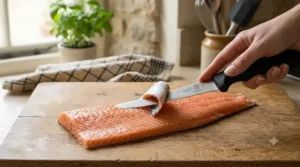
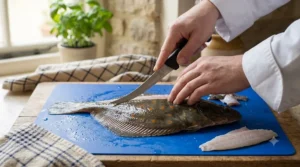
Skinning is arguably the task flexible filleting knives are most specifically built for, and it rewards a slightly different set of priorities than filleting itself. You want a thin flexible knife for skinning fish that can be angled almost parallel to the cutting board, with the blade’s flex letting you follow the skin’s contour while applying a gentle sawing motion rather than pressing straight down. A fine, sharp tip — like that on the Victorinox Fibrox Filleting Knife — helps you get the initial cut started at the tail without tearing the flesh.
A genuine fish skinning knife benefits from full or near-full flex rather than the stiffer semi-flex blades favoured for boning, since the goal is following a curved, moving surface rather than pushing through resistant tissue. Reviewers of both the Victorinox and Dexter-Russell models specifically mention skinning as a strength, with one aggregated review describing the process as producing “clean fillets” with minimal wastage of flesh left attached to the skin — a genuine measure of how well a blade performs this specific task.
Common Mistakes When Buying a Flexible Filleting Knife
The most frequent mistake is buying based on price alone without checking the flex rating, ending up with either an overly floppy blade for meat trimming or an overly stiff one for delicate fish. A close second is ignoring blade length relative to the fish typically being processed — a 15cm blade struggles with a large salmon in a single pass, while a 21cm blade feels unwieldy on small mackerel. Buyers also frequently overlook handle material until they’re standing at a fillet table with genuinely slippery hands, at which point a textured-but-hard handle can feel actively unsafe compared with a soft-grip alternative.
Finally, many first-time buyers assume all “German steel” or “Japanese steel” branding implies premium quality, when in practice steel type matters far less than the specific alloy, hardness rating and grinding process behind it — a budget knife using genuine high-carbon steel, like the SHAN ZU above, can outperform a poorly finished blade using nominally premium steel from a less careful manufacturer.
Long-Term Cost & Maintenance
A £25 budget knife that needs replacing every 18 months due to edge degradation or handle wear can end up costing more over five years than a £70 forged blade that’s still going strong. Rough maintenance costs are broadly similar across this list — a decent whetstone runs around £15-£30 as a one-off purchase, and honing rods are typically under £15 — but the frequency of professional resharpening differs. Softer steels around 53-56 HRC (Mercer, F. Dick) may need a proper sharpening session every two to three months with regular use, while harder steels around 58-62 HRC (Wüsthof, SHAN ZU) can often stretch to four to six months between full sharpenings, provided you hone regularly in between.
Total cost of ownership also depends on how the handle survives contact with fish oils and repeated washing. Santoprene and POM handles (Mercer, Wüsthof, Rockingham Forge) tend to resist degradation better over years of use than softer rubberised grips, which can occasionally perish or discolour after extended exposure to sun or repeated hot-water washing.
Safety, Regulations & Buying Knives Online in the UK
Buying any fixed-blade knife online in the UK involves legal requirements worth understanding before you order. Under current legislation, selling and delivering knives to under-18s is illegal, and reputable retailers will run age verification at both the point of sale and point of delivery — expect to provide ID or confirm your age if buying any of the knives featured in this guide. Carrying a fixed-blade filleting knife in public without good reason can also fall foul of the law, so transport yours in a sheath, in your kit bag, and only when you have a genuine reason to have it with you, such as travelling to or from a fishing trip.
Food safety matters just as much as legal compliance. When processing raw fish at home, always wash your hands and equipment thoroughly between handling raw fish and any ready-to-eat food, and use a separate chopping board where possible to avoid cross-contamination. This isn’t just good practice — it’s the single biggest factor in preventing foodborne illness in a home kitchen, and a sharp, well-maintained flexible filleting knife actually helps here, since a dull blade requires more force and increases the risk of slips and cuts.
Features That Actually Matter (And Those That Don’t)
Genuinely important: blade flex rating matched to your primary use, steel hardness and its trade-off against ease of sharpening, and handle grip security in wet conditions. These three factors determine whether a knife performs well for your specific tasks far more reliably than brand name alone.
Largely marketing noise: exotic-sounding steel names without a stated hardness figure, “Damascus pattern” finishes on budget knives (the pattern is often laser-etched rather than genuinely forged, and etched patterns add nothing functionally), and elaborate gift-box packaging that adds cost without adding performance. If a listing leads with aesthetics and buzzwords rather than a hardness rating, blade length and flex description, treat that as a mild warning sign rather than a reason to avoid the knife outright — but check independent reviews before buying.
FAQ
❓ What is a flexible filleting knife used for?
❓ Is a flexible filleting knife the same as a boning knife?
❓ What blade length should I buy for a flexible filleting knife?
❓ Can you put a flexible filleting knife in the dishwasher?
❓ How often should you sharpen a flexible filleting knife?
Conclusion
There’s no single best flexible filleting knife for every buyer, and that’s really the honest takeaway from comparing seven genuinely different blades side by side. If you’re starting out or filleting occasionally, the SHAN ZU 7 Inch Fillet Knife or Rockingham Forge Boning/Filleting Knife deliver real performance without a premium price tag. If you want an all-rounder with wide UK availability and a proven track record, the Victorinox Fibrox Filleting Knife remains difficult to beat. Anglers working in genuinely wet, slippery conditions should look hard at the Dexter-Russell SofGrip Flexible Fillet Knife, while anyone processing fish regularly enough to justify the outlay will find long-term value in the WÜSTHOF Classic Flexible Fish Fillet Knife or the F. Dick ErgoGrip Semi-Flex Filleting Knife.
Whichever you choose, match the flex rating and blade length to what you’ll actually be cutting, keep it properly honed, and store it with care — a flexible filleting knife rewards good habits with years of clean, precise fillets.
✨ Don’t Miss These Exclusive Deals!
🔍 Take your fish prep to the next level with these carefully selected knives. Click on any highlighted product above to check current pricing and availability. The right blade will help you create authentic, restaurant-quality fillets your family will genuinely enjoy!
Recommended for You
- Best Boning Knife 2026: 7 Sharp Picks for Effortless Butchery
- Offset Bread Knife 2026: 7 Brilliant Picks Compared
- Serrated Bread Knife: 7 Best Picks for Crusty Loaves (2026)
Disclaimer: This article contains affiliate links. As an Amazon Associate, I earn from qualifying purchases. If you purchase products through these links, we may earn a small commission at no additional cost to you.
✨ Found this helpful? Share it with your friends! 💬🤗
