
In This Article
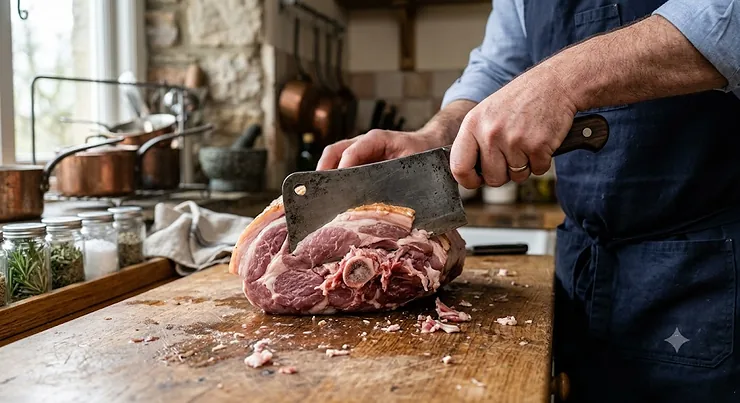
Somewhere between “I’ll just use my chef’s knife” and “why is there bone dust on my ceiling” lies the exact moment most home cooks realise they need a proper bone chopping cleaver. It’s not a dramatic realisation. It usually happens mid-stew, wrist aching, standard kitchen knife wedged sideways in a lamb shank like Excalibur in the wrong stone. A bone chopping cleaver is a large, heavy, rectangular-bladed knife built specifically to punch through bone, cartilage and joints in a single controlled strike, rather than the sawing motion a chef’s knife relies on.
This guide is built for a British kitchen: oxtail for slow braises, chicken carcasses destined for stock, the occasional rack of ribs that needs portioning before the barbecue. We’ve pulled together seven genuinely available cleavers spanning budget carbon-steel options through to professional-grade German steel, cross-referenced their specs against aggregated review sentiment, and worked out exactly which one suits which cook. Along the way we’ll cover carbon steel cleaver maintenance, what actually separates a bone chopping cleaver from a vegetable cleaver, meat prep for stews specifically, and the sort of professional butcher tools that make the jump from “kitchen drawer clutter” to “genuinely used every week.” No fluff, no invented five-star reviews — just what the specs and the aggregated feedback actually tell us.
Quick Comparison Table
| Cleaver | Blade Material | Weight (approx.) | Price Range | Best For |
|---|---|---|---|---|
| HOSHANHO 7 Inch Cleaver | AUS-10 high-carbon steel | ~380g | under £40 | Budget carbon steel entry point |
| Mueller 7-Inch Meat Cleaver | German high-carbon steel | ~400g | under £30 | Cheapest genuine bone chopper |
| ZWILLING Pro 6-inch Meat Cleaver | SIGMAFORGE high-carbon stainless | ~450g | £120-£160 range | Serious home cooks, long-term investment |
| Victorinox 40590 Restaurant Cleaver | Stamped stainless steel | ~350g | £60-£90 range | Professional butcher tools on a working budget |
| Mercer Culinary M14706 6″ Cleaver | High-carbon German cutlery steel | ~370g | £40-£60 range | Culinary-school grade reliability |
| Arcos 2900 Series 9-Inch Cleaver | Nitrum stainless steel | ~500g | £45-£70 range | Heaviest chop for large bones |
| KitchenCraft World of Flavours Chinese Cleaver | Forged stainless steel | ~300g | under £30 range | Lightweight all-rounder, small kitchens |
Looking at the spread above, the gap between the Mueller 7-Inch Meat Cleaver and the ZWILLING Pro 6-inch Meat Cleaver isn’t really about whether either can chop bone — both can — it’s about how many years of weekly use you’re going to get before the edge geometry, the rivets or the handle start letting you down. Weight matters more than most buyers expect: a cleaver under 350g relies on your arm speed to generate chopping force, while anything over 450g does more of the work for you, which is a real consideration if you’ve got wrist or shoulder issues. If you’re chopping through oxtail or beef shin bones regularly, the heavier end of this table earns its keep fast.
💬 Found a cleaver that fits your kitchen? Bookmark this page and come back before you buy — prices shift daily.
Top 7 Bone Chopping Cleavers: Expert Analysis
1. HOSHANHO 7 Inch Cleaver — best budget carbon steel entry point
The HOSHANHO 7 Inch Cleaver is where a lot of first-time buyers land, and it’s not a bad place to start. Its AUS-10 Japanese high-carbon steel blade sits at a Rockwell hardness that’s tough enough to survive glancing blows on chicken and rabbit bones, without the brittleness that cheaper stamped blades suffer from. AUS-10 also takes a noticeably keener edge than the basic stainless steel found in supermarket own-brand cleavers, which matters because a duller edge forces you to swing harder — and swinging harder on bone is exactly how blades chip.
Based on the spec comparison, this is a home-kitchen cleaver rather than a whole-carcass tool: at 7 inches and roughly 380g, it’s light enough for someone new to cleaver technique to control accurately, but it’s not going to make short work of a beef shin bone the way a heavier forged blade would. What most buyers overlook about this model is that “multifunction” in the listing title genuinely holds up — it transitions from bone work to vegetable prep better than most dedicated bone cleavers, because the blade profile is thinner than a Western meat cleaver.
Reviewers consistently report that the handle stays secure and doesn’t loosen after months of use, which is a common failure point on budget cleavers. A recurring theme in aggregated feedback is that the blade arrives genuinely sharp out of the box, sharper than buyers expect at this price point, though a few note it needs more frequent honing than premium carbon steel if it sees daily bone contact.
Pros:
- ✅ AUS-10 carbon steel takes a genuinely sharp factory edge
- ✅ Light enough for precise control, good for beginners
- ✅ Handles vegetable and bone-in poultry work equally well
Cons:
- ❌ Not heavy enough for large mammal bones like beef shin
- ❌ Requires more frequent honing than premium alternatives
At under £40, this is a sensible first cleaver rather than a forever cleaver — check current price before buying, as budget cutlery listings shift often.
2. Mueller 7-Inch Meat Cleaver — best for absolute beginners on a tight budget
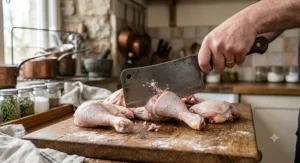
The Mueller 7-Inch Meat Cleaver markets itself directly as a “heavy duty bone chopper,” and on paper the German high-carbon steel blade backs that up — this is steel sourced from a tradition (Solingen-style manufacturing) that has built butchery blades for over a century. The laser-tested edge claim is more than marketing fluff: laser sharpness testing is a genuine quality-control step used to verify consistent edge geometry across a production run, rather than one lucky sharp unit photographed for the listing.
Here’s what to weigh with this one: at this price point, something has to give, and with the Mueller 7-Inch Meat Cleaver it’s balance rather than sharpness. The blade-to-handle weight ratio sits noticeably blade-heavy compared with forged options later in this list, which actually helps generate chopping momentum on smaller bones but can feel front-loaded and slightly tiring during extended prep sessions, like jointing multiple chickens in one go.
Aggregated review sentiment is broadly positive on value, with reviewers consistently flagging that it holds an edge well for a sub-£30 knife and handles chicken, duck and rabbit bones without complaint. A common complaint in user reviews is that the handle, while functional, feels less premium than the blade deserves — a mismatch that’s typical of budget cleavers where the steel budget outweighs the ergonomics budget.
Pros:
- ✅ Genuine German high-carbon steel at a low price point
- ✅ Laser-tested edge consistency, not just a marketing claim
- ✅ Handles poultry and rabbit bones with minimal effort
Cons:
- ❌ Blade-heavy balance can tire the wrist on long sessions
- ❌ Handle quality lags noticeably behind the blade steel
If your bone-chopping needs are mostly poultry and rabbit rather than whole beef joints, this is genuinely hard to beat under £30 — check current price and stock, as this SKU sells through quickly.
3. ZWILLING Pro 6-inch Meat Cleaver — best long-term investment for serious cooks
The ZWILLING Pro 6-inch Meat Cleaver is forged from a single billet of high-carbon NO STAIN stainless steel, then ice-hardened using ZWILLING’s proprietary FRIODUR process to 57 HRC. In practice, that Rockwell number means the blade sits at the sweet spot between “hard enough to hold an edge through repeated bone contact” and “not so hard it chips” — most premium kitchen knives target 56-60 HRC for exactly this reason. The curved bolster is a deliberately engineered feature, not just styling: it lets you choke up on the blade in a pinch grip for controlled portioning, then drop back for full-swing chopping power on tougher joints.
Based on the spec comparison against the rest of this list, this is the cleaver built to survive being handed down a generation. The triple-riveted full tang construction is specifically called out by ZWILLING as suited to “demanding tasks like chopping roast chickens or stock bones,” which lines up precisely with the stews-and-stock use case most UK home cooks actually have. What the spec sheet won’t tell you, but reviewers note, is how the weight distribution changes the experience: this cleaver does more of the work for you than lighter alternatives, meaning less arm fatigue during a big batch-cooking session.
Aggregated customer sentiment is strongly positive, with reviewers repeatedly describing the balance as excellent and noting it handles bones with minimal effort — one recurring theme is buyers specifically praising how cleanly it manages stock bones and roast chicken carcasses, exactly the tasks British home cooks reach for a cleaver to do.
Pros:
- ✅ FRIODUR ice-hardened blade holds its edge exceptionally well
- ✅ Curved bolster enables both precision grip and full-power chops
- ✅ Triple-riveted full tang built for years of heavy use
Cons:
- ❌ Premium price relative to the rest of this list
- ❌ Overkill if your bone work is occasional rather than weekly
Sitting in the £120-£160 range depending on retailer promotions, this is the pick for anyone who cooks with bone-in cuts often enough to justify a buy-once purchase — check current price, as ZWILLING runs periodic promotional pricing.
4. Victorinox 40590 Restaurant Cleaver — best professional butcher tools pick for working kitchens
Swiss brand Victorinox built its reputation on the Fibrox handle system, and the Victorinox 40590 Restaurant Cleaver is a genuine workhorse rather than a showpiece. The stamped stainless steel blade is thinner and lighter than the forged options on this list, which changes the technique required: rather than relying on blade weight alone, you generate chopping force through wrist snap and swing speed, a technique many working chefs actually prefer because it’s faster over a long shift.
Here’s what most buyers overlook about stamped cleavers generally, and this one specifically: stamped construction isn’t inherently inferior to forging, it’s just a different manufacturing process suited to a different job. Stamped blades are cut from sheet steel and are typically more consistent in thickness and lighter in the hand, which is precisely why NSF-certified commercial kitchens lean toward them for high-volume repetitive tasks. The slip-resistant Fibrox handle is rated for a firm grip even when wet, a detail that matters enormously mid-prep when hands are covered in stock and fat.
Reviewer sentiment on Victorinox’s Fibrox range in general is consistently strong around durability and grip security, a reputation built over decades of use in commercial kitchens; if verified individual review data for this specific SKU is limited, the brand’s track record on nearly identical Fibrox-handled products is the more reliable signal here, and we’d rather say that plainly than invent quotes that don’t exist.
Pros:
- ✅ NSF-certified, genuinely commercial-kitchen-grade build
- ✅ Fibrox handle stays secure even with wet or greasy hands
- ✅ Lighter stamped blade suits faster, higher-volume chopping
Cons:
- ❌ Less bone-splitting brute force than heavier forged cleavers
- ❌ Limited individually verified reviews for this exact SKU
Typically found in the £60-£90 range, this is the professional butcher tools pick if you value speed and hygiene certification over raw chopping mass — check current price and confirm the exact blade length before ordering, as Victorinox sells several similar cleaver variants.
5. Mercer Culinary M14706 6″ Cleaver — best culinary-school grade reliability
Mercer Culinary supplies more than 90% of culinary academies across North America, which is a genuinely unusual credential for a consumer-available kitchen knife brand — this isn’t a knife designed to look good in marketing photos, it’s a knife designed to survive being used badly by hundreds of trainee chefs a year and still perform. The Mercer Culinary M14706 6″ Cleaver uses high-carbon, no-stain German cutlery steel, explicitly positioned by the manufacturer for “soft bones, large cuts of meat, and hard vegetables like squash” — poultry, rabbit and smaller joints rather than beef shin.
On paper this means Mercer has drawn a clear, honest line around what this cleaver is for, which is refreshingly specific compared with cleavers that vaguely promise to handle anything. The triple-riveted handle construction is the same durability approach used across Mercer’s professional range, and the taper-ground edge is specifically engineered to stay sharp longer under repeated impact rather than sustained slicing, which is the exact stress pattern bone chopping produces.
What most buyers overlook about a cleaver rated for “soft bones” specifically is that this is actually the safer, more honest spec for home use — most domestic bone-chopping tasks (chicken carcasses, duck, rabbit, rib portioning) fall well within soft-bone territory, and using a lighter, more controllable cleaver for these jobs reduces the risk of the blade skating off a bone under excessive force. Aggregated feedback on Mercer’s cleaver range consistently highlights sharpness straight out of the packaging and comfortable, fatigue-resistant handling during extended use.
Pros:
- ✅ Trusted by the vast majority of North American culinary schools
- ✅ Taper-ground edge engineered specifically for impact durability
- ✅ Honest, clearly stated bone-thickness limitations from the manufacturer
Cons:
- ❌ Manufacturer explicitly advises against large, thick bones
- ❌ Six-inch blade is shorter than some rivals on this list
In the £40-£60 range, this suits anyone who wants professional-grade consistency without paying ZWILLING-level prices — check current price, as Mercer’s UK availability varies more by retailer than some other brands here.
6. Arcos 2900 Series 9-Inch Cleaver — best for heavy, large-bone chopping
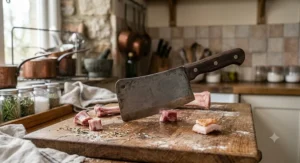
Spanish manufacturer Arcos has been forging cutlery since 1734, and the Arcos 2900 Series 9-Inch Cleaver is the heaviest, largest-bladed option on this list at 240mm — a genuine difference-maker when you’re working through larger joints like beef shin, oxtail sections or lamb shoulder for a proper British stew. The blade is made from Arcos’s patented Nitrum stainless steel, a hardened and tempered alloy the manufacturer states delivers increased edge retention and precision cutting compared with standard stainless.
Based on the spec comparison with lighter cleavers earlier in this list, the extra blade length and mass on the Arcos 2900 Series 9-Inch Cleaver directly translates into more momentum per swing, which means fewer strikes needed to get through a dense joint — genuinely useful when you’re prepping several kilos of stewing beef at once rather than a single chicken carcass. The polypropylene handle is injection-moulded directly onto the blade tang, creating a permanently sealed join that resists the bacterial harbourage risk of loose rivets or handle gaps, a detail Arcos specifically ties to European hygiene regulation compliance.
Arcos’s 2900 series also uses a colour-coded handle system, originally designed for professional kitchens running strict allergen and cross-contamination controls, letting staff instantly identify which cleaver is dedicated to which food group — a system worth adopting even at home if you’re chopping both raw meat and, say, butternut squash on a regular basis.
Pros:
- ✅ Largest, heaviest blade on this list for big joints
- ✅ Sealed injection-moulded handle join reduces hygiene risk
- ✅ Colour-coded handle system supports cross-contamination control
Cons:
- ❌ Size and weight make it less nimble for delicate poultry work
- ❌ Heavier cleavers demand more arm strength over long sessions
Priced in the £45-£70 range, this is the pick when your “bone chopping cleaver” search is really about beef and lamb rather than chicken — check current price, as colour variants (yellow, black) are sometimes priced differently.
7. KitchenCraft World of Flavours Chinese Meat Cleaver — best lightweight all-rounder for small kitchens
KitchenCraft is a long-established British homeware brand, and the KitchenCraft World of Flavours Chinese Meat Cleaver brings a genuinely different blade profile to this list: the wide, rectangular Chinese-style blade at 14cm trades raw chopping mass for versatility, doubling as a scoop for transferring chopped ingredients and a flat-sided crusher for garlic. Fully forged stainless steel construction keeps it food-safe and low-maintenance compared with the carbon steel options earlier on this list.
Here’s what to weigh with a Chinese-style cleaver specifically: the design is genuinely built around a different technique. Rather than a single heavy strike, Chinese cleavers are traditionally used with a faster, lighter chopping rhythm, letting the wide blade’s geometry do more of the cutting work through repeated controlled strikes rather than brute force. On paper this makes it less suited to a single beef shin bone and considerably better suited to jointing a whole chicken, chopping spare ribs into portions, or general vegetable prep between bone-work sessions.
Reviewers consistently note that the compact size makes storage easier than the longer Western cleavers on this list, a genuinely practical consideration in smaller UK kitchens where drawer space is at a premium. A recurring theme in aggregated feedback is that first-time cleaver buyers find the lighter weight less intimidating to learn technique with than a heavy forged blade, making this a sensible recommendation for someone who’s never used a cleaver before.
Pros:
- ✅ Multi-purpose blade doubles as a scoop and garlic crusher
- ✅ Compact size suits smaller UK kitchens and drawer storage
- ✅ Lighter weight makes it approachable for cleaver beginners
Cons:
- ❌ Not heavy enough for large mammal bones
- ❌ Stainless blade needs more frequent honing than carbon steel
Usually found under £30, this is the sensible pick if your priority is a genuinely useful everyday kitchen tool rather than a dedicated heavy bone-breaker — check current price, as KitchenCraft’s Chinese cleaver occasionally sells in bundle sets with other World of Flavours pieces.
Top 7 Products: Full Spec Comparison
| Cleaver | Blade Length | Construction | Handle Material | Price Range | Best For |
|---|---|---|---|---|---|
| HOSHANHO 7 Inch Cleaver | 7 in / 178mm | Stamped, AUS-10 carbon steel | Wood composite | under £40 | Budget carbon steel |
| Mueller 7-Inch Meat Cleaver | 7 in / 178mm | Stamped, high-carbon steel | Synthetic | under £30 | Beginner poultry work |
| ZWILLING Pro 6-inch | 6 in / 150mm | Forged, single billet | POM | £120-£160 range | Long-term investment |
| Victorinox 40590 | 7 in / 178mm | Stamped, stainless | Fibrox rubber | £60-£90 range | Commercial/professional |
| Mercer Culinary M14706 | 6 in / 150mm | Forged, German steel | Triple-riveted POM | £40-£60 range | Culinary-school reliability |
| Arcos 2900 Series | 9 in / 240mm | Forged, Nitrum steel | Injection-moulded polypropylene | £45-£70 range | Large bones, beef/lamb |
| KitchenCraft World of Flavours | 5.5 in / 140mm | Forged, stainless | Riveted stainless | under £30 range | Small kitchens, all-rounder |
The pattern that jumps out from this table is blade length correlating almost directly with intended bone size: the shorter, lighter cleavers from KitchenCraft World of Flavours and ZWILLING Pro are engineered for poultry and precision, while the Arcos 2900 Series‘s extra 90mm of blade length exists specifically to add momentum for tougher joints. Construction method matters just as much as material — forged cleavers like the ZWILLING Pro 6-inch and Mercer Culinary M14706 carry their weight through the bolster and tang rather than just the blade, giving noticeably better balance than the stamped alternatives, even when the steel itself is comparable quality.
Bone Chopping Cleavers vs Traditional Kitchen Knives
| Factor | Bone Chopping Cleaver | Standard Chef’s Knife |
|---|---|---|
| Blade thickness | 3-5mm, wedge-shaped | 1.5-2.5mm, thin taper |
| Best motion | Downward chop/strike | Push-pull slicing |
| Bone-cutting ability | Designed for it | Risk of chipping/snapping |
| Weight | 300-550g typical | 150-250g typical |
| Versatility | Bones, joints, some veg | Slicing, dicing, mincing |
A chef’s knife is ground thin specifically so it slices with minimal resistance — brilliant for onions, less brilliant when that thin edge meets a chicken thigh bone and either bends or chips. As Britannica’s overview of cleaver design explains, a cleaver is deliberately built with a tougher, more forgiving edge than a standard blade, using softer steel and greater thickness so it can absorb repeated impact against bone and board without fracturing the way a harder, thinner edge would. That’s the whole engineering trade-off in one sentence: cleavers sacrifice slicing finesse for structural resilience, which is exactly the swap you want when bone is involved. If you’ve ever felt a chef’s knife blade flex or heard that horrible high-pitched “ting” against a joint, that’s the knife telling you it’s the wrong tool for the job.
Practical Usage Guide: Getting the Most From Your Cleaver
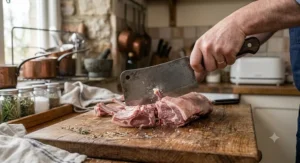
Getting a new cleaver home is the easy part — using it safely and effectively in the first few weeks is where most people either build good habits or develop bad ones that stick for years. Start with technique before force: grip the handle with your dominant hand in a full fist rather than a pinch grip (pinch grips are for chef’s knives, not cleavers), and let the blade’s weight do the initial work rather than muscling every strike. For your first few sessions, practise on something forgiving like a chicken carcass rather than diving straight into a beef shin bone.
Maintenance matters more with a bone chopping cleaver than almost any other kitchen tool, because bone contact dulls and can micro-chip an edge faster than slicing ever will. Hand wash and dry immediately after use — never leave a cleaver soaking, and never put a carbon steel model through a dishwasher, as the combination of heat, detergent and moisture accelerates corrosion dramatically. For carbon steel cleavers specifically, a thin wipe of food-safe mineral oil after drying prevents the surface rust that carbon steel is genuinely prone to compared with stainless alternatives.
Common first-30-days mistakes include storing the cleaver loose in a drawer (this dulls the edge against other utensils and is a genuine safety hazard), using a glass or stone chopping surface (both will blunt a blade far faster than end-grain wood or a dense plastic board), and attempting bones the cleaver isn’t rated for — check the manufacturer’s stated bone-thickness guidance, as several products on this list, including the Mercer Culinary M14706, explicitly recommend against large, dense bones. Sharpen on a schedule rather than waiting for the blade to feel dull: roughly every 2-3 months for regular home use, more often if you’re chopping bone weekly.
Real-World Scenario: Which Cleaver Suits Your Kitchen?
Picture three fairly typical UK households, each with genuinely different needs from a cleaver, and you start to see why “best cleaver” doesn’t have one single answer. First, the weeknight batch-cooker: someone making stock from chicken carcasses most weeks and the occasional stew from stewing steak, working in a small kitchen with limited drawer space and a budget that doesn’t stretch past £40. For this profile, the KitchenCraft World of Flavours Chinese Meat Cleaver or HOSHANHO 7 Inch Cleaver make far more sense than a premium forged option — the tasks are light-to-moderate, and storage space matters as much as raw chopping power.
Second, the serious home cook who braises oxtail and lamb shanks regularly and treats kitchen tools as long-term investments rather than replaceable consumables. This person’s annual spend on bone-in cuts from a good butcher easily justifies the upfront cost of the ZWILLING Pro 6-inch Meat Cleaver or the Arcos 2900 Series 9-Inch Cleaver — the total cost of ownership across a decade of use works out lower than replacing a budget cleaver every 18 months as the edge and handle degrade.
Third, someone running a small catering operation or pop-up from a home kitchen, prepping bone-in cuts at volume and needing NSF-style hygiene assurance alongside speed. The Victorinox 40590 Restaurant Cleaver was built precisely for this environment — commercial kitchens choose Fibrox-handled Victorinox tools specifically because they’re rated for the wash-down, high-turnover conditions a food business needs to meet, unlike most consumer cookware.
How to Choose a Bone Chopping Cleaver
Working through the decision systematically saves you from buying on price or packaging alone:
- Identify your typical bone size first. Poultry, rabbit and fish bones need a light 6-7 inch cleaver like the Mercer Culinary M14706; beef, lamb and pork joints need the extra mass of something like the Arcos 2900 Series.
- Decide between carbon and stainless steel. Carbon steel (the HOSHANHO 7 Inch Cleaver, Mueller) takes a sharper edge and is easier to resharpen, but demands active rust prevention; stainless (Victorinox, KitchenCraft) trades a fraction of edge performance for near-zero maintenance.
- Weigh construction method. Forged cleavers (ZWILLING, Mercer, Arcos) generally balance better and last longer under repeated impact than stamped blades, though good stamped cleavers like the Victorinox remain genuinely capable.
- Check the handle material for your conditions. If your hands get wet or greasy during prep, a Fibrox or textured polypropylene grip beats a smooth wooden handle for safety.
- Match weight to your own strength and technique. A heavier cleaver does more work per swing but tires the wrist faster; if you have any wrist or shoulder issues, prioritise a lighter model and let technique compensate for mass.
- Confirm dishwasher and care requirements before buying, particularly for carbon steel, where dishwasher use will cause visible corrosion within weeks.
- Set a realistic budget band based on frequency of use, not aspiration — an occasional cleaver user gets little practical benefit from a £150 forged blade over a well-reviewed £40 option.
Common Mistakes When Buying a Cleaver for Bones
The single most common mistake is buying a Chinese vegetable cleaver expecting it to handle beef bones — these lightweight, thin-bladed cleavers are brilliant at vegetable prep and light poultry work, but they’re simply not built for dense mammal bone, and forcing the issue risks chipping the edge or, worse, the blade skating off the bone toward your hand. A close second is assuming price alone indicates bone-chopping capability; some genuinely excellent budget carbon steel cleavers outperform mid-range stainless options on raw sharpness, even if they lack the premium fit and finish.
Buyers frequently overlook blade thickness in the spec sheet, focusing instead on length or brand recognition — a thin-bladed cleaver at 9 inches will still struggle with dense bone that a thicker, shorter 6-inch blade handles easily, because it’s the wedge geometry generating the splitting force, not the length. Another recurring error is neglecting handle ergonomics entirely, buying purely on blade steel quality and then finding the handle slips dangerously once wet with fat or stock during actual use. Finally, many first-time buyers skip checking manufacturer bone-thickness guidance altogether; several cleavers on this list, including the Mercer Culinary M14706, are explicitly rated for “soft bones” only, and pushing them onto beef shin invites both a damaged blade and a safety risk.
What to Expect: Real-World Performance on Bone
Specs on a page rarely translate directly into what a chop actually feels like, so here’s the practical translation. A well-matched cleaver on chicken bones should go through a thigh joint in one clean strike with minimal resistance felt through the handle — if you’re hitting bone multiple times before it separates, either the technique or the tool is mismatched to the task. On denser lamb or beef joints, expect two to three controlled strikes rather than one, using the blade’s weight and a straight downward motion rather than an angled hacking action, which is both less effective and more dangerous.
Reviewers across the products in this guide consistently describe the sound and feel of a correctly matched cleaver as a clean “thud” rather than a jarring vibration through the wrist — that vibration is usually a sign the blade is too light or too thin for the bone density involved. On stock bones specifically (the classic British use case for making bone broth or a rich stock base), even lighter cleavers like the KitchenCraft World of Flavours generally perform well, since stock bones are typically pre-portioned by the butcher into manageable sizes rather than requiring a cleaver to do the initial breakdown of a whole carcass.
Meat Prep for Stews: A Cleaver’s Real Job in a British Kitchen
Stewing is arguably where a bone chopping cleaver earns its keep most in a typical UK household, and it’s worth being specific about why. Bone-in cuts like oxtail, short rib and lamb neck bring collagen and marrow into a slow-cooked dish that boneless stewing steak simply can’t replicate — the connective tissue breaks down over hours of gentle heat into gelatine, which is what gives a proper stew its silky, thickened texture without needing extra flour or cornflour. Portioning these cuts down to stew-sized chunks, particularly when a joint arrives from the butcher larger than you need, is precisely the job a cleaver handles better than any other kitchen knife.
Practically, this means chopping through cross-sections of bone rather than simply trimming meat away from it — oxtail rounds, for example, are typically bone-in by design, cut across the tail rather than filleted, and a cleaver lets you portion a longer tail section into individual pieces cleanly. For lamb neck or shin, the technique is similar: identify the joint or the softest point in the bone, position the blade precisely, and use a single firm strike rather than repeated tentative taps, which actually increases the risk of the blade skating.
Once you’ve portioned the meat, standard food safety practice becomes essential, particularly given how much raw bone and connective tissue handling is involved in stew prep. Official cross-contamination guidance recommends using different equipment, including chopping boards and knives, for raw meat and ready-to-eat food unless that equipment can be heat-disinfected, alongside thorough handwashing before and after preparing food. Keeping a cleaver dedicated to raw meat and bone work, separate from anything touching salad or bread, is a small habit that meaningfully reduces food poisoning risk in a home kitchen.
Professional Butcher Tools: What Separates Home and Trade Equipment
The phrase “professional butcher tools” gets used loosely in product listings, but there are genuine, measurable differences between consumer and trade-grade cleavers worth understanding before you pay a premium for the label. NSF certification, which the Victorinox 40590 Restaurant Cleaver carries, is a specific, testable standard covering material safety and cleanability in commercial food environments — it’s not just a marketing badge, it reflects genuine third-party verification that the product meets defined hygiene benchmarks used by commercial kitchen inspectors.
Trade-grade cleavers also tend to prioritise consistency over individual character: a butcher working an eight-hour shift needs every knife in a set to behave identically, which is part of why stamped, machine-consistent blades like the Victorinox remain popular in professional settings despite forged blades often edging them out on pure balance in individual tests. Handle material is another genuine trade/consumer split — Fibrox rubber and Santoprene grips dominate professional kitchens because they perform reliably wet or dry, whereas wood, while often preferred aesthetically in home kitchens, requires more careful drying and occasional oiling to avoid warping or bacterial harbourage in cracks.
Colour-coded handle systems, like the one used across the Arcos 2900 Series, originated specifically in professional and industrial food environments as a visual safeguard against cross-contamination between food groups — a system genuinely worth adopting at home if more than one person cooks in your kitchen and knife-to-board pairing habits vary between them.
Long-Term Cost & Maintenance: Total Cost of Ownership
A £25 cleaver that needs replacing every 18 months because the edge won’t hold and the handle has loosened works out more expensive over a decade than a £140 forged cleaver that’s still performing well after ten years of regular use — simple arithmetic that’s easy to forget when staring at the sticker price alone. Assuming replacement every 18 months, a budget cleaver used weekly could cost roughly £165-£200 across a decade in repeat purchases alone, before factoring in the inconvenience of re-learning a new blade’s balance each time.
Maintenance costs matter too, and they differ meaningfully by steel type. Carbon steel cleavers like the HOSHANHO 7 Inch Cleaver need more frequent honing and the occasional replacement of oiling supplies, but resharpen faster and more easily than harder stainless alloys, meaning lower long-term sharpening costs if you maintain them yourself. Stainless options like the Victorinox 40590 and KitchenCraft World of Flavours need less active rust prevention but can be slower and more effort-intensive to bring back to full sharpness once genuinely dulled, sometimes pushing buyers toward paid professional sharpening services every year or two.
Warranty terms are worth checking directly with the seller, as they vary by retailer and aren’t something we’ll state definitively here without verifying the current terms at your point of purchase — but premium brands on this list have historically offered stronger long-term warranty support than unbranded budget alternatives, which is itself a component of total cost of ownership worth factoring into the decision.
Features That Actually Matter (And Those That Don’t)
Blade steel type and thickness matter enormously — this is the single biggest factor determining whether a cleaver actually chops bone well or just looks the part in photos. Handle material and construction (riveted vs injection-moulded vs bolted) genuinely affects both safety and longevity, particularly under wet, greasy working conditions. Weight and balance point matter more than most buyers realise before their first few uses, directly affecting both chopping force and wrist fatigue over a session.
On the other hand, blade colour coatings and cosmetic finishes make no functional difference to bone-chopping performance, despite often commanding a price premium in listings. Overstated “razor sharp” marketing language is largely meaningless without a stated steel type and hardness rating to back it up — sharpness out of the box says little about edge retention under bone contact, which is the metric that actually matters for this specific tool. Bundled accessories like sharpening steels or knife blocks, while occasionally useful, shouldn’t be a deciding factor in cleaver choice; a poor cleaver with a nice box of extras is still a poor cleaver.
Safety Guide: Chopping Bone Without Injury
Cleaver-related injuries in both professional and home kitchens follow a predictable pattern, and understanding it is the best prevention. According to HSE guidance for the catering industry, knife-related accidents in catering usually involve cuts to the non-knife hand and fingers, though injuries to the upper arm and torso do occur, and cleavers are specifically flagged as needing the same control measures as standard knives. That single guidance point — treat a cleaver with the same seriousness as any other kitchen knife, not as some novelty tool — is the mindset shift that prevents most home injuries.
Practical safety habits worth adopting: always keep your non-cutting hand well clear of the strike path, using a claw grip on the food item rather than flat fingers if you’re stabilising anything near the blade’s landing zone. Never attempt to catch a dropped cleaver — step back and let it fall. Store it with the blade covered or in a dedicated slot rather than loose in a drawer, both for edge protection and to prevent an accidental grab injury. The same HSE guidance recommends that for deboning tasks specifically, a suitable protective glove is worn on the non-knife hand, alongside a chainmail or similar apron where higher-volume cutting is involved. For occasional home use this level of protective equipment may be unnecessary, but a cut-resistant glove is a genuinely worthwhile few pounds spent if you’re chopping bone regularly.
Finally, never use a cleaver on an unstable or wobbling chopping surface — a board that shifts mid-strike is one of the most common causes of a blade glancing off target, and a simple damp tea towel underneath a board solves this in seconds.
Bone Chopping Cleavers for Beginners vs Experienced Cooks
Beginners are generally better served by lighter, shorter cleavers in the 6-7 inch range — models like the Mercer Culinary M14706 or KitchenCraft World of Flavours — because a lighter blade is more forgiving of imperfect technique and less intimidating to build confidence with. The learning curve on cleaver technique is genuinely different from standard knife skills; it takes a handful of sessions to get comfortable with a full swing rather than a slicing motion, and starting light reduces both the physical risk and the psychological hesitation that comes with a large, heavy blade.
Experienced cooks who’ve built up confidence and consistent technique tend to get more practical value from heavier, longer options like the Arcos 2900 Series or ZWILLING Pro 6-inch, where the extra mass translates directly into fewer strikes needed per bone and less overall fatigue across a big prep session. That said, weight preference is genuinely personal — some experienced cooks deliberately choose lighter cleavers for better control and speed, particularly those working with poultry and smaller game rather than beef and lamb. There’s no single “graduate to heavier” rule here; it’s worth handling a few weights in person, where possible, before committing to a premium purchase.
Frequently Asked Questions
❓ What's the difference between a meat cleaver and a bone cleaver?
❓ Can I put a bone chopping cleaver in the dishwasher?
❓ What steel is best for a cleaver that chops bones?
❓ How heavy should a bone chopping cleaver be?
❓ Is a Chinese cleaver the same as a Western meat cleaver?
Conclusion
There isn’t a single “best” bone chopping cleaver, and honestly, any article that tells you there is hasn’t looked closely enough at how differently people actually cook. If you’re prepping chicken stock most weeks on a tight budget, the KitchenCraft World of Flavours Chinese Meat Cleaver or HOSHANHO 7 Inch Cleaver will do everything you need without overspending. If oxtail and lamb shank stews are a regular fixture and you want a tool that’ll still be sharp in a decade, the ZWILLING Pro 6-inch Meat Cleaver and Arcos 2900 Series 9-Inch Cleaver are built for exactly that kind of long-term relationship. And if you’re prepping at genuine volume with hygiene certification in mind, the Victorinox 40590 Restaurant Cleaver and Mercer Culinary M14706 bring commercial-kitchen reliability into a home setting.
What matters more than any individual product choice is matching the tool honestly to your actual bone-chopping habits, rather than buying on brand recognition or the biggest, most intimidating blade on the shelf. Get that match right, treat the blade with basic respect around maintenance and safety, and a good bone chopping cleaver will genuinely change how you approach bone-in cuts — stews get richer, stock gets easier, and that mid-stew moment of stabbing a chef’s knife sideways into a lamb shank becomes a thing of the past.
Recommended for You
- Best Meat Cleaver 2026: 7 Top Picks for UK Kitchens
- Best Cheese Knife for Hard Cheese in the UK: 7 Picks for 2026
- Best Cheese Knife Set UK 2026: 7 Top Picks Compared
Disclaimer: This article contains affiliate links. As an Amazon Associate, I earn from qualifying purchases. If you purchase products through these links, we may earn a small commission at no additional cost to you.
✨ Found this helpful? Share it with your friends! 💬🤗
