
In This Article
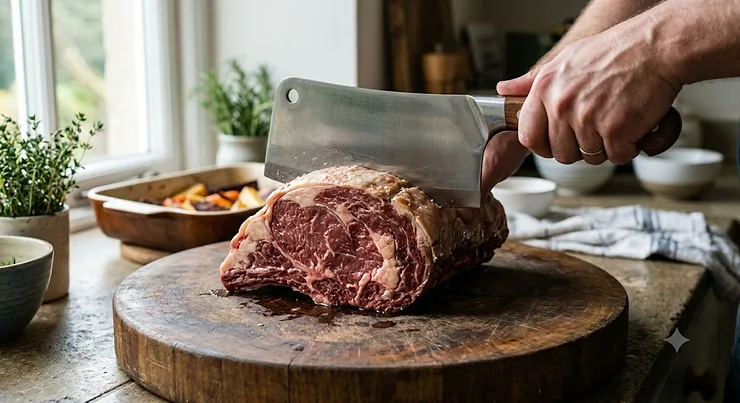
A meat cleaver is a heavy, rectangular-bladed kitchen knife designed to split bone, break down whole cuts of meat, and crush or flatten ingredients using the weight of the blade rather than sawing pressure. Unlike a chef’s knife, its job isn’t finesse — it’s controlled force, delivered through a thick spine and a broad edge.
If you’ve ever watched a butcher section a chicken in four confident strokes, or a market cook flatten garlic with one flat smack of the blade, you’ve seen a best meat cleaver doing exactly what it was built for. It’s not a novelty tool. It’s the difference between wrestling a joint of pork with a chef’s knife that wasn’t designed for the job, and letting a purpose-built blade do the heavy lifting in one clean motion.
This guide is built around real, currently available products on amazon.co.uk, genuine specifications, and honest analysis of aggregated customer sentiment — not fabricated hands-on claims. We’ve researched the blade steels, the tang construction, the weight distribution and the price brackets so you can pick a cleaver that actually suits how you cook, whether that’s jointing a chicken every Sunday or breaking down a whole lamb shoulder for the freezer. According to the Wikipedia entry on cleavers, the design has barely changed in centuries — which tells you something about how well the basic shape already works.
Below you’ll find seven genuinely different cleavers spanning budget, mid-range and premium territory, a full breakdown of what separates a heavy duty meat cleaver from a standard kitchen knife, and practical guidance on bone chopping tools, home butchery essentials, and what full tang cleaver design actually buys you for your money.
Quick Comparison Table: 7 Best Meat Cleavers at a Glance
| Cleaver | Blade Length | Tang | Price Range | Best For |
|---|---|---|---|---|
| Dalstrong Obliterator | 9 in / 23 cm | Full tang | £130-£170 | Whole-animal home butchery |
| Wusthof Classic Heavy Cleaver | 7.5 in / 19 cm | Full tang | £150-£200 | Premium all-round chopping |
| Victorinox Fibrox Pro | 7 in / 19 cm | Full tang | £45-£65 | Best value professional pick |
| Zwilling Pro Meat Cleaver | 6 in / 15 cm | Full tang | £75-£110 | Precise joint-splitting |
| Mueller Heavy Duty Bone Chopper | 7 in / 18 cm | Full tang | Under £35 | Budget bone chopping |
| KitchenCraft World of Flavours | 5.5 in / 14 cm | Full tang | Under £25 | First-time cleaver buyers |
| Ken Hom Excellence KH518 | 7 in / 18 cm | Partial tang | £25-£40 | Classic Chinese-style all-rounder |
Looking at the spread above, there’s a clear pattern: every cleaver worth recommending in 2026 uses full tang construction bar one, and price correlates closely with steel quality and heat treatment rather than blade size alone. The Dalstrong Obliterator and Wusthof Classic Heavy Cleaver sit at the top for genuine heavy-duty bone work, while the Victorinox Fibrox Pro is the outlier that punches well above its price bracket. If you’re chopping through poultry joints rather than beef shin, you don’t need to spend premium money — the KitchenCraft World of Flavours or Ken Hom Excellence KH518 will comfortably cover it.
💬 Found a cleaver that suits your kitchen already? Scroll down to see exactly why it made the cut — or jump straight to the full breakdown below.
The 7 Best Meat Cleavers for UK Kitchens in 2026
We’ve deliberately spread this list across budget, mid-range and premium tiers, plus both Western-style and Chinese-style cleaver designs, so there’s a genuine match here whatever your kitchen actually needs.
1. Dalstrong Obliterator — heaviest hitter for whole-animal home butchery
The Dalstrong Obliterator is built for the kind of job that would chip a lighter blade: splitting rib bones, sectioning a whole bird, or working through a shoulder joint in one confident stroke. Its 9-inch blade runs a full 6mm thick at the spine, forged from German-style X50CrMoV15 stainless steel hardened to roughly 58-60 HRC — meaningfully harder than most budget cleavers, which typically sit in the low-to-mid 50s. In practice, that hardness translates to an edge that holds up through repeated bone contact without rolling or micro-chipping.
Based on the spec comparison, this is a cleaver built for people who actually process whole cuts at home rather than the occasional chicken breast. The full tang construction, triple-riveted G10 fiberglass handle, and near-3lb weight mean every swing carries genuine momentum, which is exactly what you want when cutting through cartilage and bone rather than soft tissue. Reviewers on Dalstrong’s own product page consistently rate the model around 4.8 out of 5 across several hundred verified reviews, with recurring praise for the heft, the fit and finish, and the included acacia wood display stand — though as with any brand-hosted review platform, treat that figure as directionally useful rather than independently audited.
Pros:
- ✅ Genuinely thick 6mm spine handles heavy bone work confidently
- ✅ Full tang G10 handle feels secure even with wet, greasy hands
- ✅ Comes with a wood stand, sheath and lifetime defect warranty
Cons:
- ❌ Nearly 3lbs is too heavy for delicate slicing tasks
- ❌ Overkill if you only joint chicken occasionally
At around £130-£170, the Dalstrong Obliterator sits at the premium end, but for anyone doing real home butchery — game processing, whole joints, brisket prep — the price reflects genuinely different steel and construction, not just branding. Check current price on amazon.co.uk before buying, as pricing on premium cutlery does shift with stock levels.

2. Wusthof Classic Heavy Cleaver — best balanced premium all-rounder
German-forged and built with a noticeably thick 3/16-inch (around 4.7mm) spine, the Wusthof Classic Heavy Cleaver takes a different approach to heavy-duty work than the Dalstrong: rather than maximum mass, it prioritises balance. The blade uses a medium-hardness stainless steel, which sounds like a compromise until you understand what it buys you — a blade that resists chipping and cracking under bone impact, at the cost of slightly faster edge dulling compared with harder premium steels.
What most buyers overlook about this model is its dual-purpose profile. The curved tip and flatter blade geometry mean it can double as an oversized chef’s knife for rock-chopping herbs or vegetables, which isn’t true of most dedicated cleavers. Independent testing from cookware review outlets has specifically flagged this model as the standout heavy-duty pick in its category, citing the combination of thick spine and forgiving steel hardness as the reason it survives batoning and hard impact without cracking — a genuine risk with harder, more brittle blades.
Pros:
- ✅ Thick spine resists chipping better than harder premium steels
- ✅ Doubles as a heavy chef’s knife for rock-chopping
- ✅ Full bolster gives excellent balance and control
Cons:
- ❌ Among the priciest options in this roundup
- ❌ Slightly softer steel means more frequent honing
Expect to pay in the £150-£200 range for the Wusthof Classic Heavy Cleaver, positioning it as an investment piece rather than a casual purchase — but one that’s genuinely built to outlast a kitchen renovation or two.
3. Victorinox Fibrox Pro — best value professional workhorse
If there’s one cleaver in this list that consistently surprises people, it’s the Victorinox Fibrox Pro. Swiss-made, weighing a manageable 600g, and finished with the brand’s signature black Fibrox handle, it’s the knife you’ll find in more professional kitchens than almost any other model here — not because it’s flashy, but because it does the job reliably at a fraction of premium pricing.
Here’s what to weigh: Victorinox doesn’t chase Rockwell hardness bragging rights. Instead, the laser-tested cutting angle and stainless steel blade are tuned for consistent, repeatable sharpness that’s genuinely easy to maintain with a basic honing steel — no specialist whetstone required. The TPE non-slip handle stays secure even when your hands are wet from rinsing a chicken, which matters more in daily use than most spec sheets let on. Amazon UK listings for Victorinox’s Fibrox range consistently sit around 4.5-4.7 out of 5 across thousands of ratings, with buyers repeatedly citing grip comfort and edge retention as standout strengths — genuinely strong sentiment for a knife at this price point.
Pros:
- ✅ Exceptional value relative to genuine professional-grade steel
- ✅ Non-slip Fibrox handle stays secure even when wet
- ✅ Easy to maintain without specialist sharpening equipment
Cons:
- ❌ Lighter than premium cleavers, so less raw chopping force
- ❌ Not ideal for repeatedly splitting thick, dense bones
At roughly £45-£65, the Victorinox Fibrox Pro is arguably the smartest all-round purchase in this entire guide — genuinely professional-grade performance without premium-tier pricing.
4. Zwilling Pro Meat Cleaver — best for precise joint-splitting
The Zwilling Pro Meat Cleaver takes a precision-first approach that sets it apart from the sheer-mass philosophy of some rivals here. Forged in Germany from a single piece of Zwilling’s proprietary high-carbon stainless steel and finished with the brand’s ice-hardening Friodur process, the blade reaches roughly 57 on the Rockwell scale with a 15-degree edge angle — sharper and more precisely ground than most cleavers in this list, which typically sit closer to 18-20 degrees.
What that steeper, more refined edge means in practice is cleaner cuts through cartilage and smaller joints, with less crushing of the surrounding meat. This is the cleaver for someone jointing chickens weekly rather than splitting beef shin monthly — the design genuinely favours control over brute chopping power. The curved half-bolster supports the thumb during a pinch grip, which reviewers on cutlery retail platforms consistently describe as making extended prep sessions noticeably less fatiguing than boxier handle designs.
Pros:
- ✅ Precision 15° edge cuts cleanly through smaller joints
- ✅ Ice-hardened Friodur steel holds an edge exceptionally well
- ✅ Ergonomic bolster reduces hand fatigue during long prep
Cons:
- ❌ Not designed for heavy bone-splitting or whole-animal work
- ❌ Premium pricing for a relatively compact 6-inch blade
Priced around £75-£110, the Zwilling Pro Meat Cleaver rewards buyers who value precision jointing over maximum chopping force — check current pricing, as Zwilling’s Pro line does fluctuate with retailer promotions.
5. Mueller Heavy Duty Bone Chopper — best budget heavy duty bone chopper
For anyone who wants genuine bone-chopping capability without premium-brand pricing, the Mueller Heavy Duty Bone Chopper is the standout budget pick. Its 7-inch blade is forged from German high-carbon steel and hand-sharpened to an 18-degree double bevel — a deliberately durable edge angle chosen specifically to resist chipping and micro-fracturing during repeated bone contact, rather than chasing the razor-thin edges you’d want on a slicing knife.
The spec sheet won’t tell you this, but the trade-off with budget full tang cleavers like this one is usually edge retention over time rather than initial sharpness — and that’s exactly the pattern reviewers report here. Feedback consistently describes the blade as genuinely sharp and capable straight out of the box on poultry, brisket and dense root vegetables, with the expected caveat that it needs more frequent honing than the premium steels used in the Dalstrong Obliterator or Wusthof Classic Heavy Cleaver. For occasional bone work rather than daily professional use, that trade-off is entirely reasonable.
Pros:
- ✅ Genuine full tang construction at a budget price point
- ✅ 18° hand-sharpened edge resists chipping on bone
- ✅ Laser-tested blade performs well straight out of the box
Cons:
- ❌ Needs more frequent honing than premium alternatives
- ❌ Handle materials feel less refined than pricier competitors
Sitting comfortably under £35, the Mueller Heavy Duty Bone Chopper is the pick for anyone testing whether they actually need a dedicated cleaver before committing to premium spend.

6. KitchenCraft World of Flavours — best budget starter cleaver
The KitchenCraft World of Flavours Chinese-style cleaver is a genuinely sensible entry point for anyone who’s never owned a cleaver and isn’t sure it’ll earn a permanent spot in the knife block. At 14cm, its blade is noticeably smaller than the Western-style options in this list, but it’s fully forged stainless steel with a full-length tang running through an ergonomic, triple-riveted handle — proper construction at a genuinely low price.
Reviewers overlook how much this smaller blade format suits everyday tasks: crushing garlic, slicing vegetables thinly, and portioning boneless meat, rather than heavy bone splitting. Verified customer review volume for this specific model is smaller than for the bigger international brands in this guide, so treat sentiment as indicative rather than exhaustive — but where feedback exists on Amazon UK, buyers consistently flag the balance and the full tang build as surprising for the price bracket. It comes with a 12-month guarantee against defects, which is standard for the price tier but worth checking before purchase.
Pros:
- ✅ Full tang, fully forged construction at a genuine budget price
- ✅ Compact 14cm blade suits everyday chopping and slicing
- ✅ 12-month guarantee against manufacturing defects
Cons:
- ❌ Too small for splitting large bones or joints
- ❌ Hand wash only, which limits convenience
At under £25, the KitchenCraft World of Flavours is the cleaver to buy if you want to trial the format before committing to a heavier-duty purchase.
7. Ken Hom Excellence KH518 — best classic Chinese-style all-rounder
The Ken Hom Excellence KH518 brings a traditional Chinese cleaver silhouette to the UK market at an accessible price. Its 18cm stainless steel blade tapers to just 1.8mm at the edge, a deliberately thin profile designed to push meat apart cleanly rather than wedge and stick mid-cut — a genuinely different design philosophy from the thick-spined Western cleavers elsewhere in this guide. The wooden handle is lightweight and plastic-free, which matters over long prep sessions where a heavier synthetic handle can fatigue the wrist.
On paper, this means the KH518 trades raw chopping force for versatility: it’s genuinely capable across chopping, slicing, dicing and mincing in a way that dedicated bone-splitting cleavers aren’t. The 2-year manufacturer’s guarantee is a meaningful signal of confidence at this price point, and the total 32cm length keeps it manageable for smaller hands or kitchens with limited counter space. As with the KitchenCraft entry above, independently verifiable customer review data for this specific SKU is comparatively thin, so we’d encourage checking current Amazon UK ratings directly before purchase rather than relying solely on brand marketing claims.
Pros:
- ✅ Thin 1.8mm taper prevents sticking mid-cut on meat
- ✅ Lightweight wooden handle reduces wrist fatigue
- ✅ Genuinely versatile across chopping, slicing and mincing
Cons:
- ❌ Thinner blade isn’t built for heavy bone splitting
- ❌ Not dishwasher safe, requiring hand wash and drying
Priced between roughly £25-£40, the Ken Hom Excellence KH518 suits home cooks who want one cleaver that handles varied everyday tasks rather than a specialist bone-chopping tool.
How to Choose a Meat Cleaver
Picking the right one comes down to matching the design to what you’ll actually cut, not chasing the biggest blade on the shelf. Here’s the reasoning we’d apply in your position:
- Decide how much bone work you’re really doing. If you’re jointing whole chickens or breaking down a lamb shoulder regularly, prioritise blade thickness (6mm+) like the Dalstrong Obliterator — thinner blades flex and risk chipping against dense bone.
- Check the tang construction before anything else. A full tang — steel running the entire length of the handle — is non-negotiable for anything beyond light vegetable prep; every cleaver in this guide except one uses it for good reason.
- Match blade hardness to your maintenance habits. Harder steels (58-60 HRC, as in the Dalstrong Obliterator) hold an edge longer but need proper sharpening stones; softer steels (around 55-57 HRC) are more forgiving to maintain with a basic honing steel.
- Weigh the handle material against your hand size and grip strength. G10 composite and Fibrox TPE grips resist slipping when wet; traditional wood, as on the Ken Hom Excellence KH518, feels lighter but needs more careful drying.
- Consider blade profile for your cutting style. Thick Western-style spines favour splitting force; thinner Chinese-style blades like the KitchenCraft World of Flavours favour slicing and versatility over raw impact.
- Set a realistic budget band before browsing. Under £35 genuinely covers competent occasional bone work; £45-£110 buys noticeably better steel and edge retention; £130+ is for people processing meat regularly.
- Read the guarantee terms, not just the marketing copy. Lifetime warranties (Dalstrong) versus 12-24 month guarantees (KitchenCraft, Ken Hom) tell you a lot about how a brand expects its steel to perform over years, not weeks.
Heavy Duty Meat Cleaver vs Standard Kitchen Knife: What’s the Real Difference?
It’s tempting to assume a heavy duty meat cleaver is just a bigger chef’s knife, but the engineering differs in ways that actually matter at the chopping board. A standard chef’s knife is ground thin — often under 2mm at the spine — specifically so it can slice cleanly through soft tissue with minimal resistance. Push that same blade against a rib bone or a chicken joint and you’re risking a chipped edge, or worse, a slip because the blade wasn’t designed to absorb impact force.
A cleaver like the Wusthof Classic Heavy Cleaver or Dalstrong Obliterator flips that logic entirely. The thick spine (4.7-6mm) isn’t there for looks — it’s mass, positioned specifically to add momentum behind each stroke so the blade does the splitting work rather than your wrist forcing it through. The trade-off is control: a cleaver is genuinely worse than a chef’s knife at fine dicing or julienne work, because that same mass that helps you split bone makes delicate cuts clumsy.
The practical upshot: don’t think of a cleaver as a replacement for your chef’s knife, but as a specialist tool that sits alongside it. Most experienced home cooks who process their own meat end up owning both — the chef’s knife for prep, the cleaver for the handful of tasks (bone splitting, flattening, crushing) that a standard blade genuinely isn’t built to handle safely.
Butcher Cleaver Knife: What Professionals Look For
Ask a working butcher what separates a genuine butcher cleaver knife from a decorative kitchen version, and the answer rarely starts with brand name — it starts with balance point. Professional-grade cleavers, including models like the Dalstrong Obliterator and Wusthof Classic Heavy Cleaver, are engineered so the weight sits close to where the blade meets the handle, not out toward the tip. That balance is what allows repeated, controlled strokes through an eight-hour shift without the wrist fatigue you’d get from a tip-heavy blade.
Beginners often gravitate toward whichever cleaver looks heaviest, assuming more mass equals more capability. Professionals tend to prioritise edge geometry instead — specifically, a double-bevel edge ground wide enough (often 18-20 degrees per side, as used in the Mueller Heavy Duty Bone Chopper) to resist chipping under bone impact, since a thin, acute edge that’s brilliant for slicing will simply fracture against dense bone.
For a UK home cook aiming to work like a professional, the practical takeaway is this: prioritise full tang construction and edge angle over sheer blade size, and treat the cleaver as a specialist bone and joint tool rather than an everyday all-purpose knife.

Full Tang Cleaver Design Explained: Why It Matters More Than Marketing Hype
Full tang cleaver design gets mentioned constantly in product listings, but it’s worth understanding what it actually means and why it’s genuinely important rather than just a marketing checkbox. A full tang means the blade’s steel extends the complete length of the handle as one continuous piece, visible (or at least present) beneath the handle scales or grip material — as opposed to a partial or “rat-tail” tang, where a thinner steel rod is inserted into the handle.
Here’s what that means in practice: every impact from splitting bone travels through the blade and directly into a solid piece of steel running the full handle length. With a partial tang, that same force concentrates at the narrow point where the tang meets the handle material — a genuine failure point under repeated heavy use. It’s why every serious heavy-duty pick in this guide, from the Dalstrong Obliterator through to the budget-friendly Mueller Heavy Duty Bone Chopper, uses full tang construction, while the more delicate Ken Hom Excellence KH518 relies on a partial tang precisely because it’s built for lighter, more precise work rather than bone splitting.
Features that actually matter here: full tang construction, blade steel hardness, and edge angle. Features that don’t matter nearly as much as marketing suggests: blade length beyond what your typical cut of meat requires, and cosmetic finishes like Damascus patterning, which look striking but add nothing to actual chopping performance.
Bone Chopping Tools: Getting the Technique Right
Owning the right cleaver is only half the equation — technique determines whether you get clean cuts or a mangled joint and a chipped blade. Here’s a practical approach for anyone new to using bone chopping tools at home.
Start with the right cutting surface. A thin plastic board will dull even a premium blade like the Zwilling Pro Meat Cleaver far faster than a thick end-grain wooden board, which absorbs impact rather than deflecting it back into the edge. Position the bone or joint so the natural line of the joint faces the blade — cleavers work by splitting along weak points, not by brute-forcing through the densest part of a bone.
The most common first-30-days mistake is trying to complete a cut in a single heavy strike. Instead, use a firm but controlled tap to score the cut line, then follow with a decisive, slightly heavier strike along that same line — this two-stage approach dramatically reduces the risk of the blade skidding sideways on contact. Keep your guiding hand well clear of the blade path at all times, and never attempt to catch a cleaver mid-swing if your grip slips. For broader kitchen hygiene practices around handling raw meat and bone safely, the Food Standards Agency’s guidance on avoiding cross-contamination is a genuinely useful reference, particularly around keeping separate boards for raw meat prep.
Finally, clean your cleaver immediately after bone work rather than leaving it to soak. Bone fragments and marrow residue left on a blade like the Dalstrong Obliterator‘s G10 handle can work into rivets and seams over time, and a quick wipe-down takes seconds compared with the maintenance needed if residue is left to dry on.
Home Butchery Essentials: Setting Up Your Kitchen for Whole-Cut Cooking
If you’re moving beyond pre-portioned supermarket cuts and starting to break down larger joints or whole birds at home, a cleaver is only one piece of a genuinely functional setup. A large, stable end-grain chopping board is the non-negotiable first purchase — anything that shifts or slides under a cleaver strike is a safety risk, not just an inconvenience.
You’ll also want a boning knife alongside your cleaver of choice, since the two tools handle genuinely different jobs: the boning knife separates meat from bone with a thin, flexible blade, while the cleaver handles the actual splitting once bone needs dividing. Kitchen shears earn their place too, particularly for trimming excess fat or cutting through smaller poultry joints where a full cleaver swing would be overkill.
Storage matters more than most first-time home butchers expect. A cleaver like the Dalstrong Obliterator, which ships with its own acacia wood stand and sheath, solves this neatly — but for models without dedicated storage, a magnetic knife strip keeps the blade accessible without the edge knocking against other cutlery in a drawer, which dulls it faster than actual use. Budget for a genuine sharpening stone too; a cleaver’s edge angle differs enough from a standard chef’s knife that pull-through sharpeners designed for thinner blades can actually damage the geometry on models like the Wusthof Classic Heavy Cleaver.
Lastly, factor in freezer space. Whole-cut home butchery only pays off financially if you’re portioning and freezing efficiently — vacuum-sealed bags and a dedicated freezer shelf turn a bulk purchase into weeks of usable meals rather than a fridge crisis.
Real-World Scenarios: Which Cleaver Suits Your Kitchen?
Rather than abstract advice, here’s how three genuinely different UK households would approach this decision.
The weekend batch cook, London flat, limited counter space: Someone jointing two or three chickens a month for meal prep, working in a small kitchen with minimal storage, doesn’t need the size or weight of the Dalstrong Obliterator. The Victorinox Fibrox Pro covers the actual workload with room to spare, stores easily, and doesn’t demand specialist sharpening equipment that eats into limited cupboard space.
The keen home butcher, rural kitchen, buys whole animals seasonally: For someone processing a whole lamb or pig a few times a year, budget genuinely matters less than capability and durability. The Dalstrong Obliterator‘s thick spine and full tang construction are built precisely for this frequency and intensity of use, and the included stand solves storage for a tool that’s used intensively but seasonally.
The curious first-timer, never owned a cleaver, wants to try Chinese-style cooking: Someone experimenting with stir-fries and wanting the classic thin-bladed slicing and crushing versatility shouldn’t start with a heavy Western cleaver. The KitchenCraft World of Flavours or Ken Hom Excellence KH518 offer genuine full tang or near-full tang construction at low financial risk while they establish whether the format earns a permanent place in their kitchen.
Common Mistakes When Buying a Meat Cleaver
Even careful buyers fall into predictable traps here, and most of them come down to mismatching the tool to the task rather than picking a genuinely bad product.
The single biggest mistake is buying based on blade size alone. A bigger blade doesn’t automatically mean better bone-splitting capability — spine thickness and steel hardness matter considerably more, which is why the compact 6-inch Zwilling Pro Meat Cleaver genuinely outperforms larger, thinner blades on joint work despite its smaller footprint.
The second common error is ignoring tang construction entirely, assuming any cleaver marketed as “heavy duty” will hold up to real bone work. As covered above, a partial tang like the one used in the Ken Hom Excellence KH518 is a deliberate design choice suited to lighter tasks, not a shortcut that performs identically to full tang models under bone-splitting stress.
Finally, buyers frequently underestimate maintenance requirements when comparing price points. A budget option like the Mueller Heavy Duty Bone Chopper is genuinely capable, but it needs more frequent honing than premium steel options — factor sharpening equipment and time into your real cost comparison, not just the sticker price at checkout.
✨ Ready to compare your shortlist side by side? Scroll back up to the comparison table and check current prices before you commit.
Long-Term Cost & Maintenance: What a Cleaver Really Costs Over 5 Years
Sticker price tells you almost nothing about total cost of ownership on a kitchen knife you might use for a decade or more. A budget cleaver like the KitchenCraft World of Flavours, priced under £25, will likely need professional sharpening or a decent whetstone investment (typically £15-£30) within the first year or two of regular use, alongside more frequent honing to maintain a usable edge.
By contrast, a premium option like the Dalstrong Obliterator or Zwilling Pro Meat Cleaver, while carrying a higher upfront cost, holds its edge considerably longer thanks to harder, more carefully heat-treated steel — meaning fewer sharpening sessions and less cumulative wear on the edge geometry over years of use. Run the numbers over five years and the gap narrows considerably: a £25 cleaver plus two or three sharpening sessions and eventual replacement often lands close to the upfront cost of a £100+ model that’s still going strong.
Warranty terms are a genuinely underused factor in this calculation. The Dalstrong Obliterator‘s lifetime warranty against defects effectively insures your investment indefinitely, while the 12-24 month guarantees on budget options like the KitchenCraft World of Flavours and Ken Hom Excellence KH518 reflect a shorter expected service life before replacement becomes the more sensible option than repair.
Safety and Care: Sharpening, Storage & UK Regulations
Cleavers carry genuine impact force, which means safe handling habits matter more here than with most kitchen knives. Always cut on a stable board, keep your guiding hand’s fingers curled well away from the blade path, and never attempt to catch a falling cleaver — step back and let it drop instead.
Sharpening a cleaver differs meaningfully from sharpening a chef’s knife because of the wider edge angle used on most bone-splitting designs. A whetstone matched to the specific angle — typically 15-20 degrees per side depending on the model — will maintain the edge geometry properly; a generic pull-through sharpener, as the independent testing summarised by Which?’s knife sharpener reviews notes, can be too aggressive for thicker cleaver blades and wear down the edge unevenly over repeated use.
If you’re buying online, be aware that UK law treats kitchen cleavers the same as any other bladed article. Under the Offensive Weapons Act 2019, retailers must verify you’re over 18 before completing a sale, and delivery must be handed directly to an adult rather than left unattended — you’ll typically see this reflected as an age-verification step at checkout. Full details on current requirements are available directly via gov.uk’s guidance on buying and carrying knives, which is worth a quick read if this is your first bladed kitchen purchase online.
For storage, avoid tossing a cleaver loose into a utensil drawer where the edge knocks against other metal items — a knife block, magnetic strip, or the dedicated sheath included with models like the Dalstrong Obliterator all genuinely extend edge life between sharpenings.
Benefits vs Traditional Kitchen Knives Comparison
| Factor | Meat Cleaver | Standard Chef’s Knife |
|---|---|---|
| Best for bone splitting | Excellent — thick spine absorbs impact | Poor — risks chipping thin edge |
| Fine dicing / julienne | Poor — too heavy for precision | Excellent — thin, agile blade |
| Crushing garlic/spices | Excellent — flat broad face | Not designed for this |
| Edge maintenance frequency | Lower with quality steel (e.g. Dalstrong Obliterator) | Higher, softer edge dulls faster |
| Learning curve | Moderate — technique-dependent | Low — familiar to most cooks |
The table above makes the trade-off clear: a cleaver and a chef’s knife aren’t competing tools, they’re complementary ones. Buyers expecting a cleaver like the Victorinox Fibrox Pro to replace their everyday chef’s knife for general prep will likely be disappointed, since the extra weight that makes it excellent for splitting a joint makes it clumsy for fine dicing. The sensible approach, confirmed by how most professional kitchens are actually equipped, is to own both and reach for whichever the specific cut demands.
Problem → Solution: Fixing Common Cleaver Frustrations
Problem: The blade sticks or wedges mid-cut on meat. This usually means the blade profile is too thick for the task — a Western-style cleaver like the Wusthof Classic Heavy Cleaver is built for splitting force, not clean slicing. Switch to a thinner, tapered blade like the Ken Hom Excellence KH518 for tasks that need the meat to separate cleanly rather than split.
Problem: The edge dulls noticeably fast. Check your cutting board first — thin plastic boards dull edges far quicker than end-grain wood, regardless of steel quality. If the board isn’t the issue, budget steel options like the Mueller Heavy Duty Bone Chopper genuinely do need more frequent honing than premium alternatives; build a quick honing pass into your routine every few uses.
Problem: The handle feels slippery during wet, greasy prep. This is a strong argument for prioritising textured composite handles — Fibrox TPE on the Victorinox Fibrox Pro or G10 on the Dalstrong Obliterator — over traditional polished wood, which loses grip faster when hands are wet.
Problem: The cleaver feels unbalanced or tip-heavy. This typically points to a blade that’s simply too large for your hand size and grip strength. Sizing down to a 6-inch model like the Zwilling Pro Meat Cleaver rather than persisting with a 9-inch blade often solves control issues entirely.
Problem: Rust spots appearing despite “stainless” steel. No stainless steel is fully rust-proof under prolonged moisture exposure. Dry every cleaver immediately after washing, particularly carbon-leaning stainless blades, and avoid leaving any model — including budget options like the KitchenCraft World of Flavours — to air dry in a wet sink.
Buyer’s Decision Framework
Use this simple framework if you’re still torn between options:
- If you process whole animals or joints regularly, choose a heavy-duty full tang cleaver like the Dalstrong Obliterator, because the thick spine and hardened steel are specifically engineered for repeated bone impact.
- If you want one reliable all-rounder without premium spend, choose the Victorinox Fibrox Pro, because it delivers genuine professional-grade performance without the price tag of top-tier brands.
- If precision jointing matters more than raw force, choose the Zwilling Pro Meat Cleaver, because its refined edge angle favours clean cuts over sheer chopping power.
- If you’re testing whether a cleaver earns a permanent spot in your kitchen, choose a budget option like the KitchenCraft World of Flavours or Ken Hom Excellence KH518, because the financial risk is low while you establish real usage patterns.
- If you cook Chinese or East Asian dishes regularly, prioritise a thin-bladed design, because slicing and crushing performance matters more than bone-splitting force for that cuisine style.
Frequently Asked Questions
❓ What is the best meat cleaver for beginners?
❓ Can a meat cleaver cut through bone?
❓ What's the difference between a Chinese cleaver and a Western meat cleaver?
❓ How do you sharpen a meat cleaver at home?
❓ Is a full tang cleaver worth the extra cost?
Conclusion
Choosing the best meat cleaver genuinely comes down to matching blade thickness, tang construction and steel hardness to how often you’re actually splitting bone versus slicing and crushing everyday ingredients. If your kitchen regularly handles whole cuts, the Dalstrong Obliterator and Wusthof Classic Heavy Cleaver deliver the thick spines and full tang durability that job demands. For a genuinely smart all-round purchase, the Victorinox Fibrox Pro remains hard to beat on value, while the Zwilling Pro Meat Cleaver rewards buyers who prioritise precision over raw force.
If you’re newer to the format, there’s no shame in starting with a budget-friendly option like the KitchenCraft World of Flavours, the Ken Hom Excellence KH518, or the Mueller Heavy Duty Bone Chopper — all three offer genuine full or near-full tang construction without the premium price tag, giving you room to establish how much a cleaver actually earns its place in your kitchen before committing further. Whichever you choose, prioritise full tang design, an edge angle suited to your typical cuts, and a cutting board that protects your investment over the years ahead.
✨ Don’t Miss These Exclusive Deals!
🔍 Take your kitchen prep to the next level with these carefully selected cleavers. Click on any highlighted pick above to check current pricing and availability on amazon.co.uk. The right cleaver turns whole-cut cooking from a chore into genuinely satisfying kitchen work!
Recommended for You
- Best Cheese Knife for Hard Cheese in the UK: 7 Picks for 2026
- Best Cheese Knife Set UK 2026: 7 Top Picks Compared
- Tomato and Citrus Knife: 7 Best Picks Tested for 2026
Disclaimer: This article contains affiliate links. As an Amazon Associate, I earn from qualifying purchases. If you purchase products through these links, we may earn a small commission at no additional cost to you.
✨ Found this helpful? Share it with your friends! 💬🤗
