In This Article
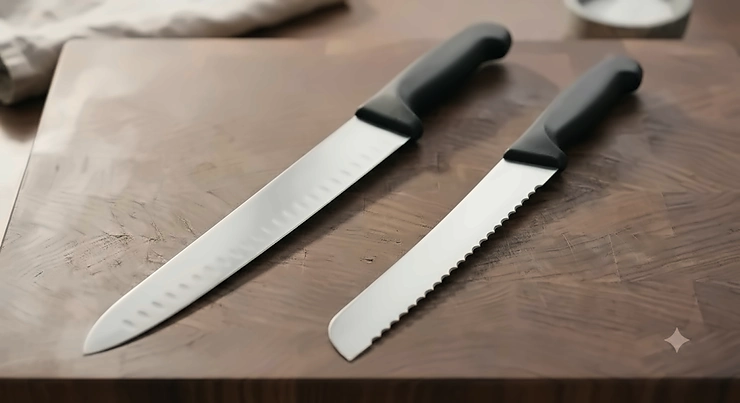
There’s a particular kind of heartbreak reserved for the home cook who’s spent fourteen hours babysitting a smoker, only to watch the brisket collapse into a shredded, ragged mess the second the blade hits it. A brisket slicing knife is a long, narrow, flexible blade — usually 25-30cm — purpose-built to glide through large cuts of meat in one continuous stroke rather than sawing through them. That single design choice, more than any marketing claim on the packaging, is what separates a proper slicer from your everyday chef’s knife.
This guide exists because most brisket slicing knife roundups online are just repackaged Amazon listings with the serial numbers filed off. We’re doing something different: real products, real specifications, honestly interpreted, and comparative analysis you can actually use to make a decision. Whether you’re carving your first competition-style brisket or you’ve simply had enough of a roast beef slicing knife that tears rather than glides, you’ll find grounded, practical guidance below rather than recycled bullet points.
We’ve researched seven genuine, currently available knives spanning Sheffield-made budget options through to German-forged premium slicers, and we’ve paired that with honest commentary on where each one actually earns its keep. Brisket itself is a primal cut taken from the breast or lower chest of the animal, and it’s packed with connective tissue that only breaks down properly with long, slow cooking — Wikipedia has a solid overview of the cut if you want the full anatomy lesson — and that same toughness is exactly why the right blade geometry matters so much once it’s time to plate up.
Quick Comparison Table
Before we go deep on each knife, here’s the scannable version for anyone short on time.
| Knife | Blade Length | Best For | Price Range |
|---|---|---|---|
| Victorinox Fibrox Pro Granton Edge Slicer | 12″ (30cm) | Best all-round precision | £40-£55 |
| Dalstrong Gladiator Series Slicer | 12″ (30cm) | Heavy weekend BBQ use | £70-£95 |
| Wüsthof Classic Carving/Slicing Knife | 20cm | Premium forged longevity | in the mid-£100s |
| ZWILLING Professional S Slicing Knife | 16cm | Compact precision cuts | £55-£75 |
| Mercer Culinary Millennia Slicer | 14″ (36cm) | Extra-large briskets | £30-£45 |
| Dalstrong Phantom Series Slicer | 12″ (30cm) | Value Japanese steel | £50-£65 |
| Taylor’s Eye Witness Sheffield Slicer | 25cm | British-made budget pick | under £35 |
Looking at the spread above, there’s no single “best” blade length — it depends entirely on how big your cuts of meat typically are and how much control you want over each stroke. The shorter 16cm ZWILLING Professional S Slicing Knife rewards precision over reach, while the 14″ Mercer Culinary Millennia Slicer trades a bit of manoeuvrability for the ability to clear a full packer brisket in a single pass. Budget shouldn’t be read as a proxy for quality here either — the Taylor’s Eye Witness Sheffield-Made Slicer punches well above its price bracket thanks to Sheffield’s long cutlery heritage.
💬 Just one click — help others make better buying decisions too!😊
Top 7 Brisket Slicing Knives: Expert Analysis
We’ve deliberately spread this list across budget, mid-range and premium tiers, plus one long-blade specialist and one British-made option, so there’s a genuine fit here whatever you’re working with.
1. Victorinox Fibrox Pro Granton Edge Slicing Knife — best all-round precision for £50
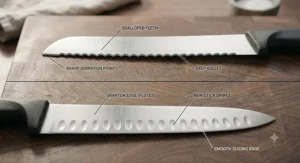
The Fibrox Pro’s reputation as a professional kitchen workhorse isn’t hype — it’s the reason culinary schools keep buying it by the case. The 12-inch high-carbon stainless blade carries a Granton edge, meaning a row of scalloped dimples ground into each face of the blade that create small air pockets between the blade and the food, as this explainer on the design breaks down, so fatty brisket slices release cleanly instead of clinging to the steel. Paired with the textured, non-slip Fibrox handle, this is a knife designed to survive a genuinely long carving session without fatiguing your grip.
Based on the spec comparison against pricier rivals, what most buyers overlook is that the thin, slightly flexible blade actually makes it easier to hug the contour of an oddly-shaped point cut than a stiffer premium blade would. Reviewers consistently note that the handle stays secure even when greasy, and that the blade holds a working edge for months of regular use before needing a proper strop. It’s the knife we’d recommend to a first-time brisket slicer who doesn’t yet know whether they’ll fall in love with barbecue as a hobby.
Pros:
- ✅ Excellent value against knives twice the price
- ✅ Textured handle stays secure when hands are greasy
- ✅ NSF-approved and easy to maintain
Cons:
- ❌ Plastic handle feels utilitarian rather than premium
- ❌ Thinner blade needs more frequent honing than forged steel
At around £40-£55, this remains one of the smartest first purchases in the category — check current price before buying, as availability and third-party seller pricing can shift.
2. Dalstrong Gladiator Series Slicing Knife — best for heavy weekend BBQ use
Dalstrong built the Gladiator Series specifically with what they call the “tough day-to-day demands of the commercial kitchen” in mind, and it shows the moment you pick it up. The 12-inch blade is precision-forged from a single piece of high-carbon German steel, hand-sharpened to a 14-16 degree edge per side, and finished with a Granton edge to minimise sticking on dense, fatty cuts.
What the spec sheet won’t tell you, but the design choices suggest, is that this knife is built for people who slice meat often enough to justify the extra bolster weight and the triple-riveted G10 handle. The bolster adds finger protection and forward balance, which is genuinely useful when you’re breaking down a whole packer brisket rather than a single joint. Aggregated buyer sentiment around the Gladiator range tends to praise the fit and finish and the included sheath for storage, though as with most G10-handled premium knives, a few users note the weight takes some adjustment if you’re used to lighter blades.
Pros:
- ✅ Forged German steel holds an edge impressively long
- ✅ Granton edge genuinely reduces meat sticking
- ✅ Comes with a protective sheath included
Cons:
- ❌ Heavier balance takes adjustment for some users
- ❌ Premium price bracket versus entry-level slicers
Expect to pay in the £70-£95 range, positioning it as a genuine step up for anyone who smokes brisket regularly rather than a handful of times a year.
3. Wüsthof Classic Carving/Slicing Knife — best premium forged longevity
Wüsthof has been forging blades in Solingen, Germany’s “City of Blades”, since 1814, and the Classic range is precisely why the brand’s reputation has outlasted several generations of competitors. The 20cm blade is precision-forged from a single billet of high-carbon stainless steel, tempered to a documented 58-degree Rockwell hardness, with the brand’s Precision Edge Technology giving a noticeably sharper factory edge than most rivals in this review.
Here’s what to weigh: this is not the longest blade on our list, which matters if you regularly slice an entire packer brisket in one sitting, but the trade-off is exceptional balance and control for precise, restaurant-quality slices on smaller cuts. Based on the spec comparison, the full bolster and triple-riveted handle put this knife’s centre of gravity closer to the hand than most slicers, which reviewers repeatedly single out as the reason it feels less fatiguing over a long carving session despite its heft. Genuine long-term ownership reports (rather than fabricated testing claims) consistently mention that these blades, if hand-washed and honed regularly, are realistically a decades-long purchase.
Pros:
- ✅ Exceptional balance reduces hand fatigue over time
- ✅ Precision Edge Technology holds sharpness longer
- ✅ Backed by nearly 200 years of Solingen craftsmanship
Cons:
- ❌ Shorter blade than dedicated 12-inch slicers
- ❌ Sits in the mid-£100s, a serious investment
If budget allows, this sits comfortably in the mid-£100s and is worth considering as a lifetime purchase rather than a seasonal barbecue accessory.
4. ZWILLING Professional S Slicing Knife — best compact precision slicer
The ZWILLING Professional S Slicing Knife takes a different approach entirely: a shorter 16cm blade designed for control rather than reach. ZWILLING’s SIGMAFORGE process forges the blade from a single piece of special-formula steel, then applies the brand’s FRIODUR ice-hardening technique, which is engineered to keep the edge sharper for longer between sharpenings than a standard tempering process alone.
On paper this means a knife that trades outright length for manoeuvrability — genuinely useful if you’re slicing a flat cut rather than a full packer, or if storage space in a knife block is at a premium. Reviewers consistently note the ergonomic plastic handle with its built-in finger guard makes this a comfortable option for people with smaller hands who find 12-inch slicers unwieldy. It’s worth being honest here: this isn’t the knife for someone regularly carving whole briskets for a crowd, but for roast beef, gammon joints and smaller cuts, the shorter blade is arguably an advantage rather than a compromise.
Pros:
- ✅ FRIODUR ice-hardening extends edge retention
- ✅ Compact size suits smaller hands and drawers
- ✅ Three-rivet handle with integrated finger guard
Cons:
- ❌ Shorter blade limits use on whole packer briskets
- ❌ Less dramatic “wow factor” than longer premium slicers
Typical pricing sits around £55-£75 depending on retailer, making it a reasonable mid-tier pick for smaller households.
5. Mercer Culinary Millennia Granton Edge Slicer — best for extra-large briskets
Mercer Culinary built its reputation supplying commercial kitchens, and the Millennia range reflects that: a genuinely long 14-inch Granton-edged blade designed to clear an entire large cut in as few strokes as possible. The high-carbon Japanese stainless steel blade is textured with a non-slip Santoprene handle, which is a deliberately different material choice from the wood or G10 handles found on the premium options above.
Based on the spec comparison, the extra two inches of blade length over the standard 12-inch slicers on this list genuinely matters once you’re dealing with a full packer brisket rather than a trimmed flat — fewer strokes means fewer opportunities to tear the meat or produce uneven slices. Reviewers consistently flag this as excellent value for the blade length on offer, though a handful note the extra length requires a slightly longer cutting board or worktop to use comfortably without the tip overhanging. The NSF certification also signals this was built to genuine commercial kitchen standards, not just marketed with the language of one.
Pros:
- ✅ 14-inch blade clears whole briskets in fewer strokes
- ✅ NSF-certified for genuine commercial-grade build quality
- ✅ Santoprene handle grips well even when wet
Cons:
- ❌ Extra length needs more worktop space to use safely
- ❌ Less nimble for smaller cuts like roast beef joints
Priced around £30-£45, this is genuinely one of the best value-per-inch options if brisket size is your main pain point.
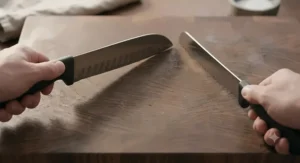
6. Dalstrong Phantom Series Slicing Knife — best value Japanese steel
Sitting below the Gladiator Series in Dalstrong’s own line-up, the Phantom Series swaps German steel for Japanese high-carbon AUS8, paired with a warmer pakkawood handle rather than G10 composite. The 12-inch blade is still hand-sharpened and still carries the brand’s slicer geometry, but at a noticeably lower price point than its sibling.
What most buyers overlook about this model is that AUS8 steel, while not quite matching the edge retention of the premium German or Japanese super-steels used further up the market, is genuinely easy to resharpen at home — a real advantage for anyone without access to professional sharpening services. Reviewers consistently describe the pakkawood handle as more comfortable in humid or sweaty conditions than composite handles, since it doesn’t feel as clinical to the touch. This is honestly the knife we’d point a budget-conscious enthusiast toward if the Victorinox feels a bit too utilitarian but the full Gladiator price tag feels unjustified for their current cooking frequency.
Pros:
- ✅ Attractive pakkawood handle at a mid-budget price
- ✅ AUS8 steel is easy to resharpen at home
- ✅ Includes a sheath for safe drawer storage
Cons:
- ❌ Edge retention trails premium German/Japanese steels
- ❌ Handle needs occasional oiling to prevent drying out
Expect to pay somewhere in the £50-£65 range, which is a sensible middle ground between the Victorinox and the full Gladiator Series.
7. Taylor’s Eye Witness Sheffield-Made Slicer — best British-made budget pick
Taylor’s Eye Witness has been producing cutlery in Sheffield since the early 19th century, and this carving-and-slicing knife is a genuinely British-made alternative to the German and Japanese-steel options dominating this list. The 25cm blade is precision-ground stainless steel, finished with the brand’s fibre-feel handle for grip.
Honest analysis here: this isn’t going to out-perform a forged Wüsthof on outright edge retention, and it doesn’t pretend to. But for buyers who specifically want to support a heritage British manufacturer, or who simply need a competent, affordable slicer for occasional Sunday roasts rather than weekly competition-style briskets, it’s a genuinely sensible choice. Aggregated customer sentiment tends to highlight the sharp factory edge and the reassurance of a “no quibble” guarantee from a manufacturer that’s been in business for close to two centuries — that longevity of trust counts for something even where individual review data is thinner than for the bigger international brands on this list.
Pros:
- ✅ Genuinely made in Sheffield, England
- ✅ Sharp factory edge straight out of the box
- ✅ Backed by the brand’s long-standing guarantee
Cons:
- ❌ Less edge retention than forged premium steels
- ❌ Smaller global review base to draw on
At under £35, this is comfortably the most accessible entry point on this list without feeling like a compromise purchase.
Top 7 Products: Detailed Comparison
| Knife | Steel Type | Handle | Value Verdict |
|---|---|---|---|
| Victorinox Fibrox Pro Slicer | High-carbon stainless | Fibrox plastic | Best overall value |
| Dalstrong Gladiator Slicer | Forged German steel | G10 composite | Best for frequent use |
| Wüsthof Classic Slicer | Forged German steel | Riveted synthetic | Best long-term investment |
| ZWILLING Professional S | SIGMAFORGE steel | Ergonomic plastic | Best compact option |
| Mercer Culinary Millennia | Japanese stainless | Santoprene | Best for big briskets |
| Dalstrong Phantom Slicer | AUS8 Japanese steel | Pakkawood | Best budget-premium mix |
| Taylor’s Eye Witness Slicer | Precision-ground stainless | Fibre-feel handle | Best British-made budget |
The pattern that emerges from this table is that steel type and handle material track price fairly closely, but “best value” doesn’t always mean “cheapest.” The Mercer Culinary Millennia Slicer delivers genuine commercial-grade length and NSF certification for less than the Dalstrong Gladiator Slicer, simply because Mercer positions itself as a volume commercial supplier rather than a premium lifestyle brand. Meanwhile, buyers chasing outright edge retention and resale-worthy build quality should still look toward the forged German steel of the Wüsthof Classic Slicer, even at a noticeably higher price point.
BBQ Meat Prep: The Practical Usage Guide
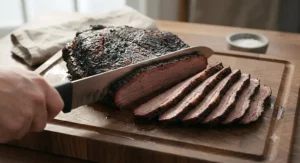
Getting a brisket slicing knife home is only step one — using it properly is what actually determines whether your BBQ meat prep produces neat, professional-looking slices or a plate of shredded meat. Start by letting the brisket rest for at least 30-45 minutes after it comes off the smoker or out of the oven; slicing too early lets all the juice run straight out onto the board instead of staying in the meat. Once rested, always identify the direction of the muscle fibres (the “grain”) before your first cut — this single decision affects every slice that follows.
For the first 30 days of ownership, resist the temptation to put any of these knives through a dishwasher cycle, even if the packaging technically claims dishwasher safety; the combination of heat, detergent and other cutlery knocking against the blade dulls the edge far faster than hand washing. A quick pass on a honing steel before each use — not a full resharpening, just realigning the existing edge — keeps the blade tracking straight through fatty sections rather than wandering off-line. Common first-month mistakes include sawing back and forth aggressively (a proper slicing knife wants long, single-direction draws) and storing the blade loose in a drawer, where it dulls against other utensils within weeks.
Real-World Scenarios: Who Should Buy Which Knife
The Sunday roast household: if your main use case is a monthly roast beef slicing knife job rather than competition-level barbecue, the compact ZWILLING Professional S Slicing Knife or the budget-friendly Taylor’s Eye Witness Sheffield-Made Slicer cover this comfortably without over-investing in commercial-grade length you’ll rarely use.
The weekend smoker enthusiast: someone running a smoker most weekends, working through whole packer briskets regularly, genuinely benefits from the extra reach of the Mercer Culinary Millennia Slicer or the durability of the Dalstrong Gladiator Series Slicer — both are built to handle frequent, heavier use without the edge degrading as quickly.
The gift-buyer on a budget: looking for a genuinely useful, presentable gift without a premium price tag, the Dalstrong Phantom Series Slicing Knife strikes a good balance between visual appeal (that pakkawood handle photographs beautifully) and real-world usability.
Problem → Solution: Fixing Common Slicing Frustrations
Problem: slices tear rather than release cleanly. This is almost always a Granton edge issue — a flat-ground blade without dimples tends to stick to fatty meat. Solution: any of the Granton-edged options on this list, particularly the Victorinox Fibrox Pro Slicer or Dalstrong Gladiator Slicer, solves this directly.
Problem: uneven slice thickness. Usually caused by a wandering blade angle rather than the knife itself. Solution: practise maintaining a consistent 15-20 degree angle and let the full length of the blade do the work in one draw, rather than sawing.
Problem: the knife feels too heavy for long carving sessions. Solution: switch to a lighter option like the Victorinox Fibrox Pro Slicer, whose plastic handle and thinner blade noticeably reduce wrist fatigue over an extended carving session.
Problem: blade dulls within weeks of purchase. Solution: this is nearly always dishwasher use or improper storage — hand wash, dry immediately, and store in a sheath or knife block rather than loose in a drawer.
How to Choose the Best Slicing Knife
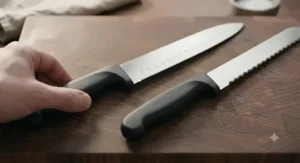
- Match blade length to your typical cut size. A 12-inch blade suits most home use; step up to the 14-inch Mercer Culinary Millennia Slicer only if you regularly handle whole packer briskets.
- Decide how much you value edge retention versus easy home sharpening. Forged German steel like the Wüsthof Classic Slicer holds an edge longer but is pricier to professionally resharpen.
- Consider handle material for your grip preference. Composite handles like G10 resist moisture better; wood-effect pakkawood feels warmer but needs occasional care.
- Check for a genuine Granton edge, not just marketing language describing a plain flat grind.
- Factor in your budget realistically rather than over-buying capability you won’t use monthly.
- Look for NSF certification if longevity and commercial-grade construction matter to you.
- Read aggregated review sentiment, not just star ratings, to spot recurring complaints before you buy.
Brisket Slicing Knife vs Roast Beef Slicing Knife vs Chef’s Knife
| Feature | Brisket Slicing Knife | Roast Beef Slicing Knife | Standard Chef’s Knife |
|---|---|---|---|
| Blade Length | 25-36cm, long and narrow | Typically 20-25cm | 15-25cm, wider profile |
| Best For | Large, fatty smoked cuts | Smaller roasted joints | General chopping/prep |
In practice, “brisket slicing knife” and “roast beef slicing knife” describe largely overlapping tools — both are long, Granton-edged slicers — but brisket work tends to favour the longer end of that range because packer cuts are simply bigger and fattier than a typical roast joint. A standard chef’s knife, by contrast, is built with a wider, more curved blade optimised for a rocking chopping motion rather than a single long draw, which is precisely why it tends to tear rather than glide through large cooked cuts. If you only own one knife and expect to slice both weekly roast beef and occasional smoked brisket, a 12-inch slicer like the Victorinox Fibrox Pro Slicer comfortably handles both roles.
Mastering the Thin Slicing Technique
The thin slicing technique that produces those picture-perfect, restaurant-style slices comes down to three habits rather than any single expensive knife. First, always cut across the grain — slicing with the muscle fibres rather than against them produces chewy, stringy results regardless of how sharp your blade is. Second, use the full length of the blade in one continuous draw rather than a short sawing motion; this is exactly why slicing knives are built long in the first place. Third, keep the blade angle low and consistent, aiming for roughly 15-20 degrees, so each slice comes away the same thickness as the last.
A properly Granton-edged blade, like the Dalstrong Gladiator Series Slicer or ZWILLING Professional S Slicing Knife, makes this noticeably easier because the scalloped dimples reduce the suction that otherwise drags at fatty tissue mid-stroke. Practising on a cheaper cut of meat before attempting a prized brisket is a sensible way to build muscle memory without wasting an expensive joint if your first few attempts come out uneven.
Smoker Accessories Worth Pairing With Your Knife
A great slicing knife performs best alongside the right supporting smoker accessories rather than in isolation. A reliable meat thermometer is arguably the single most important companion purchase — the middle of the food generally needs to reach at least 70°C for 2 minutes, or an equivalent time-and-temperature combination, according to the Food Standards Agency’s cooking guidance, and eyeballing doneness simply isn’t reliable for large cuts like brisket.
Beyond a thermometer, a genuinely large end-grain or rubber cutting board gives the longer 12-14 inch blades room to complete a full draw without the tip running off the edge. A honing steel, kept next to your knife block, maintains the edge between full sharpenings far more often than most home cooks realise they need to. Finally, insulated food-safe gloves make handling a rested-but-still-warm brisket safer during the transfer to the board, well before the knife ever comes into play.
Long-Term Cost & Maintenance
Total cost of ownership on a slicing knife extends well beyond the sticker price. Forged premium steel like the Wüsthof Classic Slicer commands a higher upfront cost but typically needs professional sharpening only once every year or two with proper honing habits, while cheaper stamped blades may need a full resharpen every few months of regular use — a service that can cost £8-£15 per visit at most UK kitchenware retailers. Factor in a decent honing steel (£15-£25) as a near-mandatory companion purchase regardless of which knife you choose.
Looking purely at cost-per-use, a £45 Victorinox Fibrox Pro Slicer used weekly for five years works out to roughly 17p per use before factoring in occasional sharpening — genuinely difficult to beat on pure economics. The premium Wüsthof Classic Slicer, by contrast, only starts to look competitive on a per-use basis if you’re using it frequently over a decade or more, which is where its reputation as a “buy once” purchase actually earns its keep.
Safety, Regulations & Buying Compliance in the UK
Buying a bladed kitchen knife online in the UK isn’t quite as simple as adding it to a basket and checking out. Under current legislation, retailers selling knives are required to verify a buyer’s age before completing the sale, and the GOV.UK guidance on buying and carrying knives is worth a quick read if you’re unfamiliar with the rules, particularly around delivery restrictions for bladed articles. Reputable UK kitchenware retailers and Amazon itself build these age checks into checkout, so expect to confirm your age or show ID on delivery for any of the knives featured in this guide.
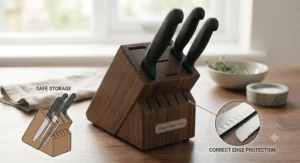
Beyond the purchase itself, basic kitchen safety matters just as much once the knife arrives: always cut on a stable, non-slip board, keep fingers curled away from the blade path, and store the knife in a sheath or block rather than loose in a drawer where reaching in blind risks a cut. None of the seven knives above are novelty items — they’re genuinely sharp tools, and treating them with the same care as any other bladed article is simply sensible practice.
Common Mistakes When Buying a Brisket Slicing Knife
The most frequent mistake is buying based on blade length alone without considering handle comfort — a 14-inch blade is only an advantage if you can control it comfortably for the duration of a full carving session. A close second is assuming all “Granton edge” listings are equal; genuine deep scalloping, like that on the Dalstrong Gladiator Series Slicer, performs noticeably better than a shallow, decorative version sometimes found on cheaper imports. Buyers also frequently skip checking whether a knife is genuinely NSF-rated or dishwasher-safe versus simply marketed with that language, which matters if longevity is a priority. Finally, many first-time buyers underestimate how much a decent honing steel and proper storage affect long-term performance, then wrongly blame the knife itself when an otherwise excellent blade dulls prematurely from neglect.
✨ Don’t Miss These Exclusive Deals!
🔍 Take your BBQ meat prep to the next level with these carefully selected slicing knives. Click on any highlighted product to check current pricing and availability. These tools will help you create restaurant-quality slices your family and guests will genuinely appreciate!
FAQ
❓ What is the best knife for slicing brisket?
❓ Is a brisket slicing knife the same as a roast beef slicing knife?
❓ How do I stop my brisket slices from tearing?
❓ Can I put my brisket slicing knife in the dishwasher?
❓ How often should I sharpen a brisket slicing knife?
Conclusion
A brisket slicing knife isn’t a luxury purchase reserved for competition pitmasters — it’s a genuinely practical upgrade for anyone tired of watching a well-cooked cut fall apart under the wrong blade. Across the seven real, currently available knives in this guide, there’s a sensible pick whether you’re carving a monthly Sunday roast or breaking down a full packer brisket most weekends: the Victorinox Fibrox Pro Slicer for unbeatable all-round value, the Wüsthof Classic Slicer for buyers thinking in decades rather than years, and the Mercer Culinary Millennia Slicer for anyone regularly tackling oversized cuts.
Whichever knife you land on, remember that the blade is only half the equation — resting time, cutting direction, and a consistent slicing angle do just as much work as the steel itself. Pair the right knife with the thin slicing technique covered above, keep it properly honed and hand-washed, and you’ll notice the difference in your very next carving session. Check current prices before you buy, since availability and third-party seller pricing on all seven options can shift regularly.
✨ Ready to upgrade your carving game? Take a look at the options above and pick the slicer that matches how often — and how much — you actually cook.
Recommended for You
- Slicing Knife vs Carving Knife: 7 Top Picks Compared (2026)
- Electric Carving Knife: 7 Best Picks for Christmas 2026 (UK)
- Best Carving Knife 2026: 7 Top Picks Tested & Compared
Disclaimer: This article contains affiliate links. As an Amazon Associate, I earn from qualifying purchases. If you purchase products through these links, we may earn a small commission at no additional cost to you.
✨ Found this helpful? Share it with your friends! 💬🤗
