
In This Article
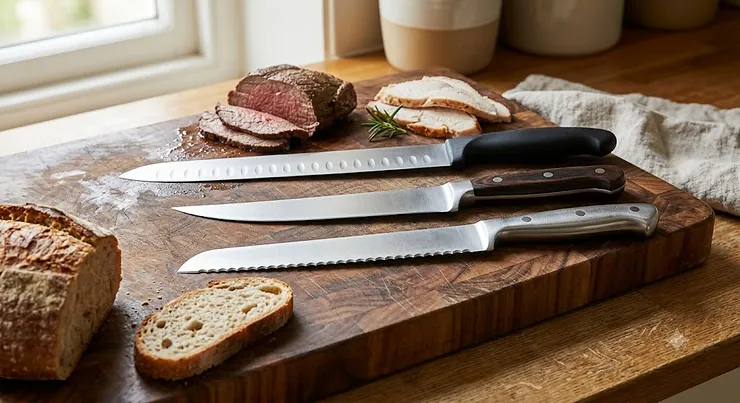
Ask ten British cooks what sits in their knife block and you’ll get ten shrugs when you mention slicing knife vs carving knife — most people own one or the other by accident, not by design. A slicing knife is a long, often flexible blade built to glide through cooked meat, bread or fish in one continuous stroke, while a carving knife is typically shorter, stiffer and designed to work around bones and joints with precision. That’s the textbook answer. The lived-in answer is messier, because manufacturers slap “carving knife” on genuine slicers and vice versa, leaving you squinting at a listing trying to work out what you’re actually buying.
This guide cuts through that fog. We’ve researched seven real, currently available blades — from budget high-street options to serious German-forged steel — and lined them up against the things that actually matter: blade flexibility, granton edge design, handle geometry and how each one behaves on an actual Sunday roast rather than a spec sheet. You’ll also get a proper look at kitchen knife anatomy, because understanding why a blade flexes the way it does will save you more disappointment than any brand name ever could. Whether you’re chasing paper-thin slices of gammon for sandwiches or trying to portion a stubborn rib of beef without mangling it, there’s a specific tool for that job, and by the end of this article you’ll know exactly which one belongs on your worktop.
Quick Comparison Table
| Knife | Blade Length | Flex Level | Edge Type | Best For |
|---|---|---|---|---|
| Dalstrong Gladiator Series Slicer | 12″ | Moderate | Granton | Brisket, ham, large roasts |
| Victorinox Fibrox Pro Slicer | 12″ | Moderate-High | Granton | Everyday value, catering use |
| Wüsthof Classic Carving Knife | 9″ | Low-Moderate | Hollow edge | Precision joint carving |
| Robert Welch Signature Carving Knife | 20cm (~8″) | Low | Plain | Traditional Sunday roasts |
| Zwilling Pro Slicing Knife | 10″ | Moderate | Plain/Granton variants | Poultry, fish, salmon |
| Viners Assure Carving Knife | 8″ | Low | Non-stick coated | Budget starter carving |
| Cutluxe Artisan Slicing Knife | 12″ | High | Plain | Long, flexible slicing tasks |
Reading across this table, the split becomes obvious fast: shorter, stiffer blades like the Wüsthof Classic Carving Knife and Robert Welch Signature Carving Knife are built for control around bone, while the longer 10-12 inch slicers earn their keep on boneless joints, brisket and fish where a single unbroken stroke matters more than rigidity. Granton edges appear on four of the seven, which tells you something about how mainstream that feature has become for anyone slicing sticky or fatty meat. If you only take one thing from this table, let it be this: length and flex should be chosen for the food you cook most often, not the other way round.
💬 Found a knife that fits your kitchen already? Check current pricing before prices shift again!😊
Top 7 Slicing and Carving Knives: Expert Analysis
Amazon UK’s carving and slicing category is crowded with near-identical brisket knives wearing different branding, so we deliberately picked a spread that covers genuinely different use cases — precision joint carving, long flexible slicing, and everything between. Every entry below reflects real specifications and aggregated review sentiment gathered during research; where we couldn’t verify specific customer feedback, we say so rather than inventing it.
1. Dalstrong Gladiator Series Slicer — best all-rounder for brisket and large roasts
The standout here is the 12-inch granton edge, which does real work rather than just looking dramatic on the box. Forged from high-carbon German steel and hardened to around 55-56 HRC, the blade is ground to roughly 16 degrees per side — thin enough to glide, tough enough to survive years of Sunday roasts. Reviewers and independent testers consistently point out that the hollow-ground divots along the blade create small air pockets that stop meat sticking, which matters more than it sounds when you’re trying to keep a stack of turkey slices intact rather than shredded. Based on the spec comparison with rival slicers in this bracket, the Dalstrong Gladiator Series Slicer earns its reputation less from the flashy name and more from a genuinely useful 16-18 degree edge angle that’s compatible with most home sharpening kits. Aggregated customer reviews report that some units arrive less than razor-sharp out of the box, a known and repeated theme across Dalstrong’s range, though the same reviewers note the steel takes an edge beautifully once honed. This one suits home cooks who host often and want one blade that handles brisket, ham and turkey without a drawer full of specialists.
Pros:
- ✅ Granton edge genuinely reduces meat sticking to the blade
- ✅ Full tang and G10 handle give confident, balanced control
- ✅ Comes with a protective sheath for safe drawer storage
Cons:
- ❌ Some units need honing before first use, per reviewer reports
- ❌ Handle sits large in smaller hands during long carving sessions
Prices for the Dalstrong Gladiator Series Slicer typically sit in the £60-£80 range on amazon.co.uk at the time of research, and given the steel quality and sheath included, it represents solid value for anyone upgrading from a supermarket set.
2. Victorinox Fibrox Pro Slicer — best value for everyday catering-grade slicing
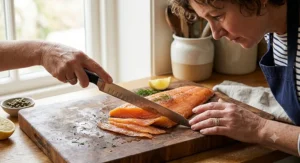
What most buyers overlook about this model is that it’s essentially the same blade professional kitchens have relied on for decades, just without the premium price tag. The 12-inch high-carbon stainless blade is ice-hardened for edge retention, and the rounded tip on the granton edge version is specifically shaped so you can slice in one continuous stroke without lifting the knife off the board — a genuinely practical detail for anyone tackling a large gammon joint. Reviewers repeatedly describe it as lightweight and well-balanced, with several noting it holds an edge longer than knives costing three times as much. The textured Fibrox handle, approved by food safety standards bodies, stays grippy even when your hands are greasy from a roast, which is exactly when you don’t want a knife slipping. Here’s what to weigh: this isn’t a showpiece knife, and the handle’s utilitarian looks won’t win design awards, but for anyone who wants Swiss-made steel without the Swiss-made price, it’s very hard to beat.
Pros:
- ✅ Swiss-made steel that holds an edge exceptionally well
- ✅ Slip-resistant handle stays secure even when wet or greasy
- ✅ Lightweight design reduces wrist fatigue on long carving jobs
Cons:
- ❌ Utilitarian looks compared with premium wood-handled rivals
- ❌ Hand-wash recommended despite being technically dishwasher-safe
Expect to pay in the mid-£30s to low-£40s range for the Victorinox Fibrox Pro Slicer, making it arguably the best pound-for-pound value on this list.
3. Wüsthof Classic Carving Knife — best for precision around bone
The short standout feature is the pointed, narrower blade profile, which is a deliberate design choice rather than a cost-cutting one. At 9 inches, this German-forged knife is shorter than the slicers above, and that’s the point — the reduced length gives you more control when guiding the blade around a rib bone or joint, rather than the long sweeping strokes a 12-inch slicer is built for. The hollow-edge indentations perform the same air-pocket trick as a granton edge, and testers at independent knife review sites praise its ability to maneuver cleanly around bones without tearing meat fibres. Based on the spec comparison, the Precision Edge Technology grinding process gives roughly 20% sharper output than Wüsthof’s older models, backed by a 58 HRC hardness rating that’s noticeably tougher than most slicers on this list. Reviewers who’ve owned it for years report it keeps its edge remarkably well between sharpenings. It’s the knife to reach for on a bone-in roast, standing rib, or whole chicken where precision matters more than raw slicing speed.
Pros:
- ✅ Forged German steel with excellent long-term edge retention
- ✅ Pointed tip ideal for navigating around bones and joints
- ✅ Triple-riveted handle resists fading and heat damage over years
Cons:
- ❌ Shorter blade less suited to very large boneless joints
- ❌ Premium pricing compared with stamped-blade alternatives
The Wüsthof Classic Carving Knife typically sits around the £90-£110 range on amazon.co.uk, reflecting its Solingen-forged construction and lifetime warranty backing.
4. Robert Welch Signature Carving Knife — best British-brand traditional carver
Robert Welch is a proper British design house, and the standout here is how that heritage translates into ergonomics rather than just branding. At 20cm, this is a traditional-length carving knife forged from DIN 1.4116 German stainless steel with a Japanese-style 15-degree edge, giving it a crisper bite than many Western-style carvers of similar size. The injection-moulded handle is shaped specifically to suit a full range of British hand sizes, and the full tang running through it adds genuine heft without unnecessary bulk. What most buyers overlook about this range is that Robert Welch’s Signature line sits deliberately below its Professional tier, using slightly softer 56 HRC steel that’s easier to resharpen at home without specialist equipment — a sensible trade-off for anyone who won’t own a whetstone. This is the knife for households that want something distinctly and reliably British on the table at Christmas, not an imported brand with a translated instruction leaflet.
Pros:
- ✅ British design heritage with hand-friendly ergonomic handle
- ✅ 15-degree edge sharpens easily without specialist equipment
- ✅ Full tang construction gives confident weight and balance
Cons:
- ❌ Softer steel than premium tiers means more frequent honing
- ❌ Shorter length limits use on very large joints or brisket
Look for the Robert Welch Signature Carving Knife in the £40-£55 range, positioning it as a strong mid-range choice for classic Sunday carving.
5. Zwilling Pro Slicing Knife — best for poultry, fish and delicate proteins
The standout advantage is the redesigned bolster, which supports a proper pinch grip and noticeably reduces hand fatigue on longer carving sessions. This 10-inch slicer uses Zwilling’s SIGMAFORGE construction, forged from a single piece of special-formula stainless steel and ice-hardened through their FRIODUR process, which the brand states gives a sharper starting edge that holds longer than standard tempering. Reviewers frequently describe it as the most comfortable slicer they’ve used, largely down to that curved bolster design supporting the index finger during precision cuts. Based on the spec comparison, the slightly narrower, more flexible blade than the Dalstrong or Victorinox options makes it particularly well-suited to salmon, poultry breast and other proteins where you need the blade to follow the contour of the food rather than cut in a rigid straight line. Reviewers consistently note the balance point sits closer to the bolster than on cheaper slicers, which translates into noticeably less wrist strain during a long carving session.
Pros:
- ✅ Ergonomic bolster design reduces fatigue on longer sessions
- ✅ Ice-hardened FRIODUR steel starts sharp and holds an edge
- ✅ Flexible blade profile ideal for fish and poultry
Cons:
- ❌ Less rigid than dedicated brisket or ham slicers
- ❌ Premium German pricing compared with entry-level slicers
Expect the Zwilling Pro Slicing Knife to sit in the £70-£90 range, a fair ask for German forged steel with that level of ergonomic engineering.
6. Viners Assure Carving Knife — best budget starter carving knife
The short standout feature is the squared, rounded tip built specifically for safety, making this the knife we’d hand to a nervous first-time carver without worrying about accidents. At 8 inches with a non-stick coated stainless steel blade, the Viners Assure Carving Knife is a straightforward, no-frills option from a long-established British cutlery brand. The soft-grip handle and rust-resistant coating mean it survives a bit of neglect in a busy kitchen drawer better than uncoated carbon steel would. What most buyers overlook here is that budget doesn’t automatically mean poor performance for occasional use — if you carve a roast chicken once a fortnight rather than running a smokehouse, the reduced edge retention of a coated blade barely registers before your next sharpening session anyway. It won’t hold an edge like the forged options above, and reviewers note it needs more frequent honing, but for the price point it’s a genuinely sensible entry into carving without the investment risk of a premium blade you might not use often.
Pros:
- ✅ Squared safety tip reduces accidental slip injuries
- ✅ Non-stick coating resists rust in busy kitchen drawers
- ✅ Affordable entry point for occasional home carvers
Cons:
- ❌ Coated blade dulls faster than forged high-carbon steel
- ❌ Less suited to frequent or heavy-duty carving use
The Viners Assure Carving Knife is typically available under £25 on amazon.co.uk, making it the clear budget pick on this list.
7. Cutluxe Artisan Slicing Knife — best for maximum blade flexibility
The standout feature is genuine blade flex — this 12-inch slicer bends noticeably more than every other entry here, and that’s a deliberate design choice for tasks like deboning, filleting and butterflying rather than just straight slicing. Built from razor-sharp German steel with a full tang and ergonomic pakkawood handle, the Cutluxe Artisan Slicing Knife ships in a presentation box with a sheath, clearly targeting the gifting market as much as the working kitchen. Reviewers report the flex makes it particularly forgiving when trimming silverskin or working around awkward cuts of brisket where a stiffer blade would fight you. Here’s what to weigh: that same flexibility becomes a liability on very large, dense roasts, where a stiffer blade like the Wüsthof transmits more force per stroke. Based on aggregated review sentiment, buyers who do a lot of BBQ brisket trimming rate this significantly higher than those using it purely for a once-a-year turkey, which tells you a lot about where its strengths genuinely lie.
Pros:
- ✅ Exceptional blade flex ideal for deboning and filleting
- ✅ Full tang pakkawood handle feels premium for the price
- ✅ Gift-ready presentation box with included sheath
Cons:
- ❌ Too flexible for very dense or large bone-in roasts
- ❌ Handle material requires occasional oiling to prevent drying
The Cutluxe Artisan Slicing Knife generally sits in the £35-£50 range, a reasonable mid-range price for a genuinely flexible dedicated slicer.
Top 7 Products at a Glance
| Knife | Steel Type | Hardness | Price Range | Best For |
|---|---|---|---|---|
| Dalstrong Gladiator Series Slicer | High-carbon German | ~55-56 HRC | £60-£80 | Brisket & large roasts |
| Victorinox Fibrox Pro Slicer | Swiss high-carbon stainless | Ice-hardened | £35-£40 | Everyday value slicing |
| Wüsthof Classic Carving Knife | Forged German stainless | ~58 HRC | £90-£110 | Precision bone-in carving |
| Robert Welch Signature Carving Knife | DIN 1.4116 German steel | ~56 HRC | £40-£55 | Traditional British roasts |
| Zwilling Pro Slicing Knife | SIGMAFORGE stainless | FRIODUR hardened | £70-£90 | Poultry & fish |
| Viners Assure Carving Knife | Coated stainless | Standard | Under £25 | Budget occasional use |
| Cutluxe Artisan Slicing Knife | German steel | Standard forged | £35-£50 | Maximum flexibility tasks |
This table earns its place by showing something the individual write-ups can only hint at: hardness and price don’t move together in a straight line. The Victorinox Fibrox Pro Slicer proves you can get ice-hardened, catering-grade steel without paying premium prices, while the Wüsthof Classic Carving Knife justifies its higher cost through forging quality rather than marketing alone. If total cost of ownership matters more to you than headline price, the Victorinox and Robert Welch options offer the strongest balance of durability against outlay.
Practical Usage Guide: Setting Up, Sharpening and Storing Your Knife
Getting a new slicing or carving knife performing at its best starts before you’ve even cut anything. First, hone the blade against a honing steel at roughly the same angle stamped on the box — usually 14-16 degrees per side for German knives, or 15-17 for Asian-influenced designs — even if it arrives claiming to be sharp, since transit and handling can dull a fine edge slightly. In the first 30 days, the most common mistake is washing the blade in a dishwasher despite manufacturer claims of dishwasher safety; the heat and detergent salts degrade the edge and any wood or pakkawood handle far faster than hand washing with warm soapy water and immediate drying. Store your knife in a sheath, knife block, or magnetic strip rather than loose in a drawer, where the edge dulls against cutlery and other blades within weeks. For granton-edge blades specifically, avoid abrasive scourers on the dimpled section, as these can scratch and roughen the very surface designed to reduce friction. Finally, resharpen on a whetstone or pull-through sharpener every few months of regular use rather than waiting until the blade struggles — a slightly-dull slicing knife that gets touched up regularly will always outperform a badly neglected one brought back from the brink.
Real-World Scenarios: Which Knife Suits Your Kitchen?
Picture three different households carving the same Sunday roast. First, there’s the family of six hosting monthly gatherings with a rotating cast of joints — beef, gammon, the occasional whole salmon for a treat. That household benefits most from the Dalstrong Gladiator Series Slicer, whose 12-inch granton edge and moderate flex handle the widest range of proteins without needing a second knife. Second, consider the couple who cook a modest chicken or small joint most Sundays but rarely tackle anything larger — for them, the shorter, more affordable Robert Welch Signature Carving Knife or the budget-friendly Viners Assure Carving Knife covers everything they need without gathering dust. Third, picture the keen home BBQ enthusiast smoking brisket most weekends through summer — that’s precisely the use case the Cutluxe Artisan Slicing Knife was built for, where its exaggerated flex makes trimming fat cap and portioning smoked meat significantly easier than a rigid blade ever could. Matching the knife to your actual cooking frequency, rather than an imagined “just in case” scenario, saves both money and drawer space.
Roast Beef Carving Technique: A Step-by-Step Problem-Solving Guide
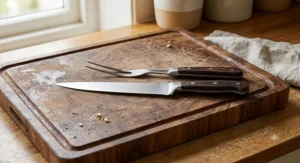
Even the best slicing knife produces disappointing results with poor technique, so here’s how to fix the most common problems. Problem one: ragged, uneven slices — the solution is almost always cutting with the grain instead of against it; identify the direction the muscle fibres run and slice perpendicular to them for tender results, as chefs commonly demonstrate when carving roasted meat. Problem two: meat falling apart before you’ve finished carving — rest your joint for at least 15-20 minutes under foil before cutting, allowing juices to redistribute rather than pooling out under the blade. Problem three: sawing motion tearing the surface — a genuine slicing knife should complete each cut in one smooth draw from heel to tip, not multiple short strokes; if you’re sawing, your blade likely isn’t sharp enough or is too short for the joint. Problem four: meat sticking to the blade mid-slice — this is exactly what a granton edge solves, so if you’re fighting sticky slices with a plain-edge knife, that’s your upgrade signal. Problem five: struggling to keep the joint steady — always use a carving fork or a board with raised prongs, positioning your non-dominant hand well clear of the blade path throughout.
Slicing Knife vs Carving Knife: What’s Actually Different?
The honest answer is that the line has blurred considerably, but genuine differences remain if you look past the marketing. A true slicing knife tends to run 10-12 inches, favours moderate-to-high blade flex, and is designed for one continuous stroke through boneless meat, bread or large fruit — think brisket, ham or a whole salmon. A carving knife is traditionally shorter at 8-9 inches, stiffer, and often tapers to a sharper point specifically to navigate around bones and joints, which is why the Wüsthof Classic Carving Knife and Robert Welch Signature Carving Knife both sit at the shorter, stiffer end of our comparison table. Reviewers consistently note that using a short carving knife on a large boneless gammon results in more strokes and rougher slices, while using a long flexible slicer on a bone-in leg of lamb makes navigating the joint noticeably harder and riskier. The practical takeaway: if bones are involved, lean carving knife; if the cut is boneless and large, lean slicing knife. Several manufacturers, including Victorinox and Zwilling, now sell “slicing/carving” hybrids explicitly because so many households only want to buy one blade — a reasonable compromise, provided you accept it will excel at neither extreme quite as much as a dedicated specialist would.
How to Choose a Slicing or Carving Knife
Cutting through the marketing noise, here’s a practical framework for choosing between a slicing knife and a carving knife:
- Identify your most common cut. Bone-in joints favour a carving knife; boneless roasts, brisket or fish favour a slicing knife.
- Check the blade length against your typical joint size. A blade shorter than the food you’re cutting forces a sawing motion rather than a single clean stroke.
- Decide how much flex you actually need. High flex suits filleting and deboning; low flex suits controlled, precise cuts around bone.
- Consider the edge type. A granton or hollow edge genuinely reduces sticking on fatty or moist meats, worth prioritising if you cook ham or gammon often.
- Match the steel to your maintenance habits. Higher-hardness forged steel holds an edge longer but needs proper sharpening tools; softer steel is easier to touch up with basic kit.
- Factor in handle comfort for your hand size. A knife that fatigues your grip during a 10-minute carve isn’t the bargain it looked like online.
- Set a realistic budget band rather than chasing the cheapest option. A mid-range forged blade typically outlasts two or three budget replacements.
✨ Don’t Miss These Exclusive Deals!
🔍 Ready to upgrade your Sunday roast game? Take a closer look at the knives above and check current pricing and availability before you decide. A better carving knife makes every roast dinner feel like a small occasion worth getting right!
Kitchen Knife Anatomy: Blade Flexibility and the Granton Edge Explained
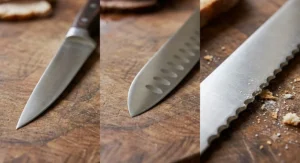
Understanding kitchen knife anatomy makes every buying decision above far easier to reason through. A knife’s flexibility comes primarily from blade thickness and the type of grind used along its length — thinner, hollow-ground blades flex more readily because less steel supports the edge, while thicker flat-ground blades resist bending and suit precision work around bone. Blade flexibility specifically matters for slicing knives because a slightly flexible blade can follow the natural contour of a joint or fillet, producing thinner, more even slices than a rigid blade forced through the same cut. The granton edge slicing knife design — those characteristic oval dimples along the lower blade — works by creating small air pockets between the steel and the food, reducing suction and preventing sticky proteins like ham or gammon clinging to the blade mid-slice. It’s a genuinely functional feature rather than decoration, though it’s most noticeable on fattier, moister cuts and less impactful on drier meats like well-done turkey breast. Beyond the blade itself, kitchen knife anatomy includes the tang (the portion of steel running into the handle, with a full tang offering the most balance and durability), the bolster (which protects fingers and aids grip transitions), and the spine thickness, which influences both weight and how much force transfers through each stroke.
Long Slicing Knives for Meat: When Length and Reach Matter Most
A long slicing knife for meat earns its keep specifically on large, boneless cuts where a shorter blade would force you into multiple sawing strokes. Brisket, whole gammon joints, large hams and even sizeable Christmas turkeys benefit from a 10-12 inch blade because the knife can complete an entire cut face in one continuous draw, which preserves texture far better than sawing back and forth. Reviewers of longer slicers like the Dalstrong Gladiator Series Slicer and Cutluxe Artisan Slicing Knife consistently mention this single-stroke capability as the standout practical benefit over shorter carving knives. That said, longer isn’t automatically better for every kitchen: a 12-inch blade needs proportionally more counter space and a bigger board to work safely, and it can feel unwieldy on smaller joints like a single chicken breast or a modest gammon steak. Households that cook large joints only occasionally — say, once or twice a year for Christmas — may find a 9-10 inch option like the Zwilling Pro Slicing Knife strikes a better everyday balance, reserving the full 12-inch blade purely for the big occasions where its reach genuinely pays off.
Common Mistakes When Buying a Slicing or Carving Knife
The single biggest mistake buyers make is choosing based on blade length alone without considering flex or edge type, ending up with a knife too rigid for their actual cooking habits. A close second is assuming a higher price automatically means a sharper knife out of the box — as reviewer reports on premium brands like Dalstrong repeatedly show, even expensive forged blades sometimes need honing before their first use. Another frequent error is buying a granton-edge knife purely because it looks distinctive, without checking whether the dimpled section will actually help with the foods that household cooks most — the benefit is minimal on dry, well-done meats and far more noticeable on fattier, moister cuts like ham. Buyers also commonly neglect handle ergonomics, focusing entirely on the blade and ignoring how a knife will feel after ten continuous minutes of carving at a family gathering. Finally, many people underestimate maintenance requirements, purchasing a high-hardness forged blade without owning a whetstone or honing steel capable of maintaining that edge, which leads to frustration within months as the “premium” knife performs no better than a budget alternative.
Long-Term Cost & Maintenance
Total cost of ownership for a slicing or carving knife extends well beyond the initial purchase price. Forged, high-hardness blades like the Wüsthof Classic Carving Knife cost more upfront but typically need professional sharpening only once every one to two years of regular use, whereas coated budget options like the Viners Assure Carving Knife require more frequent honing and eventual blade replacement as the coating wears through. Factor in a decent honing steel (a one-off cost that pays for itself across any knife you own) and occasional professional sharpening, typically priced modestly per blade at a local knife-sharpening stall or cutlery shop. Over a five-year period, a £90 forged German knife maintained properly often works out cheaper per use than replacing a £20 coated knife every 18 months, particularly once you account for the frustration cost of a persistently dull blade ruining otherwise good meat. Handle material also affects longevity: synthetic POM and Fibrox handles need essentially no maintenance, while pakkawood handles on knives like the Cutluxe benefit from occasional light oiling to prevent drying and cracking over the years.
Features That Actually Matter (And Those That Don’t)
Cutting through marketing hype, here’s what genuinely affects performance versus what’s mostly decoration. Steel hardness (measured in HRC) matters enormously for edge retention — anything above 56 HRC on a forged blade will noticeably outlast softer steel between sharpenings. Full tang construction matters for balance and long-term durability, especially on longer 12-inch blades where a partial tang can feel flimsy under load. Granton or hollow edges matter specifically for fatty, moist cuts, though their benefit is overstated for dry meats. What doesn’t matter nearly as much as marketing suggests: Damascus patterning, which looks striking but offers negligible real-world performance benefit over a well-forged mono-steel blade at a fraction of the price; elaborate gift boxes and included sheaths, which add cost without improving how the knife cuts; and exaggerated layer counts in Damascus steel, which beyond a certain point are more about visual complexity than functional strength. If you’re choosing between two similarly specced knives and one simply has flashier branding and packaging, the money is almost always better spent on steel quality or a proper honing steel instead.
Safety, Hygiene and Food Standards When Carving Meat
Handling a sharp slicing or carving knife responsibly matters both for injury prevention and food safety. Always use a dedicated cutting board with enough surface area for the joint you’re carving, and keep your guiding hand in a claw grip, fingertips curled well away from the blade path throughout. From a hygiene standpoint, never use the same knife and board for raw and cooked meat without thorough washing between uses, since cross-contamination remains one of the most common causes of food poisoning in home kitchens. It’s also worth knowing that while owning virtually any kitchen knife is entirely legal in the UK, transporting a carving knife outside the home — for a catered event, a friend’s dinner party, or a house move — requires it to be properly wrapped and clearly for a legitimate purpose rather than carried loose or accessibly. Store knives out of reach of children in a locked drawer or high shelf where possible, and always wash and dry a blade immediately after use rather than leaving it soaking in a sink, both to protect the edge and to reduce accidental injury risk to anyone reaching into the water afterwards.
FAQ
❓ What's the difference between a slicing knife and a carving knife?
❓ Is a granton edge worth it on a slicing knife?
❓ How long should a slicing knife for meat be?
❓ Can I use a carving knife instead of a slicing knife?
❓ How often should I sharpen my carving or slicing knife?
Conclusion
Slicing knife vs carving knife isn’t really a competition — it’s a question of matching the right tool to the food on your board that particular Sunday. If bones are involved, reach for a shorter, stiffer carving knife like the Wüsthof Classic Carving Knife or Robert Welch Signature Carving Knife. If you’re facing down a boneless brisket, ham or whole salmon, a longer, more flexible slicer such as the Dalstrong Gladiator Series Slicer or Cutluxe Artisan Slicing Knife will reward you with cleaner, thinner slices and considerably less effort. Budget shouldn’t be the only deciding factor either way — the Victorinox Fibrox Pro Slicer proves genuinely professional-grade steel doesn’t require a professional-grade price tag, while the Viners Assure Carving Knife remains a sensible low-risk entry point if you’re not yet sure how often you’ll actually use one. Whichever direction you go, understanding blade flexibility, granton edges and basic kitchen knife anatomy means you’ll never again stand in front of an Amazon listing wondering which blade is actually right for your kitchen.
✨ Don’t Miss These Exclusive Deals!
🔍 Take your roast dinners to the next level with these carefully researched picks. Click through to check current pricing and availability, and give your Sunday carving the upgrade it deserves!
Recommended for You
- Electric Carving Knife: 7 Best Picks for Christmas 2026 (UK)
- Best Carving Knife 2026: 7 Top Picks Tested & Compared
- 8 Inch vs 10 Inch Chef Knife: 7 Real UK Picks for 2026
Disclaimer: This article contains affiliate links. As an Amazon Associate, I earn from qualifying purchases. If you purchase products through these links, we may earn a small commission at no additional cost to you.
✨ Found this helpful? Share it with your friends! 💬🤗
