
In This Article
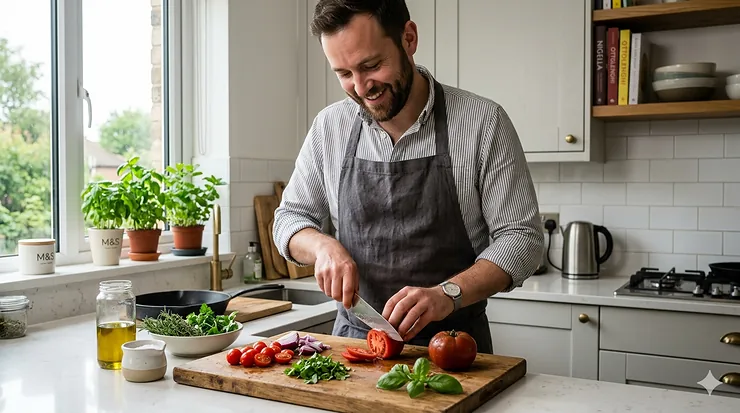
Nobody warns you about chef’s knife fatigue until you’re twenty minutes into dicing a swede for Sunday lunch, forearm aching, wondering why a piece of kitchen equipment is making you feel like you’ve been arm-wrestling a Wüsthof rep. A lightweight chef knife is, in plain terms, a knife — usually somewhere between 150g and 220g — built so the blade does the cutting and your wrist doesn’t do the suffering. Japanese makers tend to lead this category, thanks to thinner blade stock and a design philosophy that prizes precision over heft, but a few British and Swiss brands have quietly joined the party too.
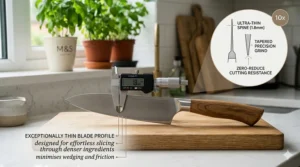
Here’s the thing the glossy adverts never mention: weight isn’t really about strength, it’s about endurance. A heavy German-style knife can absolutely demolish a butternut squash. The question is whether your wrist can do that fifteen times in a row, every weeknight, for the next decade. If you’ve got smaller hands, a touch of arthritis, or you’re simply the household’s designated chopper, the difference between a 280g blade and a 170g one is the difference between cooking with pleasure and cooking with a slight, low-level dread.
This guide is built entirely around knives genuinely sold on Amazon.co.uk right now — no invented models, no “similar to” fudges. We’ve dug into specs, UK customer reviews, and the kind of small print that actually matters (steel type, handle material, dishwasher tolerance) so you don’t have to. Whether you’re after the lightest chef knife money can buy or just want a thin blade kitchen knife that won’t bully your tendons, there’s something below for you.
As an Amazon Associate, I earn from qualifying purchases.
Quick Comparison: 7 Lightweight Chef Knives at a Glance
| Knife | Origin | Blade Length | Relative Weight | Price Range (GBP) | Best For |
|---|---|---|---|---|---|
| Global G-2 | Japan | 20cm | Light | £90–£140 | Long-term investment, balance lovers |
| Tojiro DP Gyutou | Japan | 21cm | Very Light | £55–£85 | Upgraders wanting “scary sharp” |
| KAI Wasabi Black | Japan | 20cm | Light | £25–£40 | Budget-conscious Japanese steel fans |
| Victorinox Fibrox Pro | Switzerland | 20cm | Moderate-Light | £30–£45 | Workhorse, dishwasher-safe households |
| Mercer Culinary Millennia | Taiwan/Japan steel | 20cm | Very Light | £20–£35 | Students, first knife, small hands |
| Robert Welch Signature | UK | 20cm | Light | £55–£80 | British design, Which? Best Buy fans |
| ProCook Gourmet X30 Santoku | UK retailer | 18cm | Very Light | £20–£35 | Flatter blade preference, small kitchens |
A quick read of that table tells its own story: there’s no single “best” lightweight chef knife, only the best one for how you actually cook. If raw value matters most, the Mercer Culinary Millennia and KAI Wasabi Black undercut everything else while still using genuinely good steel. If you want a knife you’ll still be sharpening on your fortieth birthday, the Global G-2 earns its premium price through one-piece construction that simply doesn’t loosen or wobble over time. And if “Made in Britain” matters to you on principle — fair enough, it often should — the Robert Welch Signature is the only one here designed and engineered in the Cotswolds rather than Solingen or Seki.
💬 Just one click — help others make better buying decisions too! 😊
✨ Don’t Miss These Exclusive Deals!
🔍 Take your kitchen kit to the next level with these carefully selected picks. Click through on any highlighted knife above to check current pricing and availability on Amazon.co.uk — these are the ones actually worth adding to your basket.
The Top 7 Lightweight Chef Knives Worth Your Money in 2026
1. Global G-2 — The Lightweight Legend
The Global G-2 is the knife that arguably started the whole “lightweight chef knife” conversation in British kitchens back in the 1990s, and it’s aged better than most fads from that decade. The blade and handle are forged from a single piece of CROMOVA 18 stainless steel, which means there’s no separate bolster or rivets to loosen, no crevice for gunk to hide in, and — crucially for anyone juggling a busy hob — nothing to wobble after a few years of hard use.
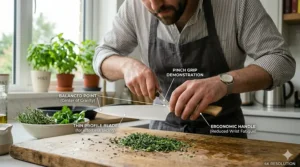
What the spec sheet won’t tell you is how that one-piece construction changes the way you actually cook with it. The hollow, dimpled handle is filled with precisely the right amount of sand to balance the blade, so the Global G-2 feels almost weightless mid-chop, yet never feels flimsy slicing through a chicken thigh. UK buyers coming from supermarket block sets often need a session or two to recalibrate — this knife rewards a lighter touch and a proper pinch grip rather than brute downward force.
Reviewers consistently flag the out-of-box sharpness as exceptional, with several long-term Amazon.co.uk owners noting it’s the first knife in years they haven’t felt tempted to “upgrade” from. The trade-off: that smooth steel handle gets slippery with wet or greasy hands, so a quick wipe mid-prep is worth the habit.
✅ Genuinely featherlight in the hand
✅ Hygienic one-piece build, nothing to harbour bacteria
✅ Holds an edge impressively well for daily British cooking
❌ Handle can feel slick when wet
❌ Needs a whetstone, not a pull-through sharpener
Price and value verdict: sits in the £90–£140 range on Amazon.co.uk — not cheap, but rarely discounted because it rarely needs replacing.
2. Tojiro DP Gyutou 21cm — The Sharpest Upgrade Per Pound
If the Global G-2 is the icon, the Tojiro DP Gyutou is the knife most serious home cooks actually buy next, usually after outgrowing a Victorinox. Made in Tsubame-Sanjo — Japan’s historic cutlery region — it clads a VG-10 steel core between layers of softer stainless, giving you carbon-steel sharpness without carbon steel’s rust-prone temperament.
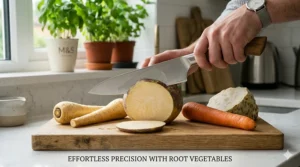
The blade is noticeably thinner than anything German in this price bracket, and that’s where the lightness comes from rather than handle gimmicks. UK reviewers who’ve previously only used Wüsthof or Zwilling describe a genuine “wait, is this even cutting or just falling through the food” moment the first time they use it. The traditional Western-style handle (rather than a Japanese octagonal one) means it feels instantly familiar, which matters if you’re nervous about switching styles entirely.
Where it asks a bit more of you: VG-10 is harder than most German steels, so it holds an edge for longer but needs a proper Japanese waterstone — not a kitchen steel — when it eventually needs attention. For anyone who enjoys the ritual of sharpening on a rainy Sunday afternoon, that’s a feature, not a chore.
✅ Exceptional sharpness for the price tier
✅ Thin blade genuinely reduces wrist fatigue
✅ Comfortable, familiar Western-style handle
❌ Not dishwasher safe — ever
❌ Needs whetstone sharpening, not a pull-through gadget
Price and value verdict: typically £55–£85 on Amazon.co.uk, and widely regarded by UK kitchen forums as punching well above that price point.
3. KAI Wasabi Black 20cm — Japanese Steel Without the Japanese Price Tag
The KAI Wasabi Black Chef’s Knife is what happens when a 115-year-old Seki City knifemaker decides to build something for communal and commercial kitchens rather than collectors — and then it quietly becomes a brilliant home option too. The 6A/1K6 stainless blade is hardened to around 58 HRC, softer than the premium VG-10 knives on this list, which actually works in its favour for UK home cooks: it’s noticeably easier to touch up on a basic sharpening stone or even a decent pull-through.
The black polypropylene handle, bulked out with bamboo powder, is where the “lightweight” claim really earns its keep — it’s genuinely one of the lighter handles in this entire roundup, and the slight curve in the spine gives a secure grip even for smaller hands. What most buyers overlook is that this is a single-bevel-adjacent design lineage (the wider Wasabi range includes true single-bevel blades for sushi work), so the double-bevel chef’s knife version you want for general UK cooking is specifically the one labelled “Chef’s Knife,” not “Deba” or “Yanagiba.”
✅ Genuinely budget-friendly for proper Japanese steel
✅ Light, secure, water-resistant handle
✅ Easy to maintain compared with harder VG-10 blades
❌ Softer steel means more frequent honing
❌ Polypropylene handle feels less premium than wood or steel rivals
Price and value verdict: usually £25–£40 on Amazon.co.uk, making it one of the best-value entries on this whole list.
4. Victorinox Fibrox Pro 8-Inch — The One Every UK Chef Secretly Owns
There’s a reason the Victorinox Fibrox Pro Chef’s Knife turns up in professional kitchens from Cornwall to Inverness despite costing a fraction of its Japanese and German rivals: it simply does the job, every day, without drama. The high-carbon stainless blade isn’t trying to be exotic — it’s trying to be reliable, and at that brief, it succeeds completely.
The non-slip Fibrox handle is the real star here for a “lightweight” conversation, because it’s noticeably less dense than the polished wood or steel handles on pricier knives, and it stays grippy even when your hands are wet from rinsing veg under the cold tap — a small but very British kitchen reality. It’s also fully dishwasher safe, which professional chefs will tell you not to do but plenty of UK households will do anyway, and the knife shrugs it off better than most.
What most reviewers note after a year of ownership is that the edge retention, while not in Tojiro territory, is more than respectable for the price, and a £10 honing rod keeps it humming along nicely between proper sharpens.
✅ Astonishing value for genuinely professional-grade performance
✅ Dishwasher safe and NSF certified
✅ Comfortable, grippy handle even when wet
❌ Not the lightest blade on this list — moderate rather than featherweight
❌ Handle styling is purely functional, not a kitchen showpiece
Price and value verdict: typically £30–£45 on Amazon.co.uk — arguably the safest first purchase for anyone unsure they’ll commit to upgrading further.
5. Mercer Culinary Millennia M22608 — The Featherweight Starter Knife
The Mercer Culinary Millennia Chef’s Knife is the knife professional culinary schools hand to first-year students, and there’s a good reason it keeps coming up in this particular conversation: one working chef reviewing it on Amazon.co.uk described it simply as “super light,” and that’s not marketing copy, that’s a daily user’s verdict. The one-piece high-carbon Japanese steel blade is hollow-ground, which strips weight out without sacrificing the taper that lets it glide through onions rather than wedging in them.
The textured Santoprene handle with raised finger points is specifically engineered for slip resistance during long prep sessions — a genuinely thoughtful detail if you’re cooking for a crowd or you simply struggle to grip smooth handles. For UK buyers managing early-stage arthritis or general hand fatigue, this combination of low weight and a grippier-than-average handle is worth more than the spec sheet numbers suggest.
The catch, and it’s a fair one for the price: Mercer recommends hand-washing only, and the black handle, while practical, won’t win any style points next to a Global or a Robert Welch on your knife block.
✅ Among the lightest knives in this entire list
✅ Excellent grip even with wet or arthritic hands
✅ Genuinely budget-friendly for the quality on offer
❌ Hand-wash only, no dishwasher shortcuts
❌ Plain looks compared with premium rivals
Price and value verdict: around £20–£35 on Amazon.co.uk, often the cheapest knife here that still uses proper Japanese steel.
6. Robert Welch Signature 20cm Cook’s Knife — British Design, Properly Tested
Designed at the Old Silk Mill in Chipping Campden rather than Solingen or Seki, the Robert Welch Signature Cook’s Knife is the rare entry on this list that’s genuinely, unambiguously British — and it’s earned a Which? Best Buy recommendation along the way, which counts for something with sceptical UK shoppers. The German 1.4116 steel is fully forged in one piece with the full tang, which is exactly the construction method that keeps the Global G-2 so light and stable, applied here with a more traditionally English-feeling handle.
The 15° Japanese-style edge angle is the clever bit: it gives a Western-handle knife the slicing precision UK cooks associate with Japanese blades, without asking anyone to relearn their grip. CATRA lab testing — the same standard the cutlery trade uses — found it measurably sharper on first cut and significantly better at edge retention than its nearest mainstream competitor, which lines up with the glowing long-term reviews from UK owners who’ve had theirs for years without a regrind.
A small but real niggle from a handful of buyers: a few report the blade chipping under aggressive home sharpening, so stick to honing and the brand’s own ceramic sharpener rather than an aggressive pull-through.
✅ British-designed, Which? Best Buy credentials
✅ Lifetime guarantee against manufacturing defects
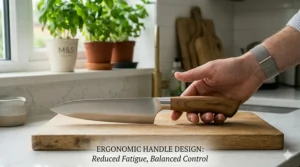
✅ Comfortable, fatigue-reducing ergonomic handle
❌ A few reports of chipping under harsh sharpening
❌ Pricier than the Japanese budget options here
Price and value verdict: generally £55–£80 on Amazon.co.uk — a fair middle ground between Japanese imports and premium German brands.
7. ProCook Gourmet X30 Santoku — The Flat-Bladed Alternative
Not every “lightweight chef knife” search ends with a gyuto — sometimes what you actually want is a santoku, the flatter-bladed Japanese cousin that’s brilliant for straight-down chopping rather than rocking cuts. The ProCook Gourmet X30 Santoku Knife, from the Cheltenham-founded UK retailer, uses carbon stainless steel with an anti-tarnish finish and is built specifically with that lighter, thinner Japanese-style profile.
What most buyers overlook is that a santoku’s shorter, flatter blade genuinely suits smaller UK kitchens and smaller hands better than a full 20cm gyuto — there’s less blade to manage on a typical British chopping board, and the lack of a pronounced curve means less wrist rotation per cut. ProCook backs its knives with a notably long guarantee, and as a Which?-recognised, B Corp-certified UK retailer, returns and warranty claims tend to be a far less painful experience than chasing an overseas brand.
It won’t replace a full-size chef’s knife for breaking down a whole chicken, but for daily vegetable prep it’s arguably the most genuinely “light” experience on this entire list.
✅ Specifically engineered for lower weight and easy control
✅ UK retailer means simple, local returns and support
✅ Anti-tarnish carbon stainless blade
❌ Shorter blade isn’t ideal for larger cuts of meat
❌ Stock availability fluctuates more than the bigger global brands
Price and value verdict: around £20–£35 on Amazon.co.uk, regularly appearing in ProCook’s own sales as well as on Amazon.
How to Choose a Lightweight Chef Knife in the UK
- Decide your weight ceiling first. If you already know heavier knives tire your wrist, treat anything over roughly 220g as a “try before you commit” purchase rather than an automatic buy.
- Match the steel to your maintenance appetite. VG-10 (Tojiro) and CROMOVA 18 (Global) hold an edge longer but need a whetstone; softer steels (Mercer, Kai) are easier to touch up on basic UK kitchen sharpeners.
- Think about your hob, not just your hand. A 20cm blade suits most British worktops; smaller kitchens or smaller hands often get on better with an 18cm santoku.
- Check the handle material against your dishwasher habits. Fibrox and Santoprene tolerate the dishwasher; Damascus-clad VG-10 blades like the Tojiro categorically do not.
- Factor in UK delivery and returns. Amazon.co.uk typically offers free delivery on orders over £25, and Prime members get next-day delivery on most of these knives — handy if a blade arrives and simply doesn’t suit your grip.
- Don’t ignore the warranty small print. Robert Welch and ProCook both offer long UK-based guarantees; imported Japanese brands often rely on the seller rather than a UK service centre.
- Buy one knife, not a set, to start. Every expert recommendation on this list applies to a single chef’s knife — sets dilute the budget across blades you’ll rarely use.
✨ Don’t Miss These Exclusive Deals!
🔍 Ready to stop wrestling with a heavy block-set knife? Tap through to any of the seven picks above and compare current Amazon.co.uk pricing before you decide.
Real Kitchens, Real Choices: Matching the Knife to the Cook
Picture a junior doctor in a one-bed flat in Manchester, cooking for one most nights after a twelve-hour shift. Speed and minimal washing-up matter more than knife snobbery, so the Victorinox Fibrox Pro — dishwasher safe, forgiving, cheap enough to not panic over a dropped blade — makes more sense than anything precious.
Now picture a retired couple in a village outside Bath, cooking properly most days and finally willing to spend on “one good knife” after forty years of supermarket block sets. The Global G-2 or Robert Welch Signature both reward that kind of considered, occasional-but-serious investment — light enough for hands that might be starting to feel the years, sharp enough to make the investment obviously worthwhile within the first roast dinner.
And picture a student in a shared house in Leeds, terrified of spending more than £25 on anything that isn’t beer. The Mercer Culinary Millennia or KAI Wasabi Black both deliver genuine Japanese-grade cutting performance without requiring a loan, and neither will provoke tears if a flatmate borrows it without asking.
Keeping a Lightweight Knife Sharp and Happy in a British Kitchen
Lightweight blades are almost always thinner blades, and thinner blades are less forgiving of bad habits than the chunky German knives you might be used to. A few UK-specific habits make a real difference. Dry your knife immediately after washing — Britain’s damp kitchens and hard-water regions (most of the South East and East Anglia) leave water spots and encourage micro-corrosion on softer Japanese steels far faster than a Mediterranean kitchen would.
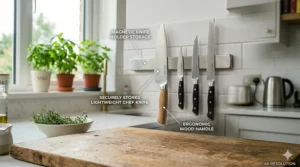
Store it properly. A loose drawer is how thin blades chip against cutlery; a magnetic strip or simple blade guard solves this in a flat with no spare worktop for a block. If you’re in a small London kitchen with limited storage, a slim in-drawer knife tray takes up far less space than a traditional block and protects the edge just as well.
Finally, resist the steel — the honing rod, that is. Harder Japanese steels like VG-10 don’t respond well to traditional honing steels the way German blades do; a ceramic rod or ten strokes on a fine whetstone does far more good and far less harm.
Lightweight vs Heavy: What the Weight Actually Changes
| Factor | Lightweight Knife | Heavy/German-Style Knife |
|---|---|---|
| Wrist fatigue over long prep | Low | Higher |
| Power through dense roots (swede, squash) | Moderate | High |
| Precision on fine herb/garlic work | High | Moderate |
| Beginner forgiveness | Moderate | High |
| Typical UK price entry point | £20+ | £25+ |
The table makes the trade-off obvious once you see it written down: heavier knives use gravity to do some of the work for you, which is genuinely useful on a stubborn swede but becomes a liability the moment you’re thirty minutes into prepping a dinner party for eight. Lightweight knives ask a little more technique of you — slightly more wrist motion, slightly more reliance on a sharp edge rather than brute mass — but that technique becomes second nature within a couple of weeks, after which most converts simply don’t go back.
Common Mistakes When Buying Your First Lightweight Knife
Buying on blade length alone is the most common slip. A 20cm Global feels completely different in the hand to a 20cm Victorinox, because weight distribution, not just length, drives the “lightweight” feel. Skipping the handle material is another — polypropylene, Fibrox, Santoprene and bare steel all behave differently when your hands are wet from rinsing a colander of sprouts, which happens roughly every single day in a British kitchen.
A genuinely UK-specific mistake is assuming every Japanese import ships with proper UK-spec packaging and age-verified delivery. By law, knives sold online to UK customers must go through age verification at checkout and at the door — Amazon and reputable UK retailers handle this automatically, but it’s worth knowing if a “great deal” knife from an unfamiliar third-party seller seems to skip this step entirely, since that’s a red flag for the listing’s legitimacy generally, not just its compliance.
Last, plenty of buyers assume “lightweight” automatically means “less durable.” It doesn’t. The Tojiro DP and Global G-2 are both lighter than a basic supermarket knife and considerably more durable, because the lightness comes from clever steel and construction, not from cutting corners on quality.
Small Hands, Arthritis, and Knife Fatigue — Choosing for Comfort
For anyone shopping specifically because of chef knife fatigue prevention, hand size, or joint discomfort, the calculus shifts slightly away from pure performance and toward grip geometry. A textured, slightly tacky handle — the Mercer Millennia‘s Santoprene or the Kai Wasabi Black‘s bamboo-infused polypropylene — reduces how hard you need to grip to maintain control, which matters enormously if your hands tire or ache with sustained pressure.
Blade length is the other lever worth pulling. An 18cm santoku like the ProCook Gourmet X30 simply requires less wrist rotation per cut than a full 20–21cm gyuto, and for smaller hands that shorter reach translates directly into less strain across a typical prep session. None of the knives here are marketed as medical or accessibility products, and nothing here should be read as clinical advice — but the general design principle (light blade, grippy handle, shorter length where comfortable) lines up with what most UK occupational therapists suggest for kitchen tool comfort.
Long-Term Cost and Maintenance in the UK
Cheaper isn’t always cheaper once you factor in sharpening costs and replacement frequency. A £25 Mercer Millennia that needs honing every few weeks but lasts a decade is, in pure value terms, comparable to a £120 Global G-2 that holds its edge for months but costs five times as much upfront. Where the maths genuinely shifts in favour of the premium knives is replacement: thin, cheap stamped blades from unknown brands tend to need replacing within a couple of years of regular UK use, while every knife on this list is built to last considerably longer than that with basic care.
Professional sharpening in the UK typically costs a few pounds per knife at a local market stall or kitchen shop, which is worth budgeting for once or twice a year regardless of which knife you choose — even VG-10 and CROMOVA steel eventually need more than a home whetstone can comfortably deliver.
UK Knife Law and Buying Online — What You Need to Know
It’s easy to forget that a chef’s knife is, legally, exactly the same category of object as anything else with a blade. Under the Criminal Justice Act 1988, retailers including Amazon must verify that buyers are over 18 before completing a sale, and it’s illegal to use any knife in a threatening way regardless of how mundane its intended purpose. In practice, this just means you’ll tick an age confirmation box at checkout and possibly show ID to the courier — a minor inconvenience that exists for good reason, and one every legitimate UK retailer on this list complies with as standard. For the full official guidance, GOV.UK publishes a plain-English breakdown of what counts as legal to buy, sell and carry.
Beyond age verification, the Consumer Rights Act 2015 protects you if a knife arrives faulty or not as described, and the Consumer Contracts Regulations give most online purchases a 14-day cooling-off period if you simply change your mind — handy if a knife you ordered turns out to feel wrong in your hand once it actually arrives.
Frequently Asked Questions
❓ Is a lightweight chef knife better than a heavy one?
❓ What is the lightest chef knife you can buy?
❓ Are Japanese chef knives good for small hands?
❓ Can a lightweight chef knife go in the dishwasher?
❓ Does Amazon UK offer free delivery on chef knives?
Final Verdict
There’s no single “best” lightweight chef knife, and honestly, anyone who tells you otherwise is probably trying to sell you something. What’s true across every recommendation here is that weight is the variable most UK shoppers ignore and then regret ignoring, usually around the third weeknight of dicing onions with a knife that’s secretly fighting them the whole way through. Start with your budget, be honest about how much maintenance you’ll actually do, and let the rest of the decision follow from there. For most people reading this, the Victorinox Fibrox Pro remains the safest first step up from a supermarket block, while anyone ready to commit properly will rarely regret the Global G-2 or the British-made Robert Welch Signature.
Recommended for You
- Best 10 Inch Chef Knife for Large Hands UK 2026 | Top 7 Picks
- Best 8 Inch Chef Knife UK 2026: 7 Top Picks Reviewed
- Best Chef’s Knife UK 2026: 7 Top Picks for Every Budget
Disclaimer: This article contains affiliate links. As an Amazon Associate, I earn from qualifying purchases. If you purchase products through these links, we may earn a small commission at no additional cost to you.
✨ Found this helpful? Share it with your mates! 💬🤗
