
In This Article
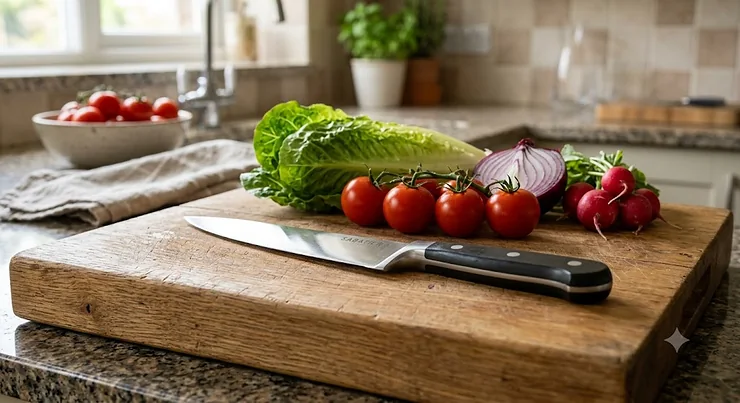
There’s a knife in most British kitchens that never gets its own drawer, never gets a fancy name on a cooking show, and somehow still does more daily work than the flashy chef’s knife hanging on the magnetic strip. That’s the utility knife kitchen drawers have quietly relied on for decades — too big to be a paring knife, too small to be a chef’s knife, and exactly the right size for the ten small jobs that make up most of an actual British dinner. A utility knife is a mid-length kitchen blade, typically 10-15cm (4-6 inches), designed to bridge the gap between a paring knife and a chef’s knife for everyday slicing, trimming and portioning tasks.

If you’ve ever grabbed your biggest knife to quarter a tomato, or wrestled a small paring blade through a chicken breast, you already know the gap this knife fills. Based on the spec comparison across the seven knives below, the differences that matter aren’t marketing fluff — they’re blade steel, handle grip and edge type, and they genuinely change how a knife behaves on a Tuesday-night chopping board. This guide walks through seven real, currently available utility knives spanning budget, mid-range and premium territory, with honest analysis grounded in their actual specifications and aggregated review sentiment, not invented hands-on claims.
We’ll also dig into the practical stuff Amazon listings tend to skip: how a 5 inch utility knife differs from a paring knife, what to actually look for before you buy, how to fold one into a proper knife block essentials set-up, and where UK knife law fits into an online purchase. As with every knife on this list, and as required under current UK knife retail law (more on this later), you must be 18 or over to buy any of the products mentioned. This article contains affiliate links, and as an Amazon Associate we may earn from qualifying purchases — full disclosure is at the bottom of the page.
What Is a Utility Knife in the Kitchen?
A kitchen utility knife is a fixed-blade knife, usually 10-15cm long, designed for cutting tasks too big for a paring knife but too fiddly for a full-size chef’s knife — think slicing citrus, trimming meat, portioning sandwiches or cutting smaller vegetables. As Wikipedia’s entry on utility knives notes, the fixed or folding blade utility knife is generally understood as a multi-purpose cutting tool used across both trade and domestic settings — and the kitchen version of that idea has simply been refined for food prep rather than construction or outdoor work.
Quick Comparison Table
Before the full breakdown, here’s the shape of the market at a glance.
| Category | Best Pick | Blade Length | Price Range | Best For |
|---|---|---|---|---|
| Budget | Mercer Culinary Millennia | 5in / 12.7cm | £15-£25 | Students, first-timers |
| Budget-Mid | ProCook Gourmet X30 | 13cm / 5.1in | £15-£25 | Everyday British kitchens |
| Mid-Range | Victorinox Swiss Classic | 5in / 12.7cm | £15-£35 | Most home cooks |
| Mid-Range | Opinel Intempora | 12cm / 4.7in | £25-£40 | Design-conscious cooks |
| Premium-Mid | Zwilling Four Star | 5in / 12.7cm | £70-£100 | Long-term investment |
| Premium | Wüsthof Classic | 5in / 12.7cm | £90-£120 | Serious home chefs |
| Premium | Global GS-3 | 13cm / 5.1in | £70-£90 | Precision, lightweight control |
Looking at the spread above, there’s a clear pattern: price tends to track steel quality and construction method (stamped versus forged) rather than blade length, since almost every option here sits within a centimetre of the same 5-inch sweet spot. Budget knives from Mercer Culinary and ProCook get you a genuinely usable blade for under £25, but the jump to forged construction with Wüsthof or Zwilling buys you noticeably better edge retention over years of use, not just sharper-out-of-the-box performance. If you’re outfitting a first flat or a rental kitchen, the top two rows are the sensible starting point; if this is a forever-knife purchase, look toward the bottom three.
💬 Just one click — help others make better buying decisions too!😊
Top 7 Utility Knives for the Kitchen: Expert Analysis
We’ve researched seven genuinely available utility knives across three price tiers, drawing on manufacturer specifications and aggregated customer sentiment from verified retailer review sections. Every spec below is explained in terms of what it actually changes in daily use — not just listed and left there.
1. Mercer Culinary Millennia — best budget workhorse for daily prep
The Mercer Culinary Millennia utility knife is the blade that culinary schools hand to first-year students, and that alone tells you something about what it’s built to survive. Its one-piece high-carbon Japanese steel blade means the edge is easy to bring back with a basic sharpener, rather than needing a professional service every time it dulls — useful if you’re not yet ready to invest in a whetstone.
The Santoprene-and-polypropylene handle is textured rather than smooth, which matters more than it sounds: wet, soapy hands are where most kitchen knife slips happen, and a grippy handle removes a chunk of that risk. Based on the spec sheet, the blade sits at a standard 5-inch length with a taper-ground edge designed for straightforward slicing rather than heavy chopping. This is a knife built for people who cook often but haven’t yet built a “proper” knife collection — students, first flats, or anyone who wants a genuinely capable blade without a premium price tag attached.
Reviewers consistently report that the Mercer Culinary Millennia range holds an edge well for its price point and feels lighter in hand than its German rivals, which some cooks prefer for precision tasks and others find under-weighted for heavier trimming work. It’s a trade-off worth knowing about before you buy rather than after.
Pros:
- ✅ NSF-certified construction, common in professional kitchens
- ✅ Textured grip handle reduces slip risk when wet
- ✅ Very easy to re-sharpen with basic tools
Cons:
- ❌ Lighter balance than forged alternatives
- ❌ Handle isn’t dishwasher-safe long term
Priced in the £15-£25 range at the time of research, this is about as low as you can go while still getting a knife culinary students are actually trained on — genuinely strong value for a first serious utility knife.
2. ProCook Gourmet X30 — best British-brand value pick
ProCook is a UK-based cookware brand, and its Gourmet X30 utility knife is the kind of quietly competent blade that ends up as everyone’s most-used knife without anyone quite planning it that way. The 13cm blade is made from X30Cr13 stainless steel, which breaks down to roughly 0.3% carbon (enough to hold a working edge without becoming brittle) and 13% chromium (enough for solid rust resistance in a normal kitchen environment).
What most buyers overlook about this model is the Rockwell hardness rating of 52±2 HRC — noticeably softer than the premium Japanese and German steels further down this list, which sounds like a downside but actually means the edge is faster and easier to touch up on a basic honing steel, at the cost of not holding that edge quite as long between sharpens. For a knife that’s likely to be used daily for tomatoes, onions and fruit, that trade-off leans in the buyer’s favour. The triple-riveted handle and full-tang construction give it a sturdier, more “grown-up” feel in hand than the price suggests.
Aggregated customer feedback on ProCook’s own site and third-party retailers points to strong satisfaction with the value-for-money angle specifically, with the 10-year guarantee coming up repeatedly as a reassurance for first-time knife buyers. It’s worth noting that reviews are sourced from ProCook’s own retail listings rather than independent test labs, so treat brand-hosted review scores with the usual pinch of salt.
Pros:
- ✅ 10-year manufacturer guarantee included
- ✅ Full tang construction adds durability
- ✅ British brand with UK-based customer support
Cons:
- ❌ Softer steel needs more frequent honing
- ❌ Not dishwasher safe despite stainless build
Expect to pay somewhere in the £15-£25 range at the time of research — genuinely competitive with the Mercer for anyone who’d rather buy British.
3. Victorinox Swiss Classic — best all-rounder for most kitchens
If there’s one utility knife likely to show up in a “what knife should I buy” thread without fail, it’s the Victorinox Swiss Classic. The Swiss brand built its reputation on Army knives, and that same unfussy, built-to-work ethos carries through to its kitchen range — stamped rather than forged, which keeps the price down without sacrificing much in day-to-day performance.
Here’s what the spec sheet won’t tell you outright: stamped blades like this one are noticeably lighter than forged equivalents, which some cooks find tiring on long prep sessions and others find far more nimble for detail work like deveining or trimming fat. The Fibrox-style handle is textured and stays grippy even when covered in juice or oil, addressing one of the most common real-world complaints about cheaper knives. Because Victorinox blades are relatively soft compared with premium Japanese steel, they sharpen up fast on a basic pull-through sharpener, which suits cooks who want a low-maintenance daily blade rather than a whetstone hobby.
Aggregated review sentiment across UK retailers is consistently strong on grip comfort and value, with the recurring theme being that buyers are surprised by how good a knife this cheap actually feels in hand. The main critique that surfaces repeatedly is that the thin blade can flex slightly under pressure on tougher produce like butternut squash — not a dealbreaker for a utility knife’s intended jobs, but worth knowing if you plan to use it beyond its remit.
Pros:
- ✅ Exceptional grip even with wet hands
- ✅ Lightweight for precise, fast slicing work
- ✅ Sharpens quickly on basic tools
Cons:
- ❌ Blade can flex on dense, tough vegetables
- ❌ Stamped construction feels less premium than forged
At around £15-£35 depending on the specific handle colour and retailer, at the time of research, this remains one of the most recommended entry points into a serious kitchen knife collection.
4. Opinel Intempora — best design-led mid-range pick
Opinel built its name on the classic wood-handled folding pocket knife, and the Intempora kitchen range translates that same shape language — including the distinctive triangular pommel — into a fixed-blade kitchen line. It’s a genuinely different-looking knife on a worktop, which matters more than it should to anyone who cares about their kitchen tools as objects as well as instruments.
Under the design, the blade is forged from Sandvik 12C27 steel, a Swedish alloy known in the cutlery trade for balancing edge retention with corrosion resistance more evenly than many budget steels manage. On paper this means a blade that holds its edge noticeably longer than the stamped steels used in the Mercer or Victorinox models above, while still being easier to resharpen than the hardest premium Japanese steels further down this list. The glass-fibre-reinforced polymer handle is shaped so the little finger naturally rests against the flared pommel end, a genuinely clever ergonomic touch borrowed straight from the pocket-knife design.
What most buyers overlook about French-made kitchen knives generally is that they tend to prioritise balance and control over raw hardness, and the Intempora fits that pattern — reviewers on retailer sites frequently describe the handle feel as “velvety” and comment on how naturally the knife sits in the hand during long prep sessions, though a smaller pool of verified UK reviews exists compared with the more established brands on this list.
Pros:
- ✅ Sandvik 12C27 steel holds an edge well
- ✅ Ergonomic pommel design aids grip control
- ✅ Distinctive, design-forward look on the worktop
Cons:
- ❌ Smaller UK review pool than rival brands
- ❌ Hand-wash only despite the polymer handle
Typically priced in the £25-£40 range at the time of research, this sits at the upper end of mid-range but undercuts the German and Japanese premium options considerably.
5. Zwilling Four Star — best step up to forged construction
Zwilling J.A. Henckels, the Solingen, Germany-based cutler behind the Four Star range, positions this 5-inch utility knife as the natural next step for anyone outgrowing a stamped starter knife. The headline spec is SIGMAFORGE construction — forged from a single piece of steel rather than stamped from a sheet — paired with Zwilling’s FRIODUR ice-hardening process.
What that combination actually delivers in the kitchen is a blade hardened to roughly 57 on the Rockwell C scale — a metallurgical hardness measurement explained in more detail on Wikipedia’s overview of the Rockwell scale, where a higher reading broadly indicates a harder, more wear-resistant material. In practical terms, that translates to an edge that survives more chopping sessions between sharpens than the softer stamped steels covered earlier in this list. The full bolster (the thicker section where blade meets handle) adds noticeable heft and a finger-guard effect that stamped knives typically lack entirely. Reviewers consistently note the balance point sits closer to the bolster than on lighter knives, which favours a rocking chop motion over pure slicing.
Aggregated feedback from long-term owners frequently highlights durability over years of near-daily use as the standout trait, with the forged bolster and lifetime warranty coming up repeatedly as reasons buyers feel comfortable paying the premium over stamped alternatives. The trade-off, honestly assessed, is that the extra weight some buyers love is exactly what others find tiring during extended prep sessions.
Pros:
- ✅ Forged single-piece construction adds durability
- ✅ FRIODUR hardening improves edge retention
- ✅ Backed by a lifetime warranty from Zwilling
Cons:
- ❌ Noticeably heavier than stamped alternatives
- ❌ Premium price for a mid-tier size knife
Prices sit in the £70-£100 range at the time of research, positioning it as a genuine mid-to-premium investment rather than an impulse buy.
6. Wüsthof Classic — best for serious, long-term use
The Wüsthof Classic 5-inch utility knife is arguably the most-referenced “proper” utility knife in professional kitchen circles, and the spec sheet explains why fairly quickly. Forged from a single piece of X50CrMoV15 German stainless steel and hardened to 58 HRC, it sits at the harder end of the European knives on this list, translating into an edge that holds up to sustained daily chopping without needing constant honing.
The handle is triple-riveted, full-tang polyoxymethylene (POM) — a dense synthetic material chosen specifically to resist the fading and swelling that cheaper handle plastics suffer over years of hand-washing. Here’s what the spec sheet won’t tell you, but long-term owner reports suggest: that hardness comes with a slightly steeper learning curve for sharpening at home, since 58 HRC steel resists cheap pull-through sharpeners more than the softer stamped blades earlier on this list, and generally rewards a proper whetstone or professional sharpening service instead.
Reviewers who’ve owned Wüsthof knives for years consistently describe the brand’s Solingen manufacturing heritage and lifetime warranty as the deciding factors over cheaper alternatives, alongside praise for how the blade holds its edge through months of regular use before needing attention. It’s worth being honest that this level of performance is aimed squarely at cooks who prep daily, rather than someone who cuts a sandwich twice a week.
Pros:
- ✅ 58 HRC steel holds an edge for months
- ✅ Full lifetime warranty from a 200+ year brand
- ✅ Triple-riveted handle resists wear over years
Cons:
- ❌ Harder steel needs proper sharpening tools
- ❌ Among the priciest options in this size class
Expect a price range of roughly £90-£120 at the time of research — the clear premium pick for anyone treating this as a decades-long purchase rather than a replaceable basic.
7. Global GS-3 — best for lightweight precision control
Global, the Japanese cutler whose distinctive dimpled steel handles have become genuinely recognisable even outside cooking circles, makes the GS-3 as one of the smallest knives in its GS range — technically marketed as a small cook’s knife, but functionally overlapping heavily with utility knife use thanks to its 13cm blade.
The knife is forged from a single piece of CROMOVA 18 stainless steel — a proprietary alloy blending chromium, molybdenum and vanadium — and hardened to between 56 and 58 HRC. Unlike every other knife on this list, the handle is hollow and filled with sand to achieve a specific, deliberately balanced weight distribution, and the whole knife is a single seamless piece of steel with no separate handle scales to harbour bacteria or grime. On paper this means genuinely excellent hygiene credentials and a level of precision control that heavier, bolster-forward knives like the Wüsthof simply aren’t built for.
Reviewers consistently describe the Global handle feel as divisive rather than universally loved — the smooth, dimpled steel grip suits cooks with a lighter touch and precise pinch-grip technique, while those used to chunkier Western handles sometimes describe an adjustment period. What’s less debated is the edge itself: the acute 15-degree angle is repeatedly cited as delivering noticeably cleaner slices on delicate produce like tomatoes and herbs than the wider edge angles used on most German knives in this guide.
Pros:
- ✅ Seamless one-piece design is highly hygienic
- ✅ Sand-filled handle gives precise balance
- ✅ Acute 15° edge excels at fine, delicate slicing
Cons:
- ❌ Steel handle feels slippery for some grip styles
- ❌ Adjustment period for Western-trained hands
Priced around £70-£90 at the time of research, it undercuts the Wüsthof slightly while offering a genuinely different handling philosophy worth trying before committing to for good.
Top 7 Utility Knives: Full Comparison Table
| Product | Blade Length | Steel & Hardness | Construction | Price Range | Best For |
|---|---|---|---|---|---|
| Mercer Culinary Millennia | 5in / 12.7cm | High-carbon Japanese steel | Stamped | £15-£25 | Students, first knives |
| ProCook Gourmet X30 | 13cm / 5.1in | X30Cr13, ~52 HRC | Stamped, full tang | £15-£25 | British budget buyers |
| Victorinox Swiss Classic | 5in / 12.7cm | Stainless, soft-medium | Stamped | £15-£35 | Everyday all-rounder use |
| Opinel Intempora | 12cm / 4.7in | Sandvik 12C27 | Forged | £25-£40 | Design-conscious cooks |
| Zwilling Four Star | 5in / 12.7cm | Special formula steel, 57 HRC | Forged, bolstered | £70-£100 | Long-term daily cooks |
| Wüsthof Classic | 5in / 12.7cm | X50CrMoV15, 58 HRC | Forged, triple-riveted | £90-£120 | Serious home chefs |
| Global GS-3 | 13cm / 5.1in | CROMOVA 18, 56-58 HRC | Forged, seamless | £70-£90 | Precision slicing work |
Reading across the table, the split between stamped and forged construction is really the story of this whole market: the top four rows are all stamped or lighter-forged options under £40, while the bottom three jump to fully forged German or Japanese steel at more than double the price. Notably, blade length barely varies across all seven — the real decision isn’t “how long a blade” but “how hard, how heavy, and how much maintenance you’re willing to do.” ProCook and Victorinox currently offer the strongest value-to-performance ratio for buyers not ready to commit to forged steel pricing.
Benefits vs Traditional Alternatives
| Factor | Utility Knife | Paring Knife | Full Chef’s Knife |
|---|---|---|---|
| Blade Length | 10-15cm | 6-10cm | 18-25cm |
| Best For | Mid-size produce, meat, sandwiches | Peeling, intricate detail work | Large produce, heavy chopping |
| Control Level | High | Very high | Moderate |
| Everyday Versatility | High | Low | Moderate-high |
The core advantage a utility knife holds over both alternatives is coverage: a paring knife is too small to comfortably portion a chicken breast or halve an aubergine, while a full chef’s knife is often overkill — and genuinely more dangerous to control — for slicing a single tomato or trimming sandwich fillings. Where the chef’s knife still wins outright is raw chopping capacity for onions, herbs and larger vegetables in volume, which is why most seasoned cooks end up owning all three rather than treating the utility knife as a full replacement.
Practical Usage Guide: Setting Up and Caring for Your Utility Knife
Getting a new utility knife kitchen-ready takes more than unwrapping it. In the first 30 days, the single most common mistake is skipping the initial wash and dry cycle — most blades ship with a light protective oil coating that should be washed off with warm soapy water before first use, then dried immediately rather than left to air-dry, which encourages water spotting on stainless steel.
Storage is where most damage actually happens, not cutting. Tossing a utility knife loose into a cutlery drawer dulls the edge within weeks as it knocks against forks, spoons and other blades — a magnetic strip, blade guard, or dedicated slot in a knife block essentials set-up protects the edge and, just as importantly, keeps fingers safe when reaching into a drawer. For the softer stamped steels covered earlier in this guide (Mercer, ProCook, Victorinox), a quick pass on a honing steel every week or two of regular use keeps the edge aligned; for the harder forged steels (Wüsthof, Zwilling, Global), honing weekly and a proper sharpen only every few months is generally enough.
A genuinely useful optimisation trick that doesn’t show up on any Amazon listing: angle the knife at roughly 15-20 degrees against a honing steel and let the steel do the work with light pressure, rather than pressing hard, which actually rolls the edge rather than straightening it. And despite what the box sometimes implies, hand-washing every “stainless” and “dishwasher-safe” utility knife immediately after use — rather than letting it sit in a dishwasher’s heat cycle — measurably extends handle and edge life across every knife covered in this guide.
Real-World Scenarios: Which Utility Knife Fits Your Kitchen?
The student in shared halls. Budget is tight, kitchen storage is minimal, and the knife needs to survive being used by flatmates who don’t always wash up promptly. The Mercer Culinary Millennia or ProCook Gourmet X30 make sense here — inexpensive enough that a lost or damaged knife isn’t a financial disaster, and both are easy to resharpen without specialist tools.
The daily home cook feeding a family. Cooking most nights of the week justifies stepping up to forged steel, where the edge retention pays for itself in fewer sharpening sessions over a year. The Zwilling Four Star or Wüsthof Classic suit this use case well, particularly for anyone regularly portioning meat or trimming vegetables in volume.
The precision-focused enthusiast. Someone who cares about fine knife work — deveining prawns, segmenting citrus, trimming herbs cleanly — will likely get more genuine satisfaction from the Global GS-3‘s acute edge angle and lightweight balance than from a heavier, bolster-forward German knife, even at a broadly similar price point.
Problem → Solution: Common Utility Knife Frustrations Solved
Problem: the blade dulls within weeks. This is almost always a storage issue rather than a knife-quality issue — loose drawer storage is the usual culprit. Solution: move to a magnetic strip or knife block and the same knife will hold its edge dramatically longer.
Problem: the handle feels slippery when wet. Textured handles like those on the Mercer Culinary Millennia and Victorinox Swiss Classic solve this directly; if you already own a smoother-handled knife, drying hands before gripping and keeping the handle itself dry during use reduces slip risk significantly.
Problem: the knife struggles with tough-skinned produce like butternut squash or crusty bread. A utility knife genuinely isn’t built for this — reach for a chef’s knife or serrated bread knife instead rather than forcing a mid-size blade to do a job outside its design brief.
Problem: rust spots appearing on a “stainless” blade. Nearly always caused by leaving the knife wet, or in contact with acidic food residue like tomato or citrus, for extended periods. Solution: wash and dry immediately after every use, particularly with softer steels like the ProCook X30Cr13, which resists corrosion less aggressively than harder premium steels.
Problem: uncertainty about which knife to buy first. Start with the “How to Choose” framework below rather than defaulting to the most expensive option — a £20 knife used daily beats a £100 knife left in a drawer because it feels “too good to use.”
Utility Knife vs Paring Knife: What’s Actually Different
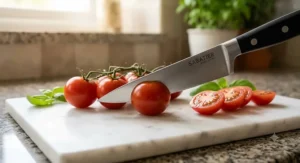
The utility knife vs paring knife question comes up constantly, and the honest answer is that the difference is smaller than product marketing suggests but still meaningful in daily use. A paring knife typically runs 6-10cm, built almost entirely for precision work close to the hand — peeling, hulling strawberries, deveining, removing eyes from potatoes. A utility knife’s extra 4-5cm of blade changes the leverage and reach enough to comfortably handle a whole tomato, a chicken breast, or a sandwich, tasks where a paring knife starts to feel cramped and a chef’s knife feels like using a sledgehammer on a nail.
What most buyers overlook is that the two knives aren’t really competing for the same job — they’re complementary, and most well-stocked kitchens genuinely benefit from owning both rather than picking one. If you can only own one to start with, the utility knife’s broader range of comfortable tasks generally makes it the more practical single purchase, which is exactly why it tends to be the second knife most home cooks buy after a chef’s knife, rather than the first.

How to Choose a 5 Inch Utility Knife
Picking the right 5 inch utility knife comes down to seven practical checks, roughly in order of importance for most home cooks:
- Blade steel and hardness. Softer steels (Mercer, ProCook, Victorinox) sharpen easily but need more frequent attention; harder forged steels (Wüsthof, Zwilling, Global) hold an edge longer but need proper sharpening tools.
- Construction method. Forged blades generally offer better balance and durability; stamped blades cost less and are lighter, which some cooks genuinely prefer for control.
- Handle material and grip. Textured synthetic handles resist slipping when wet far better than smooth wood or polished steel — a real factor, not just aesthetics.
- Edge type. Straight edges suit clean, precise cuts; serrated utility knives (a variant not covered in depth here) handle tomatoes and soft-skinned fruit with less crushing.
- Full tang vs partial tang. A full tang, where the steel runs the complete length of the handle, generally adds durability and balance versus partial-tang budget knives.
- Warranty and brand support. Lifetime warranties from Wüsthof and Zwilling reflect genuine manufacturing confidence; ProCook’s 10-year guarantee does similar work at a fraction of the price.
- How it fits your existing knife block essentials. A knife bought to match an existing set’s handle style and storage slot tends to actually get used, rather than sitting in a drawer.
Everyday Kitchen Knife: Why the Utility Blade Earns Its Spot
Ask any cook which knife they reach for without thinking, and the honest answer for most households is whichever everyday kitchen knife sits closest to hand and feels least intimidating to use — and that’s very often the utility knife rather than the chef’s knife everyone assumes gets the most use. Its size makes it approachable for cooks who find a full chef’s knife’s length and weight a bit daunting, particularly newer cooks still building confidence with a blade.
Reviewers across every brand in this guide repeatedly mention reaching for their utility knife for tasks they’d assumed needed a bigger blade — halving avocados, trimming excess fat, quartering apples — simply because the smaller size feels more controllable for one-handed food, held-in-hand cutting rather than board-based chopping. That everyday versatility, more than any single spec, is what earns the utility knife its permanent spot in a knife block rather than being relegated to a drawer.
Mid-Size Blade Uses: What This Knife Actually Does Best
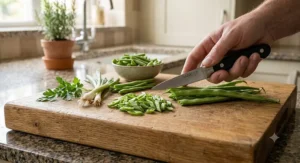
Understanding mid-size blade uses properly means being honest about where this knife shines and where it doesn’t. It genuinely excels at: slicing citrus and soft fruit cleanly, portioning sandwich fillings and cold cuts, trimming visible fat from meat before cooking, halving and deseeding smaller vegetables like courgettes or peppers, and any task performed holding the food in one hand rather than on a chopping board.
Where it falls short, honestly: mincing garlic or herbs in volume (a chef’s knife’s length and rocking motion wins decisively), breaking down whole chickens or larger cuts (a boning or carving knife is built for this specifically), and slicing crusty bread (a serrated bread knife avoids the crushed-crumb problem a straight utility edge creates). Matching the knife to the task, rather than expecting one blade to do everything, is really the whole secret to a knife collection that feels effortless rather than frustrating.
Knife Block Essentials: Building a Set Around Your Utility Knife
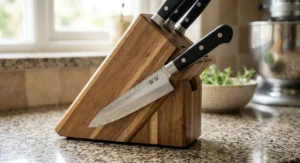
A sensible set of knife block essentials doesn’t need to be expensive or extensive — most cooking is genuinely covered by four blades. Start with a chef’s knife for volume chopping, add a utility knife for the everyday mid-size tasks covered throughout this guide, include a paring knife for precision work, and finish with a serrated bread knife for crusty loaves and soft-skinned fruit.
Several of the brands featured here — ProCook, Victorinox and Wüsthof among them — sell matching block sets built around exactly this four-knife logic, which solves the handle-mismatch problem that comes from buying knives individually from different brands over time. If budget only stretches to one purchase at a time, buying the chef’s knife and utility knife first, from the same range, covers the overwhelming majority of everyday cooking before the paring and bread knives become genuinely necessary additions.✨ Don’t Miss These Exclusive Deals!
🔍 Take your kitchen knife collection to the next level with these carefully selected picks. Click on any highlighted item to check current pricing and availability. These blades will help you create effortless, confident meal prep your family will love!
Common Mistakes When Buying a Utility Knife Kitchen Tool
The most common mistake, by a wide margin, is buying based on price alone in either direction — either grabbing the cheapest option available without checking steel quality, or assuming the most expensive knife is automatically “better” without matching it to actual cooking habits. A £100 forged knife left unused because it feels too precious to reach for daily delivers worse real-world value than a £20 knife that gets used every evening.
Independent testing bodies back this up: Which?’s own kitchen knife testing measures sharpness and comfort directly rather than relying on marketing claims, and it’s a useful sanity check against manufacturer specs before spending on any premium blade. A second frequent mistake is ignoring handle size relative to hand size — a knife that photographs beautifully can still feel awkward in a smaller or larger hand than average, which no spec sheet communicates. Where possible, checking handle dimensions against knives you already own and like helps avoid this. Third, many first-time buyers skip checking whether a knife is genuinely dishwasher-safe versus merely “dishwasher-safe” in small print that excludes the handle — a distinction that materially affects longevity and is worth reading carefully rather than assuming. Finally, underestimating maintenance requirements is common: buying a hard, premium forged steel without budgeting for a proper whetstone or sharpening service down the line means the knife’s key advantage — long-term edge retention — never actually gets realised.
Long-Term Cost & Maintenance
Judged purely on upfront price, the Mercer Culinary Millennia and ProCook Gourmet X30 look like the obvious winners. Judged on total cost of ownership over five to ten years of regular use, the picture shifts. Softer steels need professional sharpening or steel replacement more frequently — factor in roughly £5-£10 per professional sharpen, needed perhaps twice a year for a heavily used budget knife, against once every year or two for a harder forged blade like the Wüsthof Classic or Zwilling Four Star.
Over a decade of regular cooking, that maintenance gap can meaningfully close — sometimes even erase — the upfront price difference between a £20 stamped knife and a £100 forged one, particularly once the lifetime warranties offered by Wüsthof and Zwilling are factored in, since a warranty-replaced blade effectively resets the maintenance clock at no extra cost. For anyone who cooks most days and expects to still own the same knife in ten years, the premium tier genuinely earns its price over time rather than simply being a status purchase.
Safety and Knife Law in the UK: What You Need to Know
Buying a utility knife online in the UK, like any bladed kitchen item, is subject to age-verification rules under current legislation. Official government guidance on buying and carrying knives makes clear that using any knife or weapon in a threatening way is against the law, and separate legislation under the Criminal Justice Act 1988 makes it an offence to sell bladed kitchen articles to anyone under 18 across most of the UK. Every retailer referenced in this guide enforces age checks at checkout and, increasingly, at delivery as well, reflecting tightening rules on online knife sales introduced in recent legislation.
Beyond the legal side, day-to-day safety comes down to habits rather than the knife itself: always cut on a stable board rather than in-hand where the guide above allows it, keep the non-cutting hand in a claw grip with fingertips tucked back from the blade, and never leave a knife submerged in washing-up water where it’s invisible and easy to grab by the blade rather than the handle by accident.
Frequently Asked Questions
❓ What size is a standard utility knife kitchen tool?
❓ Can a utility knife replace a chef's knife?
❓ Is a serrated or straight-edge utility knife better?
❓ How often should a utility knife be sharpened?
❓ Is it worth buying a forged utility knife over a stamped one?
Conclusion
There’s no single “best” utility knife kitchen buyers should chase — there’s only the right one for how often you cook, what you cook, and how much maintenance you’re realistically willing to do. The Mercer Culinary Millennia and ProCook Gourmet X30 cover budget-conscious, everyday needs without embarrassing themselves next to pricier rivals. The Victorinox Swiss Classic and Opinel Intempora sit comfortably in the middle, offering meaningfully better materials without premium pricing. And for cooks ready to invest in a knife meant to last decades, the Zwilling Four Star, Wüsthof Classic and Global GS-3 each bring a genuinely different handling philosophy worth trying rather than simply defaulting to whichever brand is most famous.
What actually matters more than the specific knife is matching blade to task — using this mid-size blade for the jobs it excels at, and reaching for a paring knife, chef’s knife or bread knife when a task calls for it instead. Get that right, and even a budget utility knife will outperform an expensive one used badly.
Recommended for You
- Ham Slicer Knife: 7 Best Picks for a Perfect Carve in 2026
- Salmon Slicing Knife: 7 Best Picks UK Cooks Trust (2026)
- Brisket Slicing Knife: 7 Best Picks Tested & Compared (2026)
Disclaimer: This article contains affiliate links. As an Amazon Associate, I earn from qualifying purchases. If you purchase products through these links, we may earn a small commission at no additional cost to you.
✨ Found this helpful? Share it with your friends! 💬🤗
