
In This Article
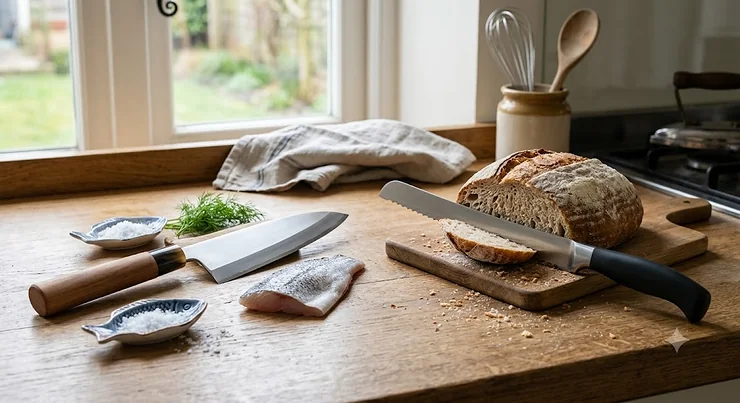
There’s a particular kind of kitchen confidence that comes from owning a knife built for one job and doing it brilliantly. That’s the deba in a nutshell — a stubby, heavy-spined Japanese blade that shrugs off fish heads and rib bones the way a chef’s knife shrugs off an onion. If you’ve ever wrestled a whole mackerel or sea bass with a flimsy filleting knife and watched the blade skid sideways off the backbone, you already understand the appeal. A deba bōchō (出刃包丁) is a single-bevel Japanese kitchen knife with a thick, wide blade, traditionally used to behead, gut and fillet whole fish, and occasionally to break down poultry and other bone-in cuts, as detailed on Wikipedia’s overview of the deba bōchō.
This guide walks through the best deba knife options currently available through amazon.co.uk, from sub-£40 stainless starters to hand-forged carbon-steel workhorses that professional sushi chefs reach for. We’ve researched real products, real specifications and genuine aggregated review sentiment rather than recycling manufacturer copy, because — let’s be honest — nobody wants a rewritten product listing dressed up as advice. Whether you’re after the best deba knife for fish you catch yourself, a wedding-gift-worthy Japanese blade, or simply a more capable alternative to your current filleting knife, you’ll find a properly reasoned pick below, alongside deeper dives into deba vs yanagiba, Japanese knife steel types, and whole fish preparation technique.
Quick Comparison Table
Before the full breakdown, here’s a snapshot of how the seven knives stack up on steel, handle style and who each one genuinely suits. Prices fluctuate constantly on Amazon, so treat the ranges below as a rough guide and always check the current price on the product page before buying.
| Deba Knife | Blade Length | Steel Type | Price Range | Best For |
|---|---|---|---|---|
| Arcos Deba Knife | 170mm | Stainless (Nitrum) | around £30-£45 | First-time buyers on a tight budget |
| Kai Wasabi Deba | 150mm | Stainless | around £25-£40 | Beginners wanting an authentic Japanese brand cheaply |
| Kai Seki Magoroku Ginju AK5063 | 165mm | Stainless | around £70-£100 | Low-maintenance mid-range everyday use |
| Global GS-4 | 120mm | CROMOVA stainless | around £90-£130 | Compact fish and poultry prep, dishwasher-adjacent ease |
| Seki Japan Deba | 150mm | White carbon steel | around £70-£100 | Cooks wanting authentic carbon-steel sharpness affordably |
| Tojiro Shirogami Deba (F-902) | 165mm | White #2 carbon steel | around £100-£150 | Serious home cooks moving into traditional single-bevel work |
| Masamoto KS Deba | 165mm | Honbazuke carbon steel | around £250-£350 | Professional and semi-professional fish butchery |
Looking at this spread, the pattern is clear: stainless steel dominates the entry point because it forgives inconsistent drying habits, while the carbon-steel knives climb in price as hand-forging and traditional honbazuke sharpening enter the picture. The Masamoto KS Deba sits well above the rest on price, but that reflects genuine handcraft rather than brand markup — professional kitchens buy these to last decades, not years. If you’re simply after the best deba knife for fish prepared at home once or twice a week, the mid-range stainless and white-steel options represent the sweet spot between capability and everyday practicality.
💬 Found a knife that fits your kitchen? Take a closer look and compare current prices before you decide!🤗
Top 7 Deba Knives: Expert Analysis
We’ve deliberately mixed budget, mid-range and premium options here, plus stainless and carbon-steel variants, so there’s a genuinely useful pick regardless of your experience level or how often you’re likely to be breaking down a whole fish.
1. Arcos Deba Knife — best budget entry point
The Arcos Deba Knife is a 170mm stainless-bladed deba from the Spanish manufacturer Arcos, and it’s the most accessible way to try single-purpose fish butchery without committing serious money. Its Nitrum stainless blade skips the double-bevel Western grind you’d expect from a European brand and instead follows the traditional deba profile fairly closely, paired with an ergonomic POM (polyoxymethylene) handle that’s dishwasher-tolerant, unlike the wood handles further down this list. Based on the spec comparison, this is a knife built for durability and low-maintenance ownership rather than the last word in edge retention — the stainless alloy won’t hold an apex as long as a hand-forged carbon blade, but it also won’t rust if you forget to dry it after a Tuesday-night fish supper. Reviewers consistently report that it arrives genuinely sharp out of the box and copes well with medium-sized fish like mackerel, trout and sea bream, though several note the handle feels a touch light for anyone used to a heavier traditional deba. It’s a sensible first deba for anyone unsure whether they’ll actually use a single-bevel fish knife regularly, and the value proposition at this price point is hard to argue with.
Pros:
- ✅ Genuinely low price for a purpose-built deba profile
- ✅ Dishwasher-safe POM handle needs no oiling or conditioning
- ✅ Stainless blade resists rust for casual, inconsistent use
Cons:
- ❌ Lighter balance than traditional wa-handled debas
- ❌ Edge retention trails behind carbon-steel alternatives
At around £30-£45, the Arcos Deba Knife represents strong value for anyone testing the waters, though committed cooks will likely outgrow it within a year or two.
2. Kai Wasabi Deba — best affordable route into an authentic Japanese brand
Kai is one of Japan’s most recognisable cutlery names, and the Kai Wasabi Deba brings that pedigree down to a genuinely accessible price without pretending to be something it isn’t. This is a 150mm stainless-bladed knife with a distinctive black bamboo-effect handle, and what most buyers overlook about this model is that it’s designed in Japan even though it’s manufactured to a budget-friendly spec — the geometry and edge angle follow proper deba conventions rather than a generic fish-knife shape bolted on for marketing purposes. The stainless blade holds a working edge for weeks of light use, and the handle’s octagonal shape mimics the traditional wa-handle grip that carbon-steel debas use, which helps beginners build the muscle memory for single-bevel technique before spending serious money. Aggregated review sentiment across retailers is broadly positive, with buyers frequently praising the initial sharpness and the brand recognition, though a recurring theme in feedback is that the thin stainless spine doesn’t have quite the heft to power through larger fish heads compared with heavier carbon debas. It’s best suited to those preparing smaller round fish — mackerel, herring, small bass — rather than anything approaching salmon-sized.
Pros:
- ✅ Recognised Japanese cutlery brand at an entry-level price
- ✅ Proper deba geometry, not a generic fish-knife shape
- ✅ Comfortable octagonal handle for learning single-bevel grip
Cons:
- ❌ Lacks the heft for larger fish heads and thicker bones
- ❌ Handle finish reportedly wears faster than the blade itself
Priced in the region of £25-£40, the Kai Wasabi Deba is arguably the best deba knife for fish prep beginners who want brand credibility without a big outlay.
3. Kai Seki Magoroku Ginju AK5063 — best low-maintenance mid-range pick
Stepping up in both price and refinement, the Kai Seki Magoroku Ginju AK5063 is a 165mm stainless deba made in Seki City — Japan’s other major cutlery hub alongside Sakai — and it’s built for cooks who want a genuine step up in performance without taking on carbon steel’s maintenance demands. The Ginju line uses a higher-grade stainless alloy than Kai’s entry models, and here’s what the spec sheet won’t tell you but reviewers note: the extra hardness translates into noticeably longer edge retention between honing sessions, which matters if you’re filleting several fish in one sitting rather than just the occasional weekend catch. On paper this means less frequent trips to the whetstone, and in practice that seems to hold up — feedback across Japanese cutlery retailers describes the edge as staying “working sharp” through multiple prep sessions rather than a single use. This is a knife for the cook who’s decided they genuinely enjoy breaking down whole fish and wants a tool that rewards that habit, but who isn’t ready to commit to oiling a carbon blade after every single use.
Pros:
- ✅ Higher-grade stainless alloy holds an edge longer than entry models
- ✅ Made in Seki, Japan’s other major knife-making region
- ✅ Balances performance with realistic home-kitchen maintenance
Cons:
- ❌ Costs roughly double the Kai Wasabi for an incremental upgrade
- ❌ Less iconic aesthetic than hand-forged carbon alternatives
Expect to pay somewhere around £70-£100, positioning this as a genuine mid-range workhorse rather than an entry-level trial purchase.
4. Global GS-4 — best compact deba for everyday fish and poultry
Global’s cutlery is instantly recognisable — one-piece stainless construction, a distinctively dimpled handle filled with sand for balance — and the Global GS-4 brings that design language to a 12cm “oriental deba” that’s smaller and lighter than most traditional debas on this list. Built from Global’s proprietary CROMOVA 18 stainless steel, it holds an edge well for a knife this size and, crucially, its one-piece construction means there’s no handle-to-tang gap for moisture or food debris to collect in, which is a genuine practical advantage over wood-handled alternatives. Based on the spec comparison, the smaller 120mm blade trades outright bone-splitting power for manoeuvrability — this is a knife that excels at smaller fish and poultry joint work rather than beheading a large salmon in one stroke. Reviewers who already own other Global knives tend to buy this as a natural addition to their block, and aggregated feedback is largely positive about the edge quality, though the sand-filled hollow handle divides opinion: some find it perfectly balanced, others feel it’s too light for the heavier chopping motion a deba is meant to perform.
Pros:
- ✅ One-piece stainless build with zero handle-tang gap for hygiene
- ✅ CROMOVA 18 steel holds a sharp, durable edge
- ✅ Compact size suits smaller fish, poultry and general bone-in work
Cons:
- ❌ Smaller 12cm blade struggles with larger fish heads
- ❌ Hollow handle feels light for traditional deba chopping technique
At around £90-£130, the Global GS-4 suits cooks who already like Global’s ergonomics and want a specialist addition rather than a first deba.
5. Seki Japan Deba — best affordable route into carbon steel
For cooks ready to move beyond stainless, the Seki Japan Deba at 150mm offers a genuinely traditional entry point: a high-carbon white steel blade paired with a magnolia wood handle, which is about as close to the classic deba format as you’ll find below the £100 mark. White steel (shirogami) is prized in Japanese knife-making for taking an exceptionally fine, sharp edge, and here’s the practical trade-off: it’s a simpler alloy with fewer additives than stainless, which means it sharpens beautifully on a whetstone but will develop a grey patina — and rust, if neglected — without regular drying and light oiling. What most buyers overlook about this model is that the reactive patina is actually protective once established, similar to seasoning on cast iron, and many owners come to see it as part of the knife’s character rather than a flaw. Aggregated review sentiment from Japanese cutlery specialists suggests this is a popular “first carbon deba” purchase, with buyers frequently commenting on how much sharper it feels straight out of the box compared with stainless equivalents at a similar price, alongside honest acknowledgement that it demands more attentive care.
Pros:
- ✅ White carbon steel takes an exceptionally sharp, fine edge
- ✅ Traditional magnolia wa-handle and authentic deba profile
- ✅ Strong value for a genuine carbon-steel introduction
Cons:
- ❌ Requires drying and occasional oiling to prevent rust
- ❌ Develops a patina that some new owners mistake for damage
Priced around £70-£100, this is arguably the best deba knife for fish lovers ready to graduate from stainless without jumping straight to premium pricing.
6. Tojiro Shirogami Deba (F-902) — best mid-premium traditional single-bevel
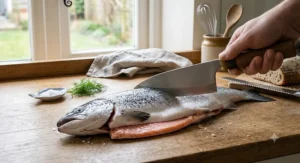
Tojiro, manufactured by the Fujitora factory in Niigata, has built its reputation on clad construction — forging softer iron around a harder steel core in the same tradition as katana-making — and the Tojiro Shirogami Deba in the F-902 165mm size is where that philosophy meets serious fish butchery. The white #2 carbon steel core is sandwiched between softer cladding, which means the cutting edge holds Japanese white steel’s legendary sharpness while the surrounding metal adds a degree of chip resistance you don’t get from a mono-steel blade. Based on the spec comparison against the Seki Japan Deba above, the extra size (165mm versus 150mm) and the clad construction justify the price step for anyone regularly working with round fish larger than mackerel — salmon, sea bass, larger bream — where the additional length and heel weight make beheading and filleting noticeably more controlled. Reviewers, including several UK-based Japanese cutlery specialists, consistently note the factory edge as genuinely ready to use, and aggregated feedback highlights the blade’s ability to hold a working edge through a full fish-prep session, with the main recurring caveat being that, like all carbon steel, it needs a proper drying-and-storage routine.
Pros:
- ✅ Clad white #2 steel balances sharpness with chip resistance
- ✅ Larger 165mm blade suits bigger round fish confidently
- ✅ Reputable Niigata factory known for consistent quality control
Cons:
- ❌ Carbon blade demands disciplined drying and light oiling
- ❌ Traditional single bevel has a learning curve for newcomers
At around £100-£150, the Tojiro Shirogami Deba is the knife we’d point most serious home cooks towards if budget allows the step up.
7. Masamoto KS Deba — best professional-grade pick
At the top of this list sits the Masamoto KS Deba, a 165mm honbazuke-sharpened carbon-steel blade from a maker whose name carries genuine weight among Tokyo’s professional sushi and fish-prep community. Honbazuke refers to a traditional multi-stage sharpening process carried out by hand, and on this knife it results in an edge geometry that’s noticeably more refined than factory-ground alternatives — the kind of detail that matters enormously once you’re breaking down fish for hours rather than minutes. The knife ships with a wooden saya (sheath), which is a practical inclusion rather than a marketing flourish, since carbon steel needs protecting from moisture during storage far more than stainless ever does. What most buyers overlook about knives at this level is that you’re not just paying for the steel — you’re paying for a maker’s willingness to hand-finish every blade to a consistent standard, and that consistency is precisely what professional kitchens rely on when a knife needs to perform identically, shift after shift. Aggregated commentary from professional and serious enthusiast circles is close to unanimous: this is regarded as one of the more capable production debas available, with the main honest criticism being that its premium positioning puts it well beyond casual or occasional users.
Pros:
- ✅ Hand-finished honbazuke edge exceeds typical factory sharpening
- ✅ Includes a protective wooden saya sheath
- ✅ Trusted by professional sushi and fish-prep chefs
Cons:
- ❌ Premium pricing makes little sense for occasional home use
- ❌ Carbon steel requires committed maintenance to protect the investment
Sitting around £250-£350, the Masamoto KS Deba is the knife to buy once you already know exactly how much you value single-bevel fish butchery.
Deba Knife Comparison at a Glance
| Deba Knife | Handle Material | Maintenance Level | Ideal Fish Size | Price Range |
|---|---|---|---|---|
| Arcos Deba Knife | POM (synthetic) | Low | Small-medium | around £30-£45 |
| Kai Wasabi Deba | Bamboo-effect resin | Low | Small | around £25-£40 |
| Kai Seki Magoroku Ginju AK5063 | Stainless-clad | Low | Small-medium | around £70-£100 |
| Global GS-4 | One-piece stainless | Low | Small | around £90-£130 |
| Seki Japan Deba | Magnolia wood | Moderate | Small-medium | around £70-£100 |
| Tojiro Shirogami Deba | Magnolia wood | Moderate-high | Medium-large | around £100-£150 |
| Masamoto KS Deba | Traditional wood (wa) | High | Medium-large | around £250-£350 |
The clearest signal in this table is the direct trade-off between maintenance and capability: every knife on the low-maintenance end of the scale is stainless, and every knife capable of handling genuinely large fish with confidence is carbon steel. That’s not a coincidence — the harder, purer carbon alloys used in traditional Japanese blades take a finer edge precisely because they sacrifice the chromium content that makes stainless steel rust-resistant. If your fish prep is occasional and forgiving, stay stainless; if you’re processing whole fish weekly and want the best possible edge, the maintenance trade-off on carbon steel is genuinely worth learning.
💬 Ready to pick your deba? Compare live pricing before you commit — stock and offers shift often.🤗
Practical Usage Guide: Setup, Sharpening and First 30 Days
Buying the best deba knife for fish prep is only half the job — how you set it up and maintain it in the first month determines whether it stays razor-sharp or dulls into a glorified cleaver. Start by handwashing immediately after every use, even with stainless models; the point isn’t just corrosion prevention but avoiding micro-chips from dishwasher jets knocking the blade against other cutlery. For carbon-steel debas specifically, dry the blade thoroughly with a cloth the moment you’ve finished, then apply a very light film of food-safe mineral oil (camellia oil is the traditional Japanese choice) before storing it — skipping this step for even one overnight session is the single most common cause of early rust spotting.
On sharpening: a deba’s single-bevel edge needs a whetstone, not a Western pull-through sharpener, which will ruin the asymmetric grind. Begin with a 1000-grit stone for general edge maintenance, moving to a 3000-6000 grit stone every few sharpening sessions to refine the edge further. A common first-month mistake is over-sharpening a brand-new blade that doesn’t need it yet — most debas, including budget stainless models, ship with a genuinely usable factory edge, so hold off on the stones until you notice actual dulling, usually after several fish-prep sessions. Store your deba in a knife block, on a magnetic strip, or in its saya if supplied — never loose in a drawer, where the tip is easily chipped against other utensils. Finally, resist the temptation to use your deba for general prep work like vegetables; its thick, heavy spine and single bevel are optimised for bone and cartilage, and misusing it for delicate slicing accelerates dulling for no real benefit.
Real-World Scenarios: Matching a Deba to How You Cook
The keen home angler. If you’re bringing back mackerel or bass from a coastal trip most weekends, a mid-range carbon option like the Seki Japan Deba or Tojiro Shirogami Deba earns its keep quickly — the sharper factory edge and better edge retention noticeably speed up whole fish preparation when you’re processing several fish in one sitting, and the cost per use drops fast at that frequency.
The occasional Sunday cook. For someone who buys a whole sea bream or trout from the fishmonger once or twice a month and wants better results than a supermarket filleting knife delivers, a stainless option such as the Kai Wasabi Deba or Arcos Deba Knife makes more sense — low maintenance, forgiving of imperfect drying habits, and more than capable at this frequency.
The serious enthusiast or trainee chef. If you’re working towards genuine Japanese knife skills, want to practise single-bevel sharpening, or are prepping fish for sushi and sashimi regularly, the step up to the Tojiro Shirogami Deba or Masamoto KS Deba reflects real value — the difference in control when beheading a larger fish or working close to the spine is immediately noticeable, and the investment in whetstone maintenance pays back in consistently better results.
Problem → Solution: Fixing Common Deba Knife Issues
Problem: the blade keeps slipping off the fish’s backbone. This is usually a technique issue rather than a knife fault — let the weight of the deba do the work rather than pressing down, and keep the blade angle shallow and consistent along the spine. A heavier knife like the Masamoto KS Deba actually makes this easier, since its mass carries the cut rather than requiring force from your wrist.
Problem: carbon steel developed rust spots after one missed drying session. Don’t panic — light surface rust on knives like the Seki Japan Deba or Tojiro Shirogami Deba can usually be removed with a rust eraser or fine wet-and-dry paper used gently along the grain, followed by a proper oiling routine going forward.
Problem: the edge feels dull after only a few uses. Check you’re not accidentally using the wrong bevel side against a cutting board with too much resistance, and confirm you’re honing on a whetstone rather than a Western honing steel, which doesn’t suit a single-bevel edge.
Problem: the knife feels too heavy or unwieldy for smaller fish. Consider sizing down — the compact Global GS-4 or Kai Wasabi Deba trade beheading power for manoeuvrability, which suits smaller round fish far better than a full-sized hon-deba.
Problem: uncertainty about which side to sharpen. Traditional debas are ground for right-handed use, with the bevel on the right side of the blade when the edge faces away from you; left-handed versions exist but are typically special order, so check the listing carefully before buying.
How to Choose the Best Deba Knife
- Decide on steel type first. Stainless suits inconsistent drying habits and lower-maintenance kitchens; carbon steel rewards regular care with a sharper, longer-lasting edge.
- Match blade length to typical fish size. A 120-150mm blade suits mackerel-sized fish; 165-180mm handles sea bass and larger round fish more confidently.
- Check handle material against your storage habits. Synthetic handles tolerate damp environments better than traditional wood, which needs occasional conditioning.
- Consider frequency of use realistically. Weekly fish prep justifies a carbon-steel investment; occasional use rarely does.
- Factor in your current knife skills. Beginners benefit from a forgiving stainless blade while learning single-bevel technique before committing to premium carbon steel.
- Look for genuine single-bevel construction. Some “deba-style” knives sold outside specialist retailers are actually double-bevelled Western knives with a deba profile — check the listing specifies single bevel if authenticity matters to you.
- Budget for a whetstone alongside the knife. A pull-through sharpener will damage a genuine deba’s edge geometry, so factor a basic whetstone into your first purchase.
Deba vs Yanagiba: What’s the Difference?
The deba and yanagiba are both traditional single-bevel Japanese knives, but they solve entirely different problems, and confusing the two is one of the most common mistakes first-time buyers make. A deba is thick, heavy and wide-spined, built to behead a whole fish and separate fillets from the bone — it’s essentially a butchery tool. A yanagiba, by contrast, is long, thin and flat-spined, designed purely for slicing already-filleted fish into clean sashimi or sushi cuts with a single smooth draw of the blade, minimising cell damage to preserve texture and flavour. Put simply: the deba does the heavy lifting of breaking the fish down, and the yanagiba does the delicate finishing work of slicing it beautifully once it’s already boneless.
For most UK home cooks buying a whole fish from a fishmonger or supermarket, a deba alone covers the entire job — heading, gutting and filleting — and a yanagiba only becomes genuinely necessary if you’re regularly slicing raw fish for sashimi or nigiri, where paper-thin, single-pass cuts actually matter to the finished dish. Trying to use a deba for sashimi slicing produces ragged, uneven cuts because the blade’s thickness bruises delicate flesh, while using a thin yanagiba to behead a fish risks chipping or snapping the blade against bone. If you’re serious about progressing into full Japanese fish preparation, most specialist retailers and chefs recommend building a deba first, since it covers more everyday ground, and adding a yanagiba later once sashimi-quality slicing becomes a priority.
Japanese Knife Steel Types Explained
Understanding Japanese knife steel types makes the price differences across this list far less mysterious. Broadly, debas fall into two camps: carbon steel and stainless steel, with several distinct grades within each.
Shirogami (white steel) is a simple, very pure carbon steel with minimal alloying elements. It sharpens exceptionally easily and takes what many consider the finest possible edge, but it’s highly reactive — it will rust within hours if left wet, and develops a grey-black patina over time that experienced owners generally welcome rather than resist.
Aogami (blue steel) adds tungsten and chromium to the white steel base, improving edge retention and toughness at a slight cost to that ultimate fineness of edge. Aogami blades hold their sharpness longer between sessions, which is why they command a premium among professionals who don’t have time for constant re-sharpening.
VG-10 and other stainless alloys add significant chromium content, which forms a passive protective layer that resists rust dramatically better than either carbon steel option. The trade-off is a slightly harder, less forgiving sharpening experience and — depending on the specific alloy and heat treatment — marginally shorter peak edge retention than top-tier carbon steel, though the gap has narrowed considerably as stainless metallurgy has improved.
Hardness across these steels is typically measured on the Rockwell C scale, with most quality deba blades sitting somewhere between 58 and 64 HRC — the higher end holds an edge longer but is more prone to chipping if used incorrectly, which is part of why heavier, well-supported blades like the deba’s thick spine matter so much for durability. None of this makes one steel type objectively “best” — it’s a direct trade-off between sharpness ceiling, edge retention and how much maintenance you’re realistically willing to commit to.
Deba Knife vs Western Fillet Knife: Benefits vs Traditional Alternatives
| Factor | Deba Knife | Western Fillet Knife |
|---|---|---|
| Blade profile | Thick, heavy, single bevel | Thin, flexible, double bevel |
| Best for | Beheading, gutting, bone-in butchery | Delicate flexing along fillets |
| Bone handling | Excellent — designed for it | Poor — flex makes bone work risky |
| Edge angle | Steep, precise, single-sided | Shallower, symmetrical |
| Learning curve | Moderate to steep | Gentle |
A Western fillet knife’s thin, flexible blade is genuinely excellent at gliding along a fillet’s contours once the fish is already opened up, which is precisely what it was designed for — but that same flexibility becomes a liability the moment the blade meets bone or cartilage, where it can bend, skip or dull rapidly. A deba trades that flexibility for rigidity and mass, deliberately built to power through the toughest parts of whole-fish preparation that a filleting knife struggles with. For UK cooks who buy fish already filleted, a Western knife remains perfectly adequate; but for anyone regularly starting from a whole fish, the deba’s bone-handling advantage alone tends to justify owning one.
Common Mistakes When Buying a Deba Knife
A recurring pitfall is choosing purely on price without checking whether a listing is genuinely single-bevel — some budget “deba-style” knives are actually Western double-bevel blades wearing a deba-shaped profile, which loses much of the design’s actual advantage. Another common mistake is buying a blade too large for the fish typically being prepared; a 210mm hon-deba is overkill and genuinely unwieldy for someone mostly handling mackerel and trout, where a 150mm knife performs better and feels far more controlled. Buyers also frequently underestimate carbon steel’s maintenance demands, purchasing a beautiful shirogami blade and then leaving it wet on the draining board — a mistake that can introduce visible rust within a single afternoon. Finally, many first-time buyers skip budgeting for a whetstone entirely, then reach for a pull-through Western sharpener that ruins the single-bevel geometry within a few uses; if you can’t stretch to a decent whetstone immediately, at minimum research proper single-bevel sharpening technique before the blade needs its first touch-up.
Deba Knives for Different Cooks: Beginners, Home Cooks and Pros
Beginners are generally best served by stainless, mid-sized options like the Kai Wasabi Deba or Arcos Deba Knife — forgiving of maintenance slips, affordable enough that mistakes during the learning curve don’t sting, and still built to proper deba geometry so the fundamentals transfer directly if you upgrade later.
Regular home cooks who fillet fish weekly or fortnightly get the most value from mid-range knives like the Kai Seki Magoroku Ginju AK5063 or Seki Japan Deba, where the step up in edge retention and sharpness genuinely reduces prep time compared with entry-level blades, without demanding professional-level maintenance discipline.
Serious enthusiasts and professionals — anyone processing multiple fish regularly, training in Japanese knife skills, or running a kitchen — will feel the difference the Tojiro Shirogami Deba and especially the Masamoto KS Deba make in a full prep session, where superior steel and hand-finished edges translate directly into consistency, speed and reduced fatigue over hours of work.
Long-Term Cost & Maintenance: Is a Deba Knife Worth It?
Total cost of ownership for a deba extends beyond the purchase price to whetstones, occasional professional sharpening, and — for carbon steel — a small ongoing spend on maintenance oil. A basic combination whetstone typically costs a fraction of even a budget deba and lasts for years, making it a one-off investment rather than a recurring cost. Where the maths genuinely favours a deba over repeatedly buying cheaper “fish knives” is longevity: a well-maintained carbon-steel blade like the Tojiro Shirogami Deba can realistically last decades with periodic sharpening, while budget multi-purpose fish knives sold as disposable-feeling kitchen accessories often need replacing every year or two as the edge geometry degrades beyond effective resharpening. Cost-per-use drops sharply for anyone preparing whole fish regularly — a £120 deba used weekly for five years works out to under 50 pence per session, which comfortably undercuts the ongoing cost of buying pre-filleted fish at a premium simply to avoid the prep work.
Safety, Regulations and Buying Knives Online in the UK
Buying a deba knife online in the UK involves the same legal framework as any other bladed kitchen item. Under current legislation, retailers selling knives online must verify that the purchaser is 18 or over before completing the sale, and deliveries must be clearly marked as containing a bladed article, handed only to an adult at the point of delivery, as set out in the official government guidance on selling, buying and carrying knives. This applies regardless of whether the knife is a genuine kitchen tool — age verification exists to prevent underage purchase of any bladed item, kitchen knives included, so don’t be surprised if an order needs ID confirmation before it ships.
Once the knife arrives, food safety matters just as much as blade safety. When preparing whole fish, always use a separate chopping board from ready-to-eat foods, and wash your hands and equipment thoroughly after handling raw fish to avoid cross-contamination, in line with official Food Standards Agency guidance on avoiding cross-contamination. A deba’s single bevel and considerable weight also demand a slightly different safety approach to a standard chef’s knife: always cut on a stable board, keep fingers well clear of the spine’s swing path when beheading a fish, and store the blade in a sheath or block rather than loose in a drawer, since the exposed tip is easy to catch accidentally.
Frequently Asked Questions
❓ What is the best deba knife for beginners?
❓ Do I need a yanagiba as well as a deba knife?
❓ How often should I sharpen a deba knife?
❓ Can a deba knife be used for anything other than fish?
❓ Is carbon steel or stainless steel better for a deba knife?
Conclusion
Choosing the best deba knife for fish preparation really comes down to being honest about how often you’ll actually use it and how much maintenance you’re genuinely willing to commit to. For occasional whole-fish cooking, a forgiving stainless option like the Arcos Deba Knife or Kai Wasabi Deba delivers proper single-bevel performance without demanding much of you in return. Regular home cooks tend to get the best value from mid-range picks like the Kai Seki Magoroku Ginju AK5063 or Seki Japan Deba, where sharper edges and better retention start paying real dividends. And for anyone serious about traditional Japanese fish butchery — or simply someone who wants a knife capable of a lifetime of use — the Tojiro Shirogami Deba and Masamoto KS Deba represent genuine craftsmanship worth the investment. Whichever you choose, pair it with a decent whetstone, a proper drying routine, and a bit of patience while you learn the single-bevel technique, and you’ll get results a generic filleting knife simply can’t match.
✨ Don’t Miss These Exclusive Deals!
🔍 Take your fish prep to the next level with these carefully selected Japanese knives. Click on any highlighted product to check current pricing and availability, and bring proper single-bevel precision to your kitchen. 🐟🔪
Recommended for You
- Best Yanagiba Knife 2026: 7 Sashimi Blades Worth Buying
- Nakiri vs Santoku Knife: 7 Best Pick; Key Differences (2026)
- Best Nakiri Knife 2026: 7 Top Japanese Picks Rated
Disclaimer: This article contains affiliate links. As an Amazon Associate, I earn from qualifying purchases. If you purchase products through these links, we may earn a small commission at no additional cost to you.
✨ Found this helpful? Share it with your friends! 💬🤗
