
In This Article
Ask any chef who’s spent a decade behind a board what separates a knife they merely own from one they actually reach for at 6am, and the answer usually has nothing to do with branding. It’s the steel. A carbon steel chef’s knife for professionals isn’t a trend piece or a kitchen ornament — it’s a working tool that rewards the people willing to towel it dry between onions and tomatoes. And in 2026, with more independent kitchens stocking their own knife rolls rather than relying on house sets, the appetite for genuinely sharp, genuinely honest steel has never been higher.
So, what is a carbon steel chef’s knife? It’s a kitchen knife forged from an iron-carbon alloy with little or no chromium, typically hardened to 58-64 HRC, prized for taking a keener edge and holding it longer than most stainless blades — at the cost of needing to be dried immediately after use to avoid rust. That trade-off is the entire story of this guide.
This isn’t a rehash of a manufacturer’s spec sheet. Across the next few thousand words we’ll pull apart seven genuinely different carbon steel knives — from a £45 Swiss workhorse to a Japanese white-steel gyuto that costs more than most people’s monthly food shop — and explain, in plain terms, who each one actually suits. We’ll also get into the unglamorous stuff nobody puts in a product photo: sharpening angles, patina management, how a carbon blade behaves inside a proper professional chef knife roll, and why edge retention numbers on a spec sheet rarely tell the full story. For background on the metallurgy itself, Wikipedia’s overview of carbon steel is a useful primer before you spend a penny.
Quick Comparison: Carbon Steel Chef’s Knives at a Glance
Before the deep dive, here’s the shape of the field. Prices are indicative ranges at the time of research and will move — always check current pricing before buying.
| Knife | Steel Type | Best For |
|---|---|---|
| Misono Swedish Carbon Steel Gyuto | Pure Swedish carbon, HRC 60 | Sushi-grade precision work |
| Masamoto KS Wa-Gyuto | Shirogami #2 (White Steel), HRC 62-63 | Ultimate edge, collectors |
| Tojiro DP Gyuto | Carbon core, stain-resistant cladding | Low-maintenance carbon entry |
| Lion Sabatier Ideal Carbon | XC70 French carbon steel | Classic rock-chop technique |
| Robert Herder Windmühlenmesser K-Series | 1%+ carbon German steel | Hand-forged European craft |
| Victorinox Rosewood | High-carbon stainless hybrid | Busy kitchens, minimal fuss |
| Dexter-Russell Traditional | DEXSTEEL high-carbon steel | Budget-conscious line cooks |
Looking at the spread above, there’s no single “best” carbon steel chef’s knife for professionals — there’s a right steel for your station. If you’re chasing the thinnest possible edge for delicate protein work, the Masamoto KS Wa-Gyuto and Misono Swedish Carbon Steel Gyuto sit at the top of the pile, but that performance demands daily discipline. Cooks who want carbon steel’s sharpness without babysitting a blade all shift will find the Tojiro DP Gyuto and Victorinox Rosewood far more forgiving, while the Dexter-Russell Traditional proves you don’t need to spend big to get genuine high-carbon performance on a line.
💬 Just one click — help others make better buying decisions too!😊
Top 7 Carbon Steel Chef’s Knives for Professionals: Expert Analysis
We’ve deliberately spread this list across budget, mid-range and premium territory, plus a couple of lesser-known specialists, so there’s a genuine option whatever your station looks like and whatever your patience for maintenance actually is.
1. Misono Swedish Carbon Steel Gyuto — thinnest edge for precision prep
The standout here is how little metal actually meets the food: this is a blade ground thin enough that push-cuts through a ripe tomato feel almost frictionless. The Misono Swedish Carbon Steel Gyuto is hand-forged from pure Swedish carbon steel, hardened to around 60 HRC, with a 70/30 asymmetric bevel that favours right-handed users and a composite wood handle built for long shifts. What that hardness means in practice is a blade that takes a genuinely fine edge on a whetstone and keeps it through a full prep list, rather than rolling after twenty minutes of onions like a softer stainless blade might.
Based on the spec comparison with other Japanese gyutos in this bracket, what most buyers overlook is that pure carbon steel like this reacts almost immediately to acidic ingredients, developing a grey-blue patina within days of first use — this is cosmetic, not a defect, and actually protects the blade from more aggressive rust once it forms. Reviewers on specialist Japanese-knife retailer sites consistently note the “glass-like” cutting feel and the ease of touching it up on a 1000-grit stone, though several also flag that the thin geometry chips if it meets a bone or a frozen block.
Pros:
- ✅ Exceptionally thin, precise edge for push-cutting
- ✅ Genuinely easy to resharpen on whetstones
- ✅ Full-tang balance suited to long prep sessions
Cons:
- ❌ Reactive blade needs drying after every cut
- ❌ Not suited to bones or frozen ingredients
Expect to pay in the £190-£240 range depending on blade length and retailer; for a specialist who already owns a whetstone, that’s honest value for genuine Japanese hand-forged carbon.
2. Masamoto KS Wa-Gyuto — the sharpest edge money can buy
If there’s a knife on this list that professional sushi chefs actually queue up for, it’s this one. The Masamoto KS Wa-Gyuto is forged from a single piece of Shirogami #2 (White Steel #2), hardened to a formidable 62-63 HRC, with a traditional wa-handle in magnolia wood and a water buffalo horn ferrule. That hardness figure isn’t just a number for the spec sheet — White Steel’s exceptional purity lets Masamoto push the hardness up without the blade turning brittle, so the edge holds a working sharpness noticeably longer between touch-ups than most Western steels at a similar HRC.
What the spec sheet won’t tell you, but specialist retailers consistently mention, is that this knife rewards skill more than any other on this list: a mediocre sharpening job wastes its potential, while a proper 15-degree whetstone edge turns it into something close to a scalpel. It’s a purist’s choice — the kind of knife enthusiasts and career chefs buy once they already understand carbon steel’s demands, rather than a sensible first purchase. Aggregated feedback from Japanese-knife specialists repeatedly highlights its fit and finish alongside a caution that it is genuinely thin behind the edge and will chip under lateral torque.
Pros:
- ✅ Among the hardest, longest-holding edges available
- ✅ Renowned hand-finishing and fit and finish
- ✅ Lightweight for reduced fatigue on long shifts
Cons:
- ❌ Premium price puts it out of casual reach
- ❌ Unforgiving of rough handling or twisting cuts
Prices sit in the £450-£600 range depending on blade length and handle finish — a serious investment that only makes sense once you’re committed to proper carbon steel care.
3. Tojiro DP Gyuto — carbon performance without the babysitting
The Tojiro DP Gyuto solves the one problem that puts most professionals off carbon steel entirely: rust anxiety. Using the traditional “honwarikomi” method, Tojiro encases a genuine carbon steel core on the front, top and back with stain-resistant steel, so the cutting edge itself behaves like carbon — taking and holding a sharper edge than typical stainless — while the outer layers barely react to moisture or acid at all.
In real-world terms, that construction means you get noticeably better edge retention than an all-stainless knife at this price point, without needing to towel it dry the second you set it down mid-service. Based on the spec comparison with fully exposed carbon blades like the Misono above, the Tojiro sacrifices a little of that ultimate thinness and sharpening ease for genuinely practical everyday resilience — a sensible trade for anyone doing back-to-back covers rather than competition-level prep. Reviewers consistently describe it as the knife they recommend to cooks curious about carbon steel but nervous about maintenance, praising the ease of resharpening and the noticeably better food release than cheaper stamped blades.
Pros:
- ✅ Carbon-core edge with far less rust anxiety
- ✅ Excellent value against similarly performing rivals
- ✅ Comfortable, well-balanced Western-style handle
Cons:
- ❌ Less dramatic edge retention than pure carbon
- ❌ Handle rivets need occasional inspection over years
Typical UK pricing runs £65-£90, which makes this arguably the smartest single purchase on this entire list for a working professional.
4. Lion Sabatier Ideal Carbon — the rocking-chop classic
Where the Japanese knives above favour a flatter, push-cutting profile, the Lion Sabatier Ideal Carbon is built for the Western rock-chop technique that most European and American culinary schools still teach first. Forged in Thiers, France, from XC70 carbon steel with a POM handle and brass rivets, it carries a fuller belly curve that rolls smoothly through a rocking motion on herbs, shallots and mirepoix.
Here’s what most spec sheets miss: that curved profile isn’t just aesthetic heritage, it’s functionally different from a Japanese gyuto’s flatter edge, and cooks trained on rock-chopping often find they’re genuinely faster and more accurate with a blade shaped this way, regardless of what any hardness figure suggests. Based on the spec comparison, the softer carbon alloy here (roughly 54-58 HRC by Sabatier’s own historical benchmarks for this range) sharpens up almost effortlessly on a basic steel, at the cost of needing more frequent honing than the harder Japanese options above. Long-time users and French culinary forums consistently praise its balance and the satisfying “bite” it takes into a whetstone, while newer buyers occasionally comment that the classic full-carbon patina develops faster than they expected in a humid kitchen.
Pros:
- ✅ Ideal profile for classic rock-chop technique
- ✅ Sharpens quickly, even on basic equipment
- ✅ Full tang with genuine French cutlery heritage
Cons:
- ❌ Softer steel needs more frequent honing
- ❌ Patinas and marks noticeably faster than harder steels
Depending on blade length, expect a £130-£160 range for a 20cm chef’s knife from this line — a fair price for genuine forged French carbon with a century of pedigree behind it.
5. Robert Herder Windmühlenmesser K-Series — Solingen craft, hand-ground thin
Few knives on this list carry as much old-world process as the Robert Herder Windmühlenmesser K-Series chef’s knife. Hand-forged in Solingen, Germany, from a proprietary carbon steel with at least 1% carbon content plus vanadium, each blade passes through more than seventy manual production steps, finished with the traditional “Kesselschen Walkschliff” convex grind and a distinctive blue-glazed polish.
What that hand-ground convex edge means practically is reduced friction and stickiness when slicing through starchy vegetables — food genuinely releases from the blade face more cleanly than off a standard flat-ground knife. Based on the spec comparison with the mass-forged options elsewhere on this list, the trade-off is fragility: this thin, hand-finished geometry will not tolerate twisting on the board or contact with bone, and Herder’s own guidance is explicit that misuse voids the benefits entirely. Reviewers on specialist European cutlery retailers consistently single out the cutting feel as unlike anything mechanically ground, describing it as noticeably lighter and more responsive, while also flagging that this is emphatically not a knife for a chaotic, high-volume line where blades get passed hand to hand carelessly.
Pros:
- ✅ Hand-ground convex edge with superb food release
- ✅ Exceptional sharpness retention for its class
- ✅ Genuine small-batch Solingen craftsmanship
Cons:
- ❌ Thin geometry demands careful, gentle handling
- ❌ Harder to source through mainstream UK retailers
Pricing for the chef’s knife size in this range typically falls between £110-£160, positioning it as a mid-range specialist pick for cooks who value process as much as performance.
6. Victorinox Rosewood — the sensible entry point
Not every professional wants — or can justify — a fully reactive blade, and that’s exactly the gap the Victorinox Rosewood chef’s knife fills. Its ice-tempered, high-carbon stainless steel blade blends a meaningful carbon content into a still broadly rust-resistant formula, paired with a traditional riveted rosewood handle that Swiss cutlery has used for well over a century.
In practice, that hybrid composition means you get a genuinely sharper, longer-holding edge than a basic stainless supermarket knife, without the drying-and-oiling ritual that fully reactive carbon steel demands. Based on the spec comparison with pure carbon options above, it won’t match the razor-thin edge of the Misono or Masamoto, but for a busy professional kitchen where knives get handed between stations and left wet more often than anyone would like to admit, that resilience is arguably the smarter real-world choice. Catering-supply reviewers and working chefs consistently describe it as a dependable, no-drama workhorse — the knife that survives years of institutional abuse largely unscathed, even if it never quite achieves cult status among carbon-steel purists.
Pros:
- ✅ Meaningful carbon edge with real rust resistance
- ✅ Comfortable, classic rosewood handle
- ✅ Genuinely durable under heavy daily use
Cons:
- ❌ Edge doesn’t match pure carbon steel’s ceiling
- ❌ Less dramatic patina appeal for enthusiasts
At around £45-£60, this is realistically the most accessible genuine step up from a supermarket stainless knife on this entire list.
7. Dexter-Russell Traditional — the American line-cook staple
Long before Japanese carbon steel became fashionable outside professional circles, American kitchens were quietly relying on knives like the Dexter-Russell Traditional. Made in the USA from DEXSTEEL, a stain-resistant high-carbon steel formulated specifically for commercial kitchens, this 8-inch cook’s knife pairs a hand-ground, honed edge with a walnut or rosewood handle secured with brass rivets.
The practical upshot of DEXSTEEL’s formulation is a blade that resists staining far better than old-school plain carbon while still sharpening up faster and holding a working edge noticeably longer than typical stamped supermarket stainless. Based on the spec comparison with premium Japanese options, this isn’t a knife chasing the thinnest possible edge — it’s chasing durability and value for kitchens that go through knives fast and can’t afford precious handling. Foodservice-equipment reviewers and working cooks consistently praise its reliability and NSF certification for commercial use, while some note the handle attachment needs periodic checking after years of hard, high-volume service.
Pros:
- ✅ Genuine high-carbon steel at a workhorse price
- ✅ NSF-certified for professional kitchen use
- ✅ Fast, easy to resharpen between services
Cons:
- ❌ Handle hardware needs occasional tightening over years
- ❌ Edge geometry favours durability over ultimate sharpness
Typically priced in the £40-£60 range, this is the knife we’d point any newly qualified chef toward if their entire knife budget is under £100.
Comparing the Field: Specs, Price and Value
| Knife | Hardness (HRC) | Price Range | Best For |
|---|---|---|---|
| Misono Swedish Carbon Steel Gyuto | ~60 | £190-£240 | Precision push-cutting |
| Masamoto KS Wa-Gyuto | 62-63 | £450-£600 | Ultimate edge & finish |
| Tojiro DP Gyuto | ~59-60 (core) | £65-£90 | Low-maintenance carbon |
| Lion Sabatier Ideal Carbon | ~54-58 | £130-£160 | Rock-chop technique |
| Robert Herder K-Series | ~60 | £110-£160 | Hand-ground craft |
| Victorinox Rosewood | ~56 | £45-£60 | Hybrid durability |
| Dexter-Russell Traditional | Manufacturer unpublished | £40-£60 | Budget commercial use |
Read purely on hardness, the Masamoto KS Wa-Gyuto wins outright, but that number only tells half the story — the Tojiro DP Gyuto delivers most of the everyday sharpness benefit at roughly a sixth of the price, which is exactly why it’s become the default recommendation for cooks testing carbon steel for the first time. If your kitchen’s biggest enemy is inconsistent staff care rather than dull edges, the Victorinox Rosewood or Dexter-Russell Traditional will outlast fussier blades that get neglected on a Friday night service.
Practical Usage Guide: Living With a Carbon Steel Chef’s Knife
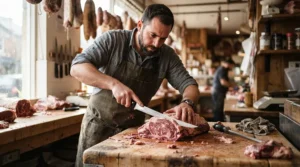
Buying the knife is the easy part; keeping it performing is where most professionals either build a genuinely useful habit or quietly give up and reach for a stainless backup instead. The single most important rule with any of the seven knives above is drying the blade immediately after contact with food or water — carbon steel can visibly begin oxidising within minutes of contact with acidic ingredients like tomatoes, citrus or onions.
In the first thirty days of ownership, most new carbon-steel owners make the same mistake: they panic at the first patina and try to polish it away completely. Don’t. A stable grey-blue patina is a protective layer, not a fault, and repeatedly scrubbing it off with abrasive pads only exposes fresh metal to rust again. Instead, wipe the blade with a light coating of mineral or camellia oil before any period of storage longer than a day, and always hand wash — never, under any circumstances, put a carbon steel knife anywhere near a dishwasher. For maintenance between full sharpening sessions, a honing steel realigns the edge rather than removing metal, and should be part of a daily pre-shift ritual, not an occasional afterthought.
Real-World Scenarios: Matching the Knife to the Cook
Picture three very different working days. First, a newly qualified commis chef doing eight-hour shifts of repetitive veg prep on a tight budget — for them, the Dexter-Russell Traditional or Victorinox Rosewood makes far more sense than an expensive Japanese blade that would be wasted on volume chopping and left wet between tasks by accident.
Second, a sushi-trained chef working an omakase counter where every cut is visible to the guest and precision genuinely matters more than speed — here, the Misono Swedish Carbon Steel Gyuto or the Masamoto KS Wa-Gyuto earns its price tag, because the thinness and edge quality directly affect the presentation and texture of raw fish.
Third, a private chef or small bistro owner who wants one exceptional all-rounder they’ll personally maintain every single night — the Lion Sabatier Ideal Carbon or Robert Herder Windmühlenmesser K-Series hits that sweet spot of genuine carbon performance with a manageable, at-home maintenance routine, rather than the industrial-scale resilience a busy commercial kitchen actually needs.
Building the Ultimate Professional Chef Knife Roll
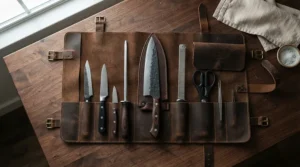
A single excellent knife is only half the picture; how it lives inside your professional chef knife roll matters just as much for both performance and safety. Carbon steel blades are more vulnerable to chipping and moisture damage in transit than stainless, so the individual knife slots and blade guards inside a quality roll aren’t a luxury — they’re what stops your Misono Swedish Carbon Steel Gyuto rattling against a steel or a peeler on the bus home.
A well-organised roll for a carbon-heavy kit typically separates blades by frequency of use rather than size alone: your primary chef’s knife (say, the Tojiro DP Gyuto or Lion Sabatier Ideal Carbon) sits in the most accessible slot, with a backup stainless option like the Victorinox Rosewood positioned for the moments when you genuinely can’t spare thirty seconds to dry a blade mid-service. Look for rolls with breathable canvas or waxed cotton exteriors rather than sealed plastic — trapped moisture inside a closed roll is one of the fastest ways to turn a light patina into genuine pitting rust overnight. Reviewers who carry carbon steel professionally consistently recommend slipping a small anti-corrosion strip or silica sachet into the roll’s tool pocket, particularly for anyone commuting through damp British weather for half the year.
High Carbon Steel vs Stainless Steel Knife: The Real Differences
This is the debate that dominates every professional knife forum, and the honest answer is that neither steel type is objectively superior — they’re optimised for different priorities. High carbon steel typically reaches a higher achievable hardness for a given toughness, which is why it takes a finer edge and holds it longer between sharpenings; stainless steel trades some of that ultimate sharpness for genuine resistance to rust, staining and the kind of neglect that happens in a chaotic professional kitchen.
| Factor | High Carbon Steel | Stainless Steel |
|---|---|---|
| Edge sharpness ceiling | Higher | Moderate |
| Edge retention | Longer between sharpenings | Shorter |
| Rust resistance | Low — needs daily drying | High |
| Ease of sharpening | Generally easier | Often harder (chromium carbides) |
| Best For | Precision, dedicated care | High-volume, shared-use kitchens |
The table above makes the practical trade-off obvious: a carbon steel knife rewards the cook who owns it personally and cares for it daily, while stainless steel forgives the realities of a shared kitchen where nobody’s quite sure whose knife just got left in the sink. Neither choice is wrong — it depends entirely on whether you’re buying for yourself or equipping a brigade.
How to Choose a Carbon Steel Chef’s Knife
- Decide your maintenance tolerance first. If daily drying and occasional oiling genuinely isn’t realistic for your role, a hybrid like the Victorinox Rosewood will serve you better than a purist Japanese blade left to rust in a drawer.
- Match blade profile to your cutting technique. Rock-choppers trained in Western technique should lean toward a curved profile like the Lion Sabatier Ideal Carbon; push-cutters will get more from a flatter Japanese gyuto profile.
- Check the hardness (HRC) against your budget. Higher HRC generally means better edge retention but more brittleness — the Masamoto KS Wa-Gyuto‘s 62-63 HRC is glorious in skilled hands and risky in careless ones.
- Consider blade length against your board space and grip. A 240mm gyuto suits most professional stations, but smaller kitchens or petite hands may prefer 210mm.
- Factor in sharpening equipment you already own. Whetstone owners can exploit softer, easier-sharpening steels; those relying on pull-through sharpeners should stick to more forgiving hybrids.
- Look past the marketing name at the actual steel spec. “High carbon stainless steel” and “pure carbon steel” are meaningfully different products, not just branding variations.
- Buy the handle you’ll actually enjoy holding for eight hours. Even the best steel underperforms in a hand that’s uncomfortable or fatigued by hour six of service.
Carbon Steel Edge Retention: What the Numbers Actually Mean
Manufacturers love quoting Rockwell hardness figures, but edge retention in a real kitchen depends on more than a single HRC number. A blade’s edge geometry — how thin and acute the actual cutting bevel is — often matters as much as the steel’s raw hardness, which is why the hand-ground Robert Herder Windmühlenmesser K-Series can rival much harder steels in perceived sharpness longevity despite a comparatively modest HRC rating.
What reviewers and sharpening professionals consistently report is that carbon steel’s edge retention advantage over stainless becomes most obvious in high-volume, repetitive cutting tasks — think a full case of onions or a tray of herbs — where a stainless blade will noticeably start dragging well before a comparable carbon edge does. That said, edge retention isn’t purely about the steel resisting wear; it’s also about how the cutting edge resists micro-chipping against cutting boards. A softer wooden or end-grain board preserves any blade’s edge far longer than a glass or stone surface, regardless of how exotic the steel itself might be.
Getting the Knife Sharpening Angle Right
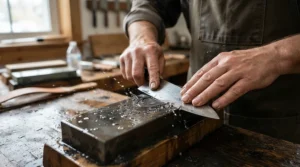
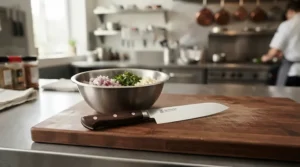
Sharpening angle is where most home-trained cooks unknowingly sabotage an expensive knife. Japanese carbon steel knives like the Misono Swedish Carbon Steel Gyuto and Masamoto KS Wa-Gyuto are typically factory-ground to a narrow 12-15 degree angle per side, reflecting their harder, more brittle steel and precision-cutting purpose. Western-style carbon knives such as the Lion Sabatier Ideal Carbon or Dexter-Russell Traditional usually sit closer to 17-20 degrees per side, trading a little raw sharpness for an edge that survives rougher handling and heavier cutting boards.
Getting this wrong in either direction causes real damage: sharpening a 15-degree Japanese edge at a Western 20-degree angle blunts its precision advantage entirely, while pushing a softer Western carbon blade down to an aggressive 12 degrees leaves an edge too fragile for typical use, prone to rolling or micro-chipping within days. A honing steel used at roughly the blade’s original bevel angle maintains alignment between full sharpenings, but it cannot restore an edge that’s already been ground incorrectly — that requires a whetstone pass at the manufacturer-specified angle. For visual guidance and hands-on technique, Which?’s expert tips on buying and using a chef’s knife is a genuinely practical starting point for anyone new to whetstone sharpening.
Common Mistakes When Buying a Carbon Steel Chef’s Knife
The most frequent error professionals make is buying purely on hardness number without considering their own maintenance realities — a stunning 62 HRC blade left wet in a communal sink overnight will rust faster and harder than a modest 56 HRC hybrid that gets dried properly. A close second is buying blade length based on prestige rather than practicality; a 270mm gyuto looks impressive but is genuinely unwieldy for cooks with smaller boards or hands, and control matters more than reach for most everyday tasks.
Another common misstep is assuming all “carbon steel” branding means the same thing — as the comparison earlier in this guide shows, a fully exposed pure carbon blade and a “high-carbon stainless steel” hybrid behave very differently despite similar-sounding marketing copy. Finally, plenty of buyers skip budgeting for a whetstone or professional sharpening service entirely, then wonder why an expensive knife feels disappointing within months — the knife is only half the investment; proper sharpening tools are the other half.
Long-Term Cost & Maintenance: Total Cost of Ownership
A cheap knife sharpened badly for years often costs more in wasted prep time and food wastage than a quality carbon steel blade that holds its edge properly. Factor genuine total cost of ownership rather than sticker price alone: a whetstone set (roughly £30-£60), the odd bottle of mineral or camellia oil (£8-£15, lasting years), and either a periodic professional sharpening (£5-£15 per knife) or the time investment of learning to do it yourself.
Against that backdrop, the Tojiro DP Gyuto‘s £65-£90 price point starts looking genuinely shrewd — a modest one-off cost with minimal ongoing maintenance burden. At the other end, the Masamoto KS Wa-Gyuto‘s £450-£600 outlay only makes long-term financial sense if it’s actually used daily for years, spreading that cost across thousands of services rather than gathering dust as an occasional showpiece. A well-maintained carbon steel knife from any tier on this list can realistically outlast a decade or more of professional use, which puts even the pricier options into reasonable perspective when measured per year of service rather than as a single upfront number.
Safety, Regulations & Buying Knives Online in the UK
Anyone buying a professional-grade chef’s knife in the UK should be aware that online knife sales are subject to age-verification and delivery requirements under UK law, with recent government reforms tightening these rules further. Retailers selling knives online, including marketplace sellers on sites like Amazon, are required to verify a buyer’s age before dispatch and again on delivery, and the government has continued strengthening these checks through measures colloquially known as Ronan’s Law. You can read the official government announcement on these changes at gov.uk’s news release on online knife sale reforms.
Beyond the legal side, basic workplace safety habits matter enormously with genuinely sharp carbon steel: always cut on a stable board, never attempt to catch a falling knife, and store blades in a dedicated block, magnetic strip or knife roll rather than loose in a drawer where an unsuspecting hand might meet an exposed edge. A razor-sharp carbon blade is, counterintuitively, often safer than a dull one — most kitchen cuts happen when a blunt edge slips and requires excess force, rather than from a properly sharp knife doing exactly what it’s asked.
What to Expect: Real-World Performance in a Professional Kitchen
On paper, the difference between a 56 HRC and a 62 HRC blade sounds abstract. In practice, over a busy dinner service, it’s the difference between resharpening once a week versus once every two or three services, and between a tomato slicing cleanly versus squashing slightly under a tiring edge by hour six. Carbon steel’s genuine real-world advantage shows up most clearly in repetitive, high-precision tasks — julienning herbs, breaking down proteins with clean cuts that don’t tear the muscle fibre, or plating delicate garnishes where a squashed edge ruins presentation.
Where carbon steel’s reputation occasionally oversells itself is in raw speed for rough, high-volume tasks like crushing garlic or breaking down root vegetables in bulk — here, a tough, slightly less precious stainless or hybrid blade like the Victorinox Rosewood genuinely performs just as well without the maintenance anxiety, and most working chefs quietly keep exactly this kind of workhorse in rotation alongside their prized carbon blade for precisely that reason.
Frequently Asked Questions
❓ Is a carbon steel chef's knife better for professionals than stainless?
❓ How often should you sharpen a carbon steel chef's knife?
❓ Does carbon steel rust immediately if not oiled?
❓ What sharpening angle should I use for a carbon steel knife?
❓ Can beginners use a full carbon steel chef's knife safely?
Conclusion
Choosing a carbon steel chef’s knife for professionals ultimately comes down to an honest conversation with yourself about how much daily care you’re genuinely willing to give a blade — not which knife photographs best on a knife roll. The Tojiro DP Gyuto remains our pick for most working cooks stepping into carbon steel for the first time, balancing real sharpness gains against manageable upkeep. Those chasing the absolute ceiling of edge performance, and willing to commit to the ritual that comes with it, will find genuine reward in the Misono Swedish Carbon Steel Gyuto or the Masamoto KS Wa-Gyuto. And for anyone whose kitchen reality involves shared equipment, rushed services and the occasional forgotten wet blade, the Victorinox Rosewood and Dexter-Russell Traditional prove that “carbon steel performance” doesn’t have to mean fragile perfectionism.
Whichever you choose from the seven covered here, the underlying lesson holds: steel type matters, but consistent care matters more. A modestly specced carbon blade that’s dried, honed and stored properly will outperform a premium knife left wet in a sink every single time. Check current prices and availability before you buy, since carbon steel knives — genuine imports especially — can move in and out of stock quickly.
Recommended for You
- Carbon Steel Kitchen Knives: 7 Best UK Picks That Actually Cut (2026)
- Stainless Steel Knife Block Set: 7 Best UK Picks (2026)
- Stainless Steel Chef’s Knife: 7 Best Cuts for UK Kitchens (2026)
Disclaimer: This article contains affiliate links. As an Amazon Associate, I earn from qualifying purchases. If you purchase products through these links, we may earn a small commission at no additional cost to you.
✨ Found this helpful? Share it with your friends! 💬🤗
