
In This Article
A VG-10 steel chef’s knife is a kitchen blade built around a core of Japanese high-carbon stainless steel, developed by Takefu Special Steel. It contains roughly 1% carbon and 15% chromium, and it is typically hardened to about 60-61 HRC. That combination gives you a keener edge than most Western stainless, without the rust drama of old-school carbon blades. The full alloy breakdown lives on Wikipedia, but here is the human version: this is the steel that made “Japanese knife” a normal phrase in British kitchens.
Picture the scene. It’s a Sunday, the onions are stacked up, the roast is resting, and your supermarket-block knife is squashing tomatoes rather than slicing them. A good VG-10 steel chef’s knife fixes that in one afternoon. It’s thinner, harder and lighter, and it rewards you for every bit of technique you bring.
But “VG-10” on a listing is not a guarantee of quality. Some blades are genuinely brilliant. Others are clever marketing wrapped around a mediocre heat treatment. So this guide does the sorting for you. We cover seven real, well-documented knives, the science behind VG-10 edge retention, and the honest trade-offs against softer stainless. There is also a proper look at carving, because a great knife should earn its keep at the Christmas table too.
Everything here draws on published specifications and aggregated review themes. I haven’t held these knives, so you won’t find fake “I tested it” stories. Prices are approximate ranges, so check current prices before you buy.
Quick Comparison Table: VG-10 Steel Chef’s Knife Picks at a Glance
| Knife | Blade & core | Approx. hardness | Approx. price range | Best For |
|---|---|---|---|---|
| Tojiro DP F-808 | 210mm, VG-10 core in 13-chrome cladding | ~60 HRC | £60-£90 | First Japanese knife, tight budgets |
| Yaxell Mon | ~200mm, 3-layer VG-10 | ~61 HRC | £80-£120 | Thin-edge cutting performance |
| Wusaki Damas VG10 | 200mm, Damascus with VG-10 core | Typical VG-10 (~60) | £70-£110 | Gift-givers, whetstone bundles |
| Masamoto VG | 210mm, VG-10, traditional gyuto profile | ~60 HRC | £120-£180 | Cooks refining their technique |
| Kasumi Damascus | 32-layer Damascus, VG-10 core | 60+ HRC | £120-£190 | Damascus lovers, longer blades |
| Shun Classic | 8″, VG-MAX core, Damascus clad | 60-61 HRC | £150-£200 | Gifting, comfortable handle |
| Miyabi Kaizen | 8″, 65-layer, VG10 core | 60-62 HRC | £170-£250 | Sharpness obsessives |
The pattern is clear: steel performance barely changes across this table, but price triples. Tojiro DP F-808 delivers the most cutting per pound, while Miyabi Kaizen and Shun Classic charge for finish, warranty and looks. If you only care about how it cuts, start at the top and stop early.
💬 Just one click — help others make better buying decisions too!😊
Top 7 VG-10 Steel Chef’s Knife Picks: Expert Analysis
Every knife below gets the same treatment: what the specs mean in practice, who it suits, and what reviewers keep saying. Availability on amazon.co.uk shifts, so check current stock and pricing.
1. Tojiro DP F-808 — the benchmark budget gyuto
The Tojiro DP F-808 is the knife other knives get measured against. Some retailers now list it as the Tojiro Classic, but it’s the same design, made in Sanjo, Niigata.
It has a 210mm blade, a VG-10 core sandwiched in 13-chrome stainless cladding, and roughly 60 HRC of hardness. The spine is only about 2mm thick, which matters more than any brochure number. A thin blade slips through a carrot instead of wedging it apart. At around 44mm tall at the heel, your knuckles also clear the board comfortably.
Based on the specs, this suits anyone stepping up from a supermarket block who wants proper Japanese geometry without a fright at the till. Reviewers consistently praise the value. The recurring gripes are plain fit-and-finish and an average handle, and older forum posts mention rough factory edges that a few passes on a stone tidy up.
Pros:
- ✅ Genuine VG-10 core at a modest price
- ✅ Thin grind glides through veg and boneless meat
- ✅ Stainless cladding keeps maintenance simple
Cons:
- ❌ Handle and finish feel utilitarian
- ❌ Factory edge can need a touch-up
Expect roughly £60-£90 in the UK, which makes it a very strong value verdict.
2. Yaxell Mon — a razor-thin 12° edge without Shun money
The Yaxell Mon is made in Seki and pairs a three-layer VG-10 core with a canvas micarta handle. The published figures are about 61 HRC and a blade angle around 12° per side.
That angle is the story. A narrower edge needs less pressure to start a cut, so tomato skin and herb stems part cleanly. The flip side is that a fine edge is less forgiving of bone, frozen food and twisting.
On paper, this suits cooks who already have decent board manners and want more sharpness per pound. Deal-forum reviewers in the US repeatedly labelled it among the best Japanese chef’s knives under about $100. UK pricing sits higher, and stock through Amazon varies, so I’d verify the exact size and listing before buying.
Pros:
- ✅ Very fine edge angle for effortless slicing
- ✅ Hard VG-10 core at about 61 HRC
- ✅ Grippy micarta handle with a lifetime warranty
Cons:
- ❌ Thin edge punishes rough handling
- ❌ UK availability and pricing fluctuate
Think around £80-£120, which is good value if you’ll actually respect the edge.
3. Wusaki Damas VG10 — the lesser-known Damascus alternative
The Wusaki Damas VG10 is a European-marketed brand that pairs a VG-10 core with Damascus cladding. One retailer bundles the 20cm chef’s knife with a 3000/8000 whetstone.
That bundle is the clever bit. Sharpening is the running cost of every hard-steel knife, and a combination stone (3000 grit for repair, 8000 for polish) removes the excuse to postpone it. The listing describes a core with about 1% carbon, which fits the standard VG-10 recipe.
I could not verify a meaningful volume of independent reviews for this range, and the hardness isn’t published in the listing I found. So treat it as a promising, slightly riskier choice rather than a proven favourite. It suits gift-buyers who want a good-looking blade plus the means to maintain it.
Pros:
- ✅ VG-10 core with attractive Damascus cladding
- ✅ Bundle with whetstone available
- ✅ Often priced below famous Japanese brands
Cons:
- ❌ Thin independent review base
- ❌ Hardness not clearly published
Around £70-£110 is the ballpark, a fair value verdict provided you value the extras.
4. Masamoto VG — the cook’s knife that grows with you
Masamoto is a Tokyo-area name with serious professional pedigree, and the Masamoto VG is its VG-10 line. It uses a more traditional gyuto profile than most export-market knives: a thinner spine, a flatter belly and a distal taper that thins the blade toward the tip.
What does that mean at the board? A flatter belly favours push cuts and straight chopping over rocking. It feels crisper and more precise, but it asks you to adapt if you’re used to a German-style rock. The distal taper leaves the tip delicate for fine work while the heel stays sturdy.
This is best for cooks who’ve already mastered the pinch grip and want a knife that rewards better technique. Japanese-knife guides tend to call the VG line a knife that improves with the cook. The Duracon handle is functional rather than glamorous, so you’re paying for the profile more than for polish.
Pros:
- ✅ Pro-kitchen pedigree and refined gyuto profile
- ✅ Thin, tapered blade for precision work
- ✅ VG-10 steel with easy stainless care
Cons:
- ❌ Flatter belly takes rocking-cutters time to adapt
- ❌ Costs more than a Tojiro DP F-808 for the same steel
Expect roughly £120-£180, an honest value verdict for intermediate cooks.
5. Kasumi Damascus — hand-finished Seki elegance
Kasumi Damascus knives come from the Sumikama family in Seki, a 27th-generation knife-making dynasty. The Damascus range folds 32 layers of stainless around a VG-10 cutting core, with a 15° edge and hardness above 60 HRC.
Those layers are partly cosmetic, but the soft cladding also protects the brittle-ish hard core from impact. A 15° bevel is a sensible compromise: sharper than most European edges, sturdier than the ultra-fine 10-12° finishes. Longer sizes are listed too, including a 24cm model (SM-88024), which is useful if you regularly slice roasts.
Reviewers often frame Kasumi as a Shun-style alternative with similar looks and cutting feel at a friendlier price. The laminated wood handle is handsome but deserves proper drying, so don’t leave it soaking.
Pros:
- ✅ Damascus finish with a hard VG-10 core
- ✅ 15° edge balances sharpness and toughness
- ✅ Longer sizes suit slicing roasts
Cons:
- ❌ Laminated wood handle needs careful drying
- ❌ Range is patchy across UK stockists
Look around £120-£190, decent value if you love the aesthetic.
6. Shun Classic — the gift-shelf favourite
The Shun Classic deserves a footnote. Its core is VG-MAX, Shun’s own VG-10 variant, hardened to about 60-61 HRC and wrapped in 69-layer Damascus. It sits in this list because it’s the closest sibling of VG-10 and the knife most buyers will cross-shop.
The D-shaped Pakkawood handle is the real selling point. It locks the hand into position, which helps beginners. The catch is that D-handles suit right-handed users more naturally.
Reviewers consistently call it beautiful, sharp and gift-worthy, and several rank it as the best step-up from a budget Japanese knife. The recurring criticism is price: steel performance is similar to a Tojiro DP F-808, so you’re paying for finish and warranty.
Pros:
- ✅ Beautiful Damascus and Pakkawood finish
- ✅ VG-MAX core at about 60-61 HRC
- ✅ Comfortable handle for long prep sessions
Cons:
- ❌ Costs two to three times a Tojiro DP F-808
- ❌ D-handle favours right-handed cooks
Around £150-£200. A fair verdict if you value looks and support.
7. Miyabi Kaizen — scalpel sharpness with a premium finish
The Miyabi Kaizen has a 65-layer blade built on a VG10 core, hardened to about 60-62 HRC and hand-honed to a 9.5-12° edge. The blade is roughly 2.1mm thick at the heel and weighs about 7 ounces.
That very fine edge is why reviewers keep describing it as one of the sharpest out of the box in its class. It also explains the care instructions: no bones, no frozen veg, and regular honing to keep the edge straight. One buying warning: the later Kaizen II reportedly moved to a different FC61 core, so check the steel in the listing.
It suits cooks who enjoy the ritual of sharpening and want a knife that looks as good as it cuts. The linen micarta D-handle is comfortable and non-slip.
Pros:
- ✅ Extremely fine edge with VG10 core
- ✅ Hand-honed and ice-hardened blade
- ✅ Handsome flower Damascus finish
Cons:
- ❌ Highest price of the seven
- ❌ Fine edge less tolerant of misuse
Budget roughly £170-£250, a premium verdict for enthusiasts.
What Is a VG-10 Steel Chef’s Knife, Really?
Strip away the marketing and the story is metallurgical. Carbon (about 1%) makes the steel hard enough to take a very sharp edge. Chromium (about 15%) forms carbides and resists rust. Molybdenum and vanadium refine the grain, and cobalt helps with hardness and corrosion behaviour.
Most kitchen versions wrap this core in softer stainless. That’s the “san mai” or clad construction you see on the Tojiro DP F-808 and Yaxell Mon. The soft outer layers make the knife tougher and easier to sharpen at the sides, while the hard core does the actual cutting.
Hardness is where VG-10 stands out. At around 60-61 HRC, a VG-10 steel chef’s knife is noticeably harder than the softer stainless (about 56-58 HRC) found in many Western and some Japanese-style knives. Harder steel accepts a finer edge and holds it longer, but it can chip if you treat it like a cleaver.
One myth worth killing: VG-10 isn’t “unbreakable Japanese magic”. Heat treatment matters as much as the alloy. Two knives labelled VG-10 can perform differently, which is why brand reputation and the published hardness figure are worth checking.

How to Choose a VG-10 Steel Chef’s Knife (6 Steps)
Here’s a quick decision path that works whatever your budget.
- Pick your length. A 210mm blade suits most home boards. Go 240mm only if you have generous counter space and confident knife skills.
- Check the steel is actually VG-10. Look for “VG-10” or “VG10” in the core description, not just “Japanese steel”. Remember that some premium lines, like Shun Classic, use a variant.
- Look at the hardness figure. Around 60-61 HRC is the sweet spot. Much softer and you lose edge retention, much harder and chipping risk rises.
- Consider edge angle. A 12° edge like the Yaxell Mon slices beautifully but needs care, while 15° is sturdier.
- Feel the handle. Full tang or not, the handle shapes your grip fatigue. If you can’t try it in a shop, read comfort notes from reviewers.
- Budget for sharpening. A knife without a stone or a plan is a temporary knife. Which? testing of chef’s knives also stresses that a sharp, comfortable blade matters more than a famous logo.
Follow those steps and you’ll skip the classic mistake: paying for Damascus patterns while ignoring geometry and hardness.
VG-10 vs Stainless Steel Kitchen Knife: What Actually Changes?
The VG-10 vs stainless steel kitchen knife debate usually compares VG-10 with softer, general-purpose stainless. That’s the material in most supermarket blocks and many German-style knives.
| Feature | VG-10 steel chef’s knife | Typical softer stainless knife | Best For |
|---|---|---|---|
| Hardness | ~60-61 HRC | ~56-58 HRC | VG-10 for sharpness fans |
| Edge retention | Longer between sharpenings | Needs more frequent honing | VG-10 for low-touch cooks |
| Toughness | More chip-prone if abused | More forgiving | Softer stainless for heavy-handed cooks |
| Sharpening | Slower on stones, holds keener finish | Quick to resharpen | Softer stainless for beginners |
| Weight | Usually lighter and thinner | Usually heavier | VG-10 for prolonged prep |
Read the table honestly and the choice is not “good versus bad”. A VG-10 knife wins on sharpness and staying power, while softer stainless wins on forgiveness. If your kitchen involves cracking crab, chopping through poultry bones or lending your knife to guests, an inexpensive tough blade might genuinely suit you better. If you mostly slice, dice and chop, VG-10 is the stronger daily driver.
Stainless vs VG-10 Hardness: Why 60 HRC Changes the Feel
The stainless vs VG-10 hardness gap looks small on paper. Two or four Rockwell points sounds trivial. In practice, it changes how the knife behaves.
Softer stainless deforms slightly under use, which is why it can be “steeled” back into shape quickly. VG-10 is harder, so it resists that rolling and stays keen longer, but it is less forgiving when it meets a bone or a hard board. It doesn’t bend back; it can micro-chip.
Compare against the extremes. Steel around 58-59 HRC, such as 440C, sits noticeably below VG-10’s typical 60-61 HRC. At the other end, powder-metal steels used in premium Japanese knives (around 63 HRC) can hold a fine edge for months of regular cooking, but they cost more and demand better sharpening technique.
VG-10 sits in the pragmatic middle. That’s why so many makers choose it: enough hardness for genuinely long-lasting sharpness, enough toughness for real kitchens. Treat stainless vs VG-10 hardness as a spectrum, then decide how much care you’re prepared to give.
VG-10 Edge Retention: How Long Does the Sharpness Last?
VG-10 edge retention is good rather than miraculous, and honest numbers help. One Japanese knife guide suggests that with normal home use, a VG-10 knife like the Tojiro DP F-808 benefits from sharpening every one to three months. A Which? expert quoted in its testing suggests waiting around six months for a first sharpening with proper care, then sharpening about every three months.
Those ranges overlap sensibly. How often you sharpen depends on how much you cook, what you cut on and whether you hone regularly. Glass, granite and ceramic boards destroy edges faster than end-grain wood or good plastic.
Three habits extend VG-10 edge retention more than any expensive stone:
- ✅ Cut on wood or soft plastic. Never on stone, glass or your worktop.
- ✅ Hone lightly and often. A fine ceramic rod straightens micro-rolls before they become dullness.
- ✅ Dry immediately. Even stainless dislikes sitting wet.
Compared with softer stainless, VG-10 will hold its edge visibly longer. Compared with premium powder steels, it will need sharpening sooner. That middle position is precisely why it suits home cooks.
VG-10 Steel Carving Knife: Does the Steel Suit Slicing?
A VG-10 steel carving knife makes sense because carving is about long, clean slices, and hardness plus a fine edge deliver exactly that. In Japanese terms, the closest match is a sujihiki, a slim double-bevel slicer.
The Tojiro DP Sujihiki 240mm is the popular entry point. It has a VG-10 core at about 60 HRC, stainless cladding, a double-bevel grind that works for left- and right-handed cooks, and a slim blade around 35mm tall. Japanese-knife editors often name it the best-value first slicer, and step up to longer 270mm blades once carving becomes a regular habit.
There’s a nuance worth knowing. A traditional carving knife is used with a gentle sawing motion, while a sujihiki is drawn toward you in one long stroke. Neither is wrong, but they need different habits. And since roast meat sits wet and fatty, VG-10’s stainless nature is a genuine advantage over carbon steel that would stain.
If you already own a chef’s knife from this list, adding a VG-10 steel carving knife is optional. For big family roasts, though, a slim slicer makes cleaner slices with less shredding.
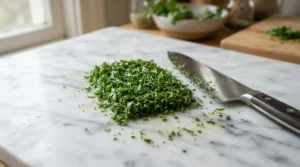
Carving Knife Technique: How to Slice Like You Mean It
Good carving knife technique matters more than the knife. Here’s the method, adapted from standard roast-carving practice such as Jamie Oliver’s chicken carving guide.
- Rest the bird first. Give it at least 15-30 minutes so the juices settle. Carve too early and you’ll flood the board.
- Steady with a fork. Hold the meat at the top of the breast with the tines, keeping your fingers behind the blade.
- Remove the legs. Cut through the skin between breast and leg, pull the leg away, and cut through the joint.
- Slice the breast. Run the blade along the breastbone. Either slice the breast on the bird or lift it off whole and slice across the grain.
- Use the full length of the blade. Let the knife do the work. Long, light strokes beat short, heavy sawing.
- Keep slices consistent. Around 0.5cm is a good starting thickness for turkey breast.
Sharpness is your safety net here. A dull knife slips more easily and demands more pressure, which is when accidents happen. Good carving knife technique is really just calm, controlled slicing with an edge that deserves the meat.
Practical Guide: Setting Up and Caring for Your VG-10 Steel Chef’s Knife
The first 30 days set the habits that decide whether your knife lasts a decade or a season. Here’s the plan.
Day one: inspect and clean. Wash by hand with warm water and mild detergent, then dry straight away. Run a fingertip gently along the spine (never along the edge) to check for burrs.
Week one: learn the grip. Use a pinch grip, thumb and forefinger on the blade heel, remaining fingers on the handle. It gives control that a hammer grip can’t.
Week two: build a honing habit. A few light passes on a fine ceramic rod before big cooking sessions beats a major sharpening every few months.
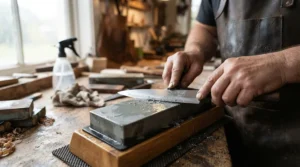
Week three: first proper sharpen if needed. If cutting feels dull, use a 1000-3000 grit whetstone at a consistent angle, roughly 12-15° depending on the knife. If you bought a bundle like the Wusaki Damas VG10 with a 3000/8000 stone, this is where it earns its keep.
Week four: audit your habits. Are you cutting on glass? Leaving the knife in the sink? Twisting through squash? Fix those three things and your knife will outlast most of your other kitchen kit.
Common mistakes in the first 30 days
- ❌ Using the knife to smash garlic or pry open lids
- ❌ Putting it in the dishwasher
- ❌ Cutting bones, frozen food or hard shells
Avoid those and even a Tojiro DP F-808 should stay sharp far longer than you expect.
Real-World Scenarios: Which VG-10 Steel Chef’s Knife Fits Your Kitchen?
Specs are abstract. Here are three realistic buyers, with recommendations grounded in the published details.
The student cook on a tight budget. Cooking four nights a week in a shared flat, wanting one good knife. The Tojiro DP F-808 is the clear answer: real VG-10, thin geometry, low price. Keep it out of shared-house washing-up and it will outlive the tenancy.
The Sunday-roast host. Regularly feeding six to eight people, with a real need for long, clean slices. A 24cm Kasumi Damascus works as a chef’s knife and a slicer in one, and pairs well with a Tojiro DP Sujihiki 240mm if you want dedicated carving. Prioritise a good board and a carving fork.
The enthusiast who loves gear. Sharpens on stones, owns a honing rod, and enjoys the details. The Miyabi Kaizen or Masamoto VG suits this cook: fine edge, refined geometry, and the technique to make use of both. The Shun Classic is the comfortable, gift-friendly alternative.
Notice what’s missing: a “best overall” crown. That’s deliberate. The best VG-10 steel chef’s knife is the one that matches your habits, your board and your patience for maintenance.
✨ Don’t Miss These Exclusive Deals!
🔍 Take your knife skills to the next level with these carefully selected blades. Click on any highlighted item to check current pricing and availability on amazon.co.uk. These tools will help you create restaurant-quality slices your family will love!
Long-Term Cost and Maintenance: What Ownership Really Costs
The sticker price is only the opening bid. Total cost of ownership includes sharpening, storage and how long the knife actually lasts.
| Cost factor | Budget VG-10 (e.g. Tojiro DP F-808) | Premium VG-10 (e.g. Miyabi Kaizen) | Best For |
|---|---|---|---|
| Purchase | £60-£90 | £170-£250 | Budget for value seekers |
| Whetstone / honing kit | £20-£50 | £20-£50 | Everyone |
| Sharpening frequency | Every 1-3 months (heavy use) | Similar, with finer edge | Regular cooks |
| Lifespan with care | Decades | Decades | Both |
The takeaway is simple. Over ten years the extra spend on a premium knife works out to a few pounds per month for better looks and a finer edge, which is reasonable if you’ll use it daily. But the maintenance costs are nearly identical, so buying an expensive knife doesn’t mean you’ll spend less on upkeep. Put your budget into a good knife and a proper stone first, and only then into cosmetics.
UK Regulations: Buying and Carrying a Kitchen Knife Legally
Knives are age-restricted in the UK, and the rules have tightened. Selling a knife to anyone under 18 is an offence in England and Wales, and the government has moved to strengthen age checks for online sales and delivery. The government’s announcement on tougher online knife sales rules explains the direction of travel, including reporting of suspicious bulk purchases.
In practice, expect ID or age verification when you order, and possibly at delivery too. Someone over 18 needs to be available to receive the parcel, so don’t be surprised if it won’t be left with a neighbour. Details are still evolving, so check the latest guidance and the retailer’s own terms.
Carrying is a separate matter. Taking your own kitchen knives to and from a workplace is generally treated as a recognised good reason, but the burden is on you to show it. Keep blades wrapped, boxed and out of reach on the journey, and never leave knives in a car overnight or in view. If in doubt, ask your local police for guidance.
FAQ
❓ Is a VG-10 steel chef's knife good for beginners?
❓ What angle should I sharpen a VG-10 steel chef's knife at?
❓ Can a VG-10 steel chef's knife cut through bones or frozen food?
❓ Does VG-10 rust, and how do I prevent it?
❓ Is a Damascus VG-10 knife better than a plain one?
Conclusion
If you’ve read this far, you already know more than most people standing in a kitchen shop. A VG-10 steel chef’s knife gives you genuine hardness, a sharp edge and low-fuss stainless care, and it rewards a little discipline with years of pleasant cutting.
For most UK cooks, the sensible route is simple. Start with the Tojiro DP F-808 if you want the best cutting per pound. Move to the Yaxell Mon or Masamoto VG if you want a finer edge or a more refined profile. Choose the Kasumi Damascus, Shun Classic or Miyabi Kaizen when finish, gifting and ceremony matter as much as the cut. And treat the Wusaki Damas VG10 as a promising wildcard, especially if you value a bundled whetstone.
Whichever you pick, budget for a honing rod and a stone, cut on wood, dry the blade and respect the edge. Do that, and even a modest VG-10 steel chef’s knife will feel like a luxury every time you slice an onion.
Recommended for You
- Damascus Steel Knife Block Set: 7 Best Picks For UK Kitchens (2026)
- Damascus Steel Chef’s Knife: 7 Best UK Picks For 2026
- Damascus Knife Set: 7 Best UK Picks Ranked For 2026
Disclaimer: This article contains affiliate links. As an Amazon Associate, I earn from qualifying purchases. If you purchase products through these links, we may earn a small commission at no additional cost to you.
✨ Found this helpful? Share it with your friends! 💬🤗
